

Mastering the High Stakes Dialogue
Golden Hook & Introduction
SECTION
Nova: Atlas, I’ve got two books here that claim to hold the keys to unlocking impossible conversations. Your five-word review?
Atlas: Listen. Talk. Don't explode.
Nova: Ooh, concise! I love it. And honestly, that’s pretty much the essence of what we’re diving into today.
Atlas: Well, when you’re building systems, innovating business models, or just trying to drive growth, the last thing you need is a conversation that blows up in your face. It’s like a critical system failure.
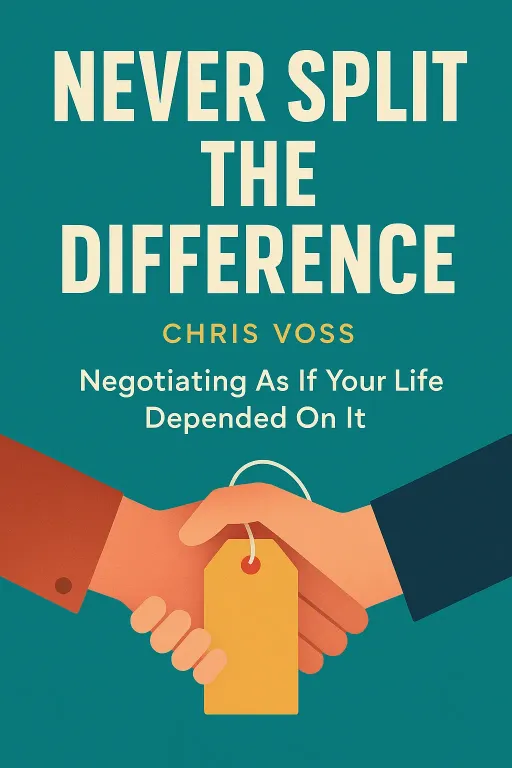
Nova: Exactly! And that’s why we’re exploring some incredible insights today from two powerhouse books. We’re talking about Chris Voss's "Never Split the Difference" and Kerry Patterson et al.'s "Crucial Conversations."
Atlas: Two titans of talking, eh? What’s the hook, Nova? What makes these different from the countless other books on communication?
Nova: Fantastic question, Atlas. It’s about the and the. For "Never Split the Difference," the author, Chris Voss, is a former lead international hostage negotiator for the FBI. Imagine applying those high-stakes, life-or-death negotiation skills to your next client pitch or internal strategy session!
Atlas: FBI negotiator for clients? That’s a… unique selling proposition. It suggests a level of strategic intensity we don't often associate with boardroom discussions.
Nova: Precisely! And on the other side, "Crucial Conversations" comes from researchers who’ve spent decades dissecting what makes or breaks high-stakes discussions in business and life. They’ve built a framework based on extensive empirical study, not just theory. It’s about building a robust system for communication when emotions are high and stakes are critical.
Atlas: FBI negotiator for clients? That’s a… unique selling proposition. And dissecting conversations? Sounds like building a robust system for communication. Okay, I’m intrigued. Nova, how do we bridge the gap from hostage negotiation to, say, a client meeting about a business model innovation? How do these intense, almost adversarial, approaches actually help us build and grow?
The Art of Tactical Empathy: Unlocking Negotiation Power Through Understanding
SECTION
Nova: That’s the brilliant paradox, Atlas! What Voss teaches isn't about winning at all costs, but about winning by understanding. He calls it ‘Tactical Empathy.’ It’s the skill of understanding the other person’s perspective, their fears, their desires, their constraints, not just to connect with them, but to gain leverage. It’s about seeing the negotiation not as a battle of wills, but as a problem to be solved collaboratively, once you truly understand the other side's map.
Atlas: Leverage through understanding… that sounds counterintuitive. Usually, leverage implies power over someone, not empathy with them. For us builders and strategists, we’re focused on efficiency and clear objectives. How does delving into someone else’s emotional landscape help us achieve a scalable outcome?
Nova: Because often, the real barriers to agreement or progress aren't logical; they're emotional or rooted in unarticulated fears. Voss emphasizes that ‘winning’ in a negotiation means getting your counterpart to believe you their world. When they feel understood, they become more open, less defensive, and more willing to find a solution that works for both sides. It disarms them.
Atlas: So, it’s like… a sophisticated form of active listening? But with a specific strategic objective?
Nova: Exactly, but it's more proactive than just listening. One of the key techniques he champions is 'labeling' emotions. This is where you identify and articulate the emotion you perceive in the other person, framing it as a statement rather than an accusation. For example, instead of saying, "Why are you so worried about the timeline?", you might say, "It seems like you are concerned about the timeline."
Atlas: "It seems like you are concerned about the timeline." Huh. That feels… softer. Less confrontational. But Nova, for someone building a new business model, or trying to secure a critical partnership, how does this 'labeling' help us uncover hidden constraints? We’re already swamped with operational challenges.
Nova: That’s precisely where it shines for a strategist and builder, Atlas. When you label an emotion, you're not just being nice; you're inviting the other person to confirm or correct your perception. If you say, "It seems like you're concerned about the timeline," and they reply, "Yes, I am, because our R&D department hasn't finalized the specs yet, and we're afraid of launching a product that's not fully tested," you've just uncovered a crucial hidden constraint – a lack of R&D finalization – that you didn't know about.
Atlas: Ah, I see! So, by acknowledging their about the timeline, you get them to reveal the behind the feeling, which is the actual constraint! It’s like opening a locked door by asking, "Is this door stuck?" instead of trying to bash it down.
Nova: Beautiful analogy! And it builds rapport. When someone feels you're trying to understand their emotional state, they’re more likely to trust you. Think about a client meeting where a potential partner is hesitant about a new, bold strategic direction. They might be saying 'no' because they're afraid of the unknown, or afraid of failing publicly.
Atlas: So, instead of just pushing the benefits of our vision, we could try… "It sounds like you're feeling a bit uncertain about how this new direction might impact your team's current workload, is that right?"
Nova: Precisely! And their response might be, "Well, yes, because our team is already stretched thin, and we're not sure we have the bandwidth to take on this new initiative without dropping the ball on our existing commitments." Suddenly, you’re not just selling a vision; you’re addressing a tangible constraint – resource allocation. You can then discuss solutions, perhaps phasing the rollout or reallocating resources, rather than just hitting a wall of resistance.
Atlas: This is powerful. It reframes negotiation from an adversarial game to a diagnostic process. It allows us to understand the underlying 'why' behind a 'no', which is invaluable for anyone trying to implement change or secure buy-in. It’s about de-escalating resistance by validating the emotion, which then allows the logic, the actual constraint, to surface. This is iterative learning in action – you learn their constraints, adjust your approach, and move forward.
Nova: Exactly. And the beauty is that it doesn't require you to be a mind reader. You're making educated guesses, and the feedback loop is immediate. You're building trust by showing you're willing to step into their shoes, even for a moment, to understand their world. This is foundational for any strategist who needs to navigate complex stakeholder landscapes.
Navigating the Storm: Frameworks for Constructive Dialogue When Everything is on the Line
SECTION
Atlas: So, understanding is key, that’s clear. But what happens when the conversation itself becomes the minefield? What if the stakes are so high, opinions are so polarized, and emotions are already boiling, that even trying to 'label' an emotion feels impossible because the other person is already defensive or aggressive? That’s where I imagine the framework from "Crucial Conversations" comes into play. How do we actually these talks when everything is on the line and the risk of explosion is imminent?
Nova: You’ve hit the nail on the head, Atlas. That’s precisely the territory "Crucial Conversations" addresses. While Voss gives us the tools to understand the and beneath the surface, Patterson and her colleagues provide the architecture for to conduct the conversation itself when it matters most. They define a 'crucial conversation' as one where stakes are high, opinions vary, and emotions run strong. Think of a critical project review, a performance feedback session, or a tense discussion about a major strategic pivot.
Atlas: Right. And in my experience as a builder, those are the conversations that often get avoided, leading to bigger problems down the line. People choose the path of least resistance, which often means the path of most long-term damage. So, what’s their architecture? How do we prevent these conversations from becoming train wrecks?
Nova: Their core philosophy revolves around creating 'safety' in dialogue. They argue that for a conversation to be productive, all parties must feel safe to speak their minds. If safety is compromised, people go into 'fight or flight' mode, or they withdraw. Safety, in their framework, is built on two pillars: mutual respect and mutual purpose.
Atlas: Mutual respect and mutual purpose. Okay, I can see how that’s essential. But Nova, when we're focused on rapid iteration and business model innovation, how do we balance this 'safety' with the need for decisive action? Isn't there a risk of getting bogged down in 'feelings' and ensuring everyone feels 'safe' instead of making tough, data-driven decisions quickly? For a visionary, sometimes you need to push hard.
Nova: That's a fantastic point, and it gets to the heart of why this framework is so valuable for leaders. It’s not about avoiding tough calls; it’s about making them. When you establish mutual respect and mutual purpose, you create an environment where people are more willing to share their honest opinions, even dissenting ones. This actually decision-making because you surface potential problems, blind spots, or alternative solutions you might have missed. It’s about ensuring all voices that matter are heard, so the final decision is robust.
Atlas: So, safety isn't about coddling; it's about creating the conditions for truth to emerge. It's about building a more resilient organizational system through better communication inputs.
Nova: Exactly. Imagine a scenario: Your team is deciding on a major strategic pivot. Two key members have completely opposing views. One wants to invest heavily in a new technology, the other believes it's too risky and prefers to stick with the current model. Tensions are rising. The current approach is leading to an impasse, and the project is stalled.
Atlas: Oh, I’ve seen that movie. Usually, it ends with someone grudgingly agreeing, or the project getting stuck in analysis paralysis.
Nova: Right. So, using the Crucial Conversations framework, the leader might start by establishing safety. They might say something like, "Look, we've got two very different perspectives here, and I value both of them. Our mutual purpose is to ensure the long-term growth and success of this company. To do that, we need to make the best possible decision about this pivot. I want to hear everyone's honest thoughts, and I want everyone to feel safe sharing them, even if they're critical. Does that sound like a good starting point?"
Atlas: That sets a different tone. It frames the disagreement as a shared challenge, not a personal battle. It highlights the 'mutual purpose' – company growth – and explicitly invites dissent under a banner of 'safety.'
Nova: And then, the conversation can proceed. If one person starts to get defensive, or the dialogue veers into personal attacks, the leader can use techniques from the framework to restore safety, perhaps by restating mutual purpose or apologizing for any misunderstanding. For instance, if one team member starts to feel attacked, the leader might interject: "Whoa, hold on. I think we're getting a bit off track. Let's step back., I want to make sure I understand your concern about the risk. And, I want to hear your perspective on the potential upside. Our goal is to find the best path forward."
Atlas: That’s about course-correcting in real-time. It’s like a pilot making micro-adjustments to stay on course. For a builder, this focus on process and safety is crucial. It’s about building robust communication protocols that can handle turbulence. It prevents the kind of catastrophic failure that happens when vital information is withheld or distorted because people fear the consequences of speaking up. This directly impacts financial acumen, as poor decisions stemming from bad communication can cripple growth.
Nova: Absolutely. And it enables the 'visionary' aspect too. A visionary needs to inspire change, but if the team isn't safe to voice concerns about implementing that vision, the vision might never be realized effectively, or it might be flawed from the start. These conversations, when handled well, lead to better strategy, more innovative solutions, and stronger team dynamics, all critical for sustainable growth.
Synthesis & Takeaways
SECTION
Nova: So, we have Chris Voss teaching us how to skillfully navigate the of difficult conversations by leveraging empathy to uncover hidden constraints and gain understanding. And then we have Kerry Patterson and her colleagues providing the essential and for the conversation itself, ensuring that even when stakes are highest, dialogue remains constructive and productive.
Atlas: They’re not competing ideas; they’re deeply complementary. You need Voss’s tools to understand what’s being said, and what’s being said, and Patterson’s framework to create the environment where those insights can actually be shared and acted upon. It’s like having a brilliant diagnostic tool and a perfectly engineered operating theater.
Nova: Precisely. And for our audience, the strategist, the builder, the visionary, this is gold. It’s about mastering the human element, which is often the most complex variable in any business model or growth plan.
Atlas: Right. So, let’s bring it back to the actionable. The specific takeaway here is practicing 'labeling' emotions. You mentioned it as a tiny step. Nova, for someone who's analytical and perhaps not naturally inclined to dive into emotional waters, what's the best way to approach this 'labeling' in their next client meeting or even a team discussion?
Nova: The key is to treat it as an experiment, Atlas, aligning with that mindset of iterative learning. Don't aim for perfection; aim for practice. Choose one interaction, one moment where you sense an underlying emotion – concern, frustration, hesitation, excitement. And simply try framing it as a gentle observation. "It seems like you're feeling X," or "I sense Y might be on your mind." The goal isn't to be right about the emotion, but to open the door for clarification and uncover those hidden constraints.
Atlas: And for us builders, those 'hidden constraints' are the operational bottlenecks, the resource limitations, the unspoken risks that can derail a project or a growth strategy. By labeling an emotion, we’re essentially asking, "What's the root cause of this feeling that's impacting our objective?" It's a powerful diagnostic question disguised as an empathetic observation. It fuels our ability to build more resilient systems because we’re addressing the real issues, not just the symptoms.
Nova: Exactly. And for the visionary, it helps ensure that the path to the vision is clear of unseen obstacles. It’s about building bridges, not just drawing blueprints. When you can navigate these high-stakes dialogues effectively, you foster an environment where innovation can truly flourish, where financial acumen is supported by clear communication about resources and risks, and where team dynamics are strong because people feel heard and understood.
Atlas: It’s a fundamental shift from trying to win an argument to trying to build understanding and achieve a shared goal. It’s about making conversations a strategic asset, not a potential liability. The power isn't in forcing your will, but in creating the conditions for the best possible outcome to emerge through genuine dialogue.
Nova: That’s the profound insight here, isn't it? In a world that often rewards assertiveness and winning at all costs, the true mastery lies in the ability to connect, to understand, and to guide conversations toward mutually beneficial solutions. It’s a skill that transcends any single profession; it’s vital for leadership, for innovation, and for building anything of lasting value.
Atlas: So, for our listeners, the challenge is clear.
Nova: Indeed. Your actionable takeaway: In your next client meeting, or even your next team huddle, practice an emotion. Just one. See what happens.
Atlas: It might feel awkward at first, but remember, iterative learning means every step forward counts.
Nova: This is Aibrary.
Atlas: Congratulations on your growth!