Unlocking Niche Markets: Beyond the Obvious
Golden Hook & Introduction
SECTION
Nova: You know, Atlas, I was thinking about how some of the biggest tech giants started. They didn't just burst onto the scene targeting everyone. They found a tiny, almost invisible corner of the market and became indispensable.
Atlas: Oh, I like that. It's like finding a secret garden in the middle of a bustling city. So, we're talking about those hidden gems, those niche markets that everyone else overlooks?
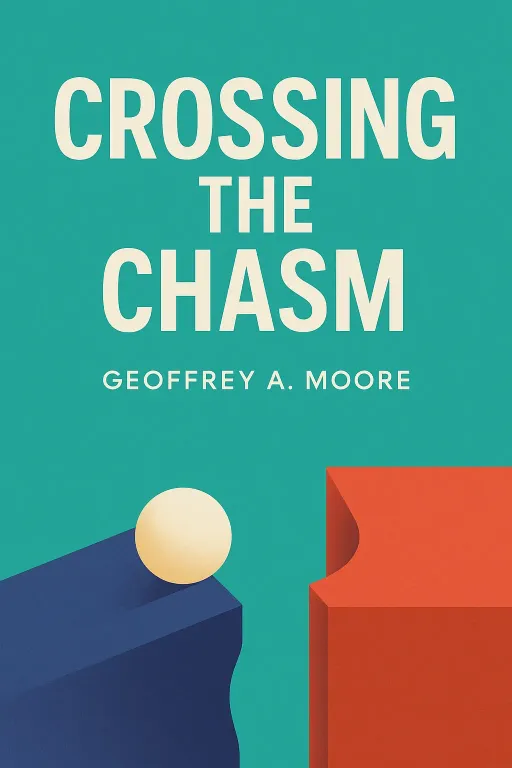
Nova: Exactly! Today, we're diving deep into the art of "Unlocking Niche Markets: Beyond the Obvious," drawing insights from two foundational texts: "Crossing the Chasm" by Geoffrey A. Moore and Eric Ries's "The Lean Startup." Moore, a Silicon Valley legend, actually started his career as an English literature professor before becoming authority on disruptive technologies and market adoption. His unique background gave him a fresh lens to analyze how new products really break through.
Atlas: That's a fascinating origin story for someone who shaped how we think about market entry. So, what's the big idea connecting these two books when it comes to niche markets?
Nova: The core of our podcast today is really an exploration of how truly understanding and adapting to a specific, underserved group isn't just a strategy; it's a profound act of empathy and strategic foresight. Today we'll dive deep into this from two perspectives. First, we'll explore the critical chasm between early adopters and the mainstream market, then we'll discuss the lean approach to finding product-market fit in those specific niche areas.
Crossing the Chasm into Niche Dynamics
SECTION
Nova: So, let's start with Moore's "Crossing the Chasm." Think of it as a blueprint for high-tech companies trying to break into mainstream markets. He argues there's this enormous, often fatal, gap between early adopters—those tech enthusiasts and visionaries who love newness—and the early majority, who are far more pragmatic.
Atlas: Hold on. So, it's not just a continuum? It's literally a chasm? That sounds rough, but it makes sense. I imagine a lot of our listeners, especially those building innovative products, feel like they're shouting into a void after the initial excitement wears off.
Nova: Exactly! Moore highlights that these early majority customers aren't interested in technology for technology's sake. They want solutions to pressing problems, and they want them to be reliable and proven. The chasm forms because the sales and marketing strategies that work for early adopters completely fail with the early majority.
Atlas: So you're saying it's not about having the coolest new gadget, but about solving a very specific, painful problem for a pragmatic group? Can you give an example?
Nova: Absolutely. Think about the early days of desktop publishing. The early adopters were graphic designers and enthusiasts who loved playing with new fonts and layouts. But the early majority? They were small businesses, trying to produce professional-looking brochures and newsletters without hiring a full-time designer.
Atlas: Right, like a local print shop or a small marketing agency. They didn't care about the bleeding edge, they cared about getting a job done efficiently.
Nova: Precisely. Moore would say the companies that successfully crossed the chasm focused intensely on that specific, pragmatic early majority segment—the "niche." They tailored their messaging, their product features, even their distribution channels, to solve the problem for that one group, rather than trying to be everything to everyone. They targeted the segment that had the most compelling reason to buy, and whose needs were most similar, creating a beachhead.
Atlas: So, it's almost counterintuitive. To go broad, you have to go incredibly narrow first. It’s like, instead of building a bridge across the entire chasm, you build a single, sturdy pathway for one specific group.
Nova: That’s a perfect analogy, Atlas. And it’s not just about finding a small gap, but understanding its unique dynamics and adapting your strategy to its specific psychological and practical needs. It's about serving a focused group so well that they become your most passionate advocates. They become your reference customers, and that's what builds trust for the next segment.
The Lean Approach to Niche Market Fit
SECTION
Nova: This naturally leads us to Eric Ries and "The Lean Startup," which offers the methodology to actually and those niches. While Moore tells us we need to cross the chasm, Ries gives us the —through validated learning and continuous innovation.
Atlas: Oh, I know that feeling. The "build it and they will come" mentality often leads to a lot of wasted effort, especially when you're trying to innovate in new or niche areas. I imagine a lot of our listeners, who are often strategic seekers and resilient learners, have experienced that frustration of building something they was perfect, only to find it didn't quite hit the mark.
Nova: That's where the lean startup methodology shines. Ries champions rapid experimentation and customer feedback loops. Instead of spending years perfecting a product in stealth, you build a Minimum Viable Product, or MVP, and get it into the hands of your target niche as quickly as possible.
Atlas: Okay, so you're not just guessing what that specific niche needs. You're putting something out there, even if it's imperfect, to get real-world data from them. That makes me wonder, how does this connect back to Moore's chasm? Because Moore talks about finding the right niche.
Nova: Great question, Atlas. The lean approach is the engine that drives your ability to identify and then iterate within that niche. Moore tells you to target the early majority's specific pragmatic problem. Ries gives you the tools to what that problem truly is and to solve it incrementally, without burning through all your resources.
Atlas: So, you use the lean methodology to validate your assumptions about a niche before you commit fully. It's like you're test-driving different pathways across that chasm, getting feedback on each one, rather than trying to construct a massive, unproven bridge.
Nova: Exactly! Imagine a small software company, let's call them "MediFlow," trying to create a new scheduling system for medical offices. Instead of building a full-blown, complex system for every type of clinic, they might create an MVP specifically for small, independent dental practices.
Atlas: Like, just a simple calendar and patient reminder system? Not billing, not insurance, just the core scheduling problem for that one micro-segment.
Nova: Precisely. They'd launch that MVP, gather feedback from those dental practices, and learn what features are critical, what's missing, and what’s just noise. This validated learning ensures they're building something that truly resonates with that specific niche, making them passionate advocates, just as Moore described.
Atlas: That’s actually really inspiring. It’s about serving a focused group so well that they become your most passionate advocates. It feels like a more sustainable way to grow, too, by building on proven success rather than just hoping for it.
Synthesis & Takeaways
SECTION
Nova: So, bringing it all together, the profound insight here is that successful niche market penetration isn't just about finding a small gap. It’s about understanding its unique dynamics, adapting your strategy to its specific psychological and practical needs, and then using a lean, iterative approach to serve that focused group so exceptionally well that they become your most passionate advocates.
Atlas: That gives me chills. It’s a powerful combination: the strategic foresight to identify the chasm and the pragmatic niche, coupled with the agile methodology to actually traverse it. It’s about building a movement, one truly satisfied customer at a time.
Nova: Absolutely. It’s a testament to the idea that sustainable growth often comes from deep, focused service rather than broad, shallow reach. Sometimes, to achieve massive impact, you must first master the micro.
Atlas: So, for our listeners, the big takeaway is to trust your intuition about those smaller, overlooked segments. Your vision is a powerful guide, but it needs the resilience to learn and adapt. And celebrate those small wins of validated learning. Acknowledge your progress as you build that dedicated following.
Nova: Right. It’s about being the empowering architect of your own growth, understanding that navigating complex markets requires both strategic thinking and leadership development, but also the mental resilience to sustain that founder journey.
Atlas: This is Aibrary. Congratulations on your growth!