The Innovator's Dilemma: Navigating Disruption and Sustaining Growth
Golden Hook & Introduction
SECTION
Nova: Imagine a world where the very things that make you successful today become the chains that bind you tomorrow. It sounds like a plot from a dystopian novel, doesn't it? But for countless businesses, it's a stark reality, playing out right now.
Atlas: Whoa, that's kind of a heavy opener, Nova! Are we talking about a business horror story here, or something more... strategic? Because I imagine a lot of our listeners, the visionaries and architects among us, are constantly trying to build something lasting, not something that self-destructs.
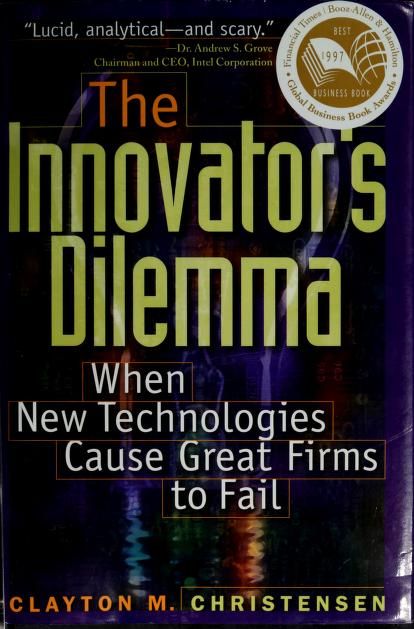
Nova: Absolutely, Atlas. It's strategic, but with a crucial, almost ironic twist. Today, we're dissecting a foundational concept that explains why even brilliantly managed, successful companies can stumble and ultimately fail when faced with disruptive innovation. We're diving into the powerful insights from Clayton Christensen's seminal work, The Innovator's Dilemma.
Atlas: Oh, I like that. Christensen, if I'm remembering correctly, was a Harvard Business School professor, and this book really shook up the business world when it came out. It's widely cited and often considered a classic in modern business strategy. It's one of those books that everyone talks about, but not everyone has truly internalized.
Nova: Exactly. And what's fascinating is that Christensen himself had a really interesting background—he wasn't just an academic; he'd also co-founded a ceramics company, giving him a real-world perspective on the challenges of innovation. This wasn't just theory; it was theory forged in the fires of practical experience. His insights continue to resonate decades later because they tap into a fundamental truth about market dynamics. It's a must-read for anyone looking to build a movement, not just a product.
The Innovator's Dilemma: Why Good Management Can Lead to Failure
SECTION
Atlas: Okay, so let's unpack this 'Innovator's Dilemma.' What exactly is this paradox where doing everything right can lead to failure? That feels counter-intuitive for anyone trying to define a clear roadmap.
Nova: It's brilliantly counter-intuitive. Christensen's core argument is that successful companies often fail not because they do things wrong, but precisely because they do things right. They listen intently to their customers, they invest in profitable product lines, and they continuously improve their existing offerings. This sounds like good management, right?
Atlas: Right! That's the playbook for growth, for ensuring product-market fit with your current audience. You serve your best customers, you make your products better, you iterate. That's what we're always told to do.
Nova: Precisely. But here's the rub: disruptive technologies often emerge as inferior products, initially appealing only to a small, niche market. Think about the early personal computers compared to mainframes, or digital cameras compared to film. They were less powerful, more expensive, or had fewer features. A well-managed company, looking at its profit margins and listening to its high-value customers, would naturally dismiss these "inferior" innovations.
Atlas: So you're saying a company sees this tiny, clunky new thing, and their existing customers are saying, "No thanks, I need the big, powerful version I'm already using," and the company, being smart, says, "Okay, we'll keep making the big, powerful version." And that's the mistake?
Nova: That's the dilemma. They're optimizing for their current success. They allocate resources to satisfy their most demanding, high-margin customers, which is rational from a financial perspective. But while they're doing that, the disruptive technology is quietly improving, finding its own market, and moving upmarket. By the time it's good enough to challenge the incumbents, it's often too late. The disruptor has built a different cost structure, a different business model, and a loyal customer base that the incumbent can't easily replicate.
Atlas: That’s a perfect example. I remember hearing about Kodak, a giant in film photography, and how they actually invented the digital camera. But they couldn't bring themselves to fully commit to it because it would cannibalize their incredibly profitable film business. In the end, they got disrupted by the very technology they pioneered.
Nova: Exactly. Kodak is a classic, almost tragic, case study. They were doing 'the right thing' by protecting their existing revenue streams and listening to their film-loyal customers. But that commitment blinded them to the future. It’s not a lack of vision, but often an abundance of focus on the present that trips them up. It’s a powerful lesson for anyone with strategic foresight hoping to avoid similar pitfalls.
Atlas: That gives me chills, honestly. It's like a Greek tragedy for corporations. So, the lesson here for our listeners, the visionaries who see the big picture, is that sometimes you have to be willing to disrupt yourself, even if it feels like it's going to hurt your current success. You have to build a culture that encourages experimentation.
Nova: Absolutely. And that leads us to our next crucial point. It's not enough to identify the disruption; you also need to know how to navigate it, how to bring those innovative products to a broad audience, which often means crossing a very specific kind of chasm.
Crossing the Chasm: Bridging the Gap from Early Adopter to Mainstream
SECTION
Atlas: Okay, so once you've embraced the disruptive idea, and maybe even built a new team for it, how do you get it past those initial enthusiasts? I’m curious, what does 'crossing the chasm' really entail?
Nova: This is where Geoffrey Moore's work, particularly his book Crossing the Chasm, becomes incredibly relevant. Moore focuses on the unique challenges of marketing and selling high-tech products, especially the critical gap between early adopters and the mainstream market. Think of it like this: innovators and early adopters are eager to try new things, even if they're buggy. They're driven by the technology itself, by the novelty.
Atlas: Right, they love being first. They'll wait in line for the new iPhone, or download a beta app just to see what it does. They're forgiving of imperfections because they're excited by the potential.
Nova: Exactly. But the mainstream market, what Moore calls the 'early majority,' is very different. They're pragmatists. They don't care about the tech for tech's sake; they care about solutions to their problems. They want proven results, reliability, and social proof. They don't want to be pioneers; they want to join a movement that's already established. And the chasm is the vast, often fatal, gap between these two groups.
Atlas: So, you've got this amazing new product, your early adopters are raving about it, you've got great press... but then sales just flatline. You can't seem to break through to the bigger market. That's the chasm. How do you bridge it? For someone building a movement, that mainstream connection is everything.
Nova: Moore's core insight is that you can't market to the early majority the same way you market to early adopters. You need to identify a specific, niche segment within the early majority—what he calls the 'beachhead'—and dominate it. Solve their problems so completely that they become your enthusiastic references. Then, use that success to expand into adjacent segments. It's about focusing intensely, not broadly, initially.
Atlas: That makes sense. It’s like, instead of trying to sell your new smart home device to 'everyone,' you decide to focus entirely on busy parents who need to manage their kids' screen time. You become the absolute best solution for for.
Nova: Precisely. You create a compelling value proposition that speaks directly to their pragmatic needs, not just the cool factor. You build out a complete solution, including services and partnerships, that makes adopting your product a no-brainer for that niche. Once you've conquered that beachhead, you have the credibility and momentum to cross into other segments. It's about strategic focus and understanding the psychology of your target market. It’s about effective communication, tailoring your message to who you're speaking to.
Atlas: That's a great way to put it. It’s not about shouting louder, but about whispering the right message to the right people. It sounds like it requires a lot of active listening, which is something our listeners are always working on. And it really connects to the idea of product-market fit, validating your vision early with the right audience.
Future-Proofing Your Vision: Cultivating Disruptive Experimentation
SECTION
Nova: And that brings us to the crucial question for any visionary, any architect: how do you future-proof your vision in a world constantly reshaped by these disruptive forces? How do you build a culture that not only identifies the next big wave but embraces it?
Atlas: Yeah, because it's one thing to understand the dilemma and the chasm, but it's another to actually live it, to implement it within an organization. For someone who values strong teams and authentic leadership, how do you inspire and empower your team to take those risks?
Nova: It starts with what Christensen calls fostering 'tiny steps' and 'deep questions.' First, identify one emerging technology or trend that, while seemingly niche today, could potentially disrupt your core market in the next 3-5 years. Don’t ignore it because it's small. Brainstorm how your current product or service could adapt or be reimagined to embrace it.
Atlas: So, it's not about trying to predict the future perfectly, but about having a radar up for potential disruptions and then actually doing something about it, even if it's small scale. Like, if you're a traditional media company, maybe you start a tiny podcasting division, even if it seems like a distraction from your main TV revenue.
Nova: Exactly. It's about creating small, autonomous units—often separate from the core business—that are free to explore these disruptive opportunities without being burdened by the expectations or metrics of the main organization. These units can fail fast, learn, and iterate without threatening the core business. This allows for experimentation.
Atlas: That's really smart. It sidesteps the innovator's dilemma by creating a safe space for disruption. But then, the 'deep question': How do you build a culture that encourages this experimentation, even if these disruptive ideas initially seem to detract from current successes? Because let's be honest, that's a tough sell for quarterly earnings.
Nova: It requires authentic leadership. Leaders must clearly articulate that long-term survival depends on embracing change, even if it means short-term discomfort. They need to celebrate learning from failures, not just successes. It’s about psychological safety—making it okay to propose ideas that might challenge the status quo, even if they seem 'crazy' at first. It’s about actively listening to those fringe ideas.
Atlas: That's a huge shift from how many organizations operate. It’s about building trust, clarifying needs, and empowering teams to look beyond the immediate horizon. It’s about leading not just with strategy, but with a mindset that embraces the journey, even the messy parts.
Synthesis & Takeaways
SECTION
Nova: Ultimately, the message from both Christensen and Moore is clear: strategic foresight isn't just about seeing the big picture; it's about understanding the subtle mechanics of market dynamics and then having the courage to act. It's about being willing to disrupt yourself before someone else does.
Atlas: And it's not a one-time thing, is it? It's a continuous process of active listening, of identifying those tiny signals, and then being brave enough to nurture them, even when they look insignificant next to your current giants. It’s about continuous stakeholder alignment, making sure everyone is on board for the long haul.
Nova: Precisely. The journey of innovation is never perfect, and not every step will be. But by understanding the innovator's dilemma and how to cross the chasm, leaders can learn from every iteration, adapt, and truly build enduring movements. It’s about recognizing that the future isn't just something that happens to you; it’s something you actively create through your choices today.
Atlas: That’s actually really inspiring. It means even if you're a massive, successful company, there's a path forward, and it's built on a foundation of humility and adaptability. It challenges that conventional thinking that bigger is always better, and that success is static. It's a profound reminder that true growth comes from constant evolution.
Nova: Absolutely. And for all our listeners, the visionaries, the architects, the communicators out there actively shaping their industries—we encourage you to look at your own 'tiny step' this week. What's one emerging trend you can start experimenting with, even in a small way, that could become your next big wave?
Atlas: Yeah, take that step. And remember, the goal isn't just to build a product; it's to build a movement. And movements are built by those who are willing to embrace the journey, learn from every iteration, and actively listen.
Nova: This is Aibrary. Congratulations on your growth!