

The Architecture of Sound Reasoning
Opening
SECTION
Nova: Content` format.**
Golden Hook & Introduction
SECTION
Nova: Here's a bold thought: The most dangerous thing for your career, your relationships, and even your personal growth isn't a lack of talent or effort. It's the things you you don't know.
Atlas: Whoa, Nova. That sounds like a riddle wrapped in an existential crisis. Are you telling me my biggest problems are currently invisible to me? Because honestly, my to-do list feels pretty visible right now.
Nova: Exactly! It's the professional blind spots, Atlas. The areas where our self-perception drastically diverges from reality. And today, we're diving into how to not just identify these hidden pitfalls, but to actually that uncomfortable truth for profound growth.
Atlas: Okay, I’m listening. Because if there's a secret level to self-improvement I'm missing, I want in.
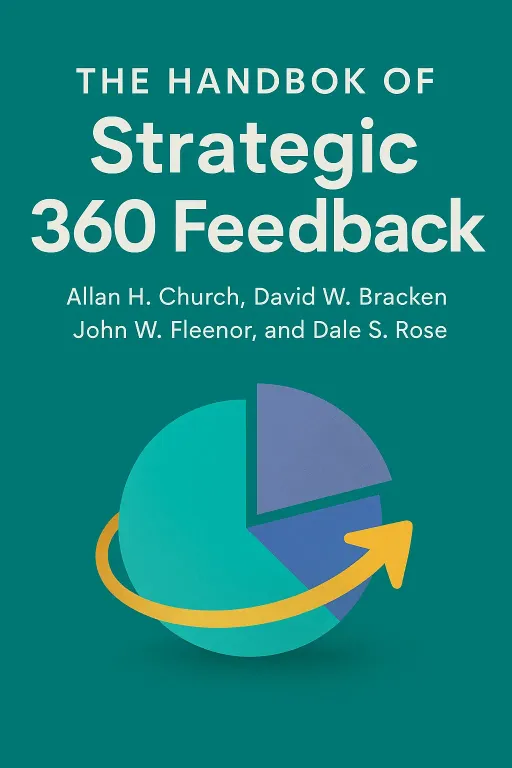
Nova: Well, we're pulling insights from two foundational texts. First, "The Handbook of Strategic 360 Feedback" by Allan H. Church and his co-authors, a seminal work in organizational psychology that really unpacks how multi-source data can illuminate those blind spots. And then, to process that raw data, we’re tapping into Richard W. Paul and Linda Elder's "Critical Thinking," a book that's practically a bible for developing the cognitive tools to analyze information without our ego getting in the way.
Atlas: Ah, so it’s not just about getting feedback, it’s about actually it, even when it stings. That’s a whole different ballgame.
Uncovering Blind Spots: The Power of Multi-Source Feedback
SECTION
Nova: Precisely. Let's start with Church and his team. Their work emphasizes that our own view of ourselves is inherently limited. Think of it like trying to inspect the back of your own head without a mirror. You can feel it, you can imagine it, but you can't truly it. That's a blind spot.
Atlas: That makes sense. I imagine a lot of our listeners, who are always striving for efficiency and impact, probably feel they have a pretty good handle on their performance. What’s the specific risk if we seek this kind of feedback?
Nova: The risk is stagnation, Atlas. Imagine a project manager named Sarah who genuinely believes she empowers her team, always encourages autonomy, and fosters a collaborative environment. But from her team's perspective, Sarah unknowingly hoards critical information, makes last-minute changes that derail their work, and often takes credit for their successes in meetings. She's completely unaware of this disconnect. Without diverse feedback, Sarah will continue a pattern that demoralizes her team, undermines her own goals, and stunts her leadership potential. Church's research highlights that multi-source, or '360-degree' feedback, is essential because it gathers perspectives from all angles: peers, subordinates, superiors, and even clients. It’s like getting a full diagnostic scan, not just a quick self-check.
Atlas: Okay, but isn't getting feedback often just... noise? I mean, people have their own agendas, some are just complainers. How do you filter through that to find the actual gold?
Nova: That's where the "strategic" part comes in. It’s not just random comments. It's structured, often anonymous, and designed to identify patterns across multiple data points. For example, if one person says you're a poor communicator, you might dismiss it. But if three peers, two direct reports, and your manager all independently highlight communication as an area for development, that's a pattern. That's a blind spot illuminated, and it becomes much harder to ignore.
Atlas: So it's not about individual critiques so much as it is about consensus around an area for improvement. I can see how that would be harder to ignore. But for someone who's already short on time, is this something you have to implement company-wide, or can individuals practice elements of this?
Nova: Absolutely. While formal 360s are often organizational, the is accessible. You can proactively seek feedback from a diverse group of trusted colleagues. Ask specific questions: "What's one thing I could do differently that would make your job easier?" or "Where do you see me unknowingly creating friction?" The key is diversity of sources and specificity of inquiry. It’s a micro-learning approach to self-awareness, perfectly suited for a discerning insight seeker.
Atlas: That’s a great way to put it. Getting feedback isn't just about hearing what you did wrong, it's about seeing the full picture of your impact from perspectives you can't access on your own. It's like having multiple mirrors instead of just one, helping you navigate your professional journey more effectively.
Mastering the Inner Game: Processing Feedback with Critical Thinking
SECTION
Nova: Exactly, Atlas. And once you have that multi-faceted reflection, the next, often harder, step begins: processing it without emotional bias. This is where Paul and Elder's work on critical thinking becomes our guide. They argue that our brains are wired for self-preservation, which often translates into ego-defense when confronted with criticism.
Atlas: Oh, I know that feeling! Someone says something that rubs you the wrong way, and suddenly your brain goes into full-on defense mode, rationalizing why they're wrong, or why it's not a big deal, or why the problem.
Nova: That’s the ego speaking, and it's a huge barrier to growth. Paul and Elder provide cognitive tools to help us bypass that knee-jerk reaction. One key principle is to identify the embedded in the feedback, and in your own reaction. For instance, if a colleague tells you, "You're not a good team player," your immediate assumption might be, "They think I'm selfish and uncooperative." But is that what they said or meant?
Atlas: Hold on, so it’s about dissecting the feedback itself, rather than reacting to the emotional charge of it?
Nova: Precisely. Another tool is evaluating the. What specific behaviors or instances led to that feedback? If the feedback is vague, you need to probe for concrete examples. "Can you give me an instance where you felt I wasn't collaborative?" This shifts the conversation from subjective judgment to objective facts, allowing you to make more informed choices about your behavior.
Atlas: That makes me wonder, how does this apply when the feedback feels truly unfair or even malicious? Because that happens.
Nova: It absolutely does. And critical thinking helps there too. Paul and Elder encourage us to consider and. Is there a kernel of truth, however small, even in poorly delivered feedback? What might be the other person's perspective or motivation? Perhaps they're stressed, or they have a different understanding of 'collaboration.' And what are the of accepting or rejecting this feedback for your own growth and impact? It's about moving from "I don't like this feedback" to "What can I learn from this, regardless of how it was delivered?"
Atlas: That sounds like a powerful way to reclaim agency. Instead of being a victim of feedback, you become an analyst, looking for data points. For our listeners who are trying to build financial literacy or understand complex tech trends, this critical thinking process seems universally applicable. It’s about not just accepting information, but evaluating it with discernment.
Nova: It is. It’s about building an internal 'logic lab' where every piece of information, especially uncomfortable feedback, is subjected to rigorous testing, not emotional filtering. It’s the difference between blindly accepting a diagnosis and asking for a second opinion, or even a deeper understanding of the symptoms before making a decision.
Synthesis & Takeaways
SECTION
Nova: So, when you combine Church's strategic multi-source feedback with Paul and Elder's critical thinking tools, you arrive at a powerful destination: intellectual humility. It's the willingness to admit what you don't know, to see your own imperfections, and to approach every piece of feedback as a gift, however unwrapped or poorly presented it might be.
Atlas: That’s actually really inspiring. It’s not just about getting better, it’s about being to being better, even when that process is uncomfortable. It resonates with anyone who wants to make truly informed choices, whether in their career or personal life. It's about maximizing impact through continuous, conscious growth.
Nova: Exactly. It's the ultimate growth mindset. Instead of recoiling from criticism, you lean into it, dissect it, and extract its value. It ensures you're always navigating towards a better future, personally and professionally.
Atlas: So, for our listeners who are pragmatic explorers and future navigators, what's the one thing they can do this week to embody this?
Nova: This week, practice intellectual humility. Actively seek out one piece of critical feedback – from a trusted colleague, a friend, even a family member. And then, instead of reacting defensively, take that feedback and analyze it through the lens of objective evidence. What are the facts? What are the underlying assumptions? Can you separate the message from the messenger and find the truth in it, even if it's a small nugget?
Atlas: That’s a powerful challenge. It’s about turning potential pain points into actual growth opportunities, maximizing our impact in the long run. I like that.
Nova: It's about consciously choosing growth over ego, every single time.
Atlas: This is Aibrary. Congratulations on your growth!









