

Unlocking Your Creative Genius: Beyond the Blank Page
Golden Hook & Introduction
SECTION
Nova: What if I told you that the biggest enemy of your creative genius isn't a lack of inspiration, but a belief that inspiration is even required?
Atlas: Whoa, that sounds like a direct challenge to pretty much every artist's romantic ideal. So, you're saying the muse is… overrated?
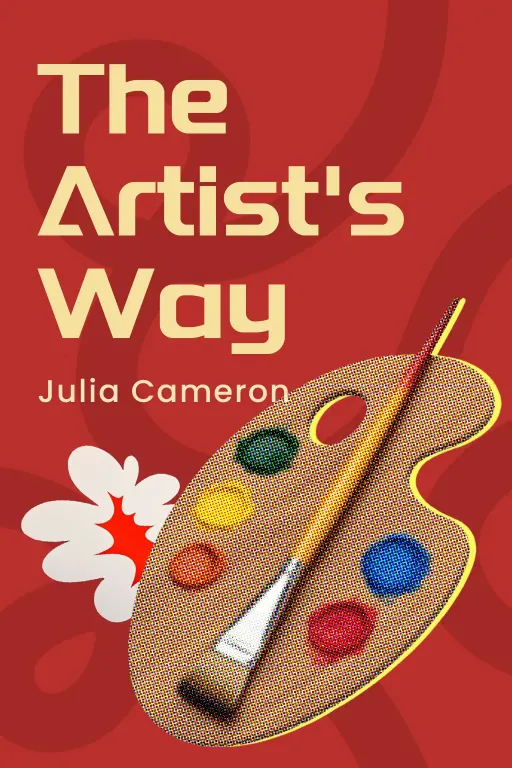
Nova: Exactly! Today, we're diving into how to unlock your creative genius, not by waiting for a lightning bolt, but by actively building the conditions for it. Our journey begins with Julia Cameron’s seminal work, "The Artist's Way." What makes Cameron’s approach so unique is that she frames creativity not just as a skill, but as a spiritual path, guiding you to unblock and nurture your inner artist through daily, intentional practices.
Atlas: Oh, I like that. It moves beyond the idea that creativity is some mystical gift only for a chosen few. It sounds like she’s democratizing the muse, making it accessible. So, how does she propose we mere mortals tap into this inner artist?
Cultivating Individual Creative Practice & Morning Pages
SECTION
Nova: Her foundational tool, and it's deceptively simple, is something called 'Morning Pages.' It’s a practice that's been embraced by countless artists, writers, and even business leaders.
Atlas: Morning Pages. I’ve heard of them. Isn't it just… journaling? Like, writing down your thoughts?
Nova: Well, it’s a specific kind of journaling, Atlas. The instruction is to write three longhand pages, stream-of-consciousness, first thing every morning. The crucial part? It's completely non-judgmental. You don't edit, you don't reread, you don't even think about what you're writing. It's literally just getting whatever is in your head onto the page.
Atlas: Okay, but how does that actually unblock creativity? My morning brain is usually just a chaotic mess of grocery lists and half-remembered dreams. Putting that on paper sounds more like therapy than creative genius.
Nova: That's the magic! Think of it as a mental drain cleaner. Our minds are constantly buzzing with anxieties, to-do lists, worries, and criticisms. These are like static that clogs the creative channel. Morning Pages act as a brain dump, clearing out all that mental chatter. By getting it out, you create space. You're silencing the inner critic, even if just for those few minutes, and making room for new, fresh ideas to emerge.
Atlas: So basically you're saying it's not about what you write, but the act of writing itself that matters? Like, the physical process is the point?
Nova: Precisely. It’s about consistency, not content. Cameron emphasizes that creativity is a muscle that benefits from consistent exercise. You wouldn't expect to run a marathon without training, right? Morning Pages are your daily creative workout. They train your mind to access deeper thoughts, to bypass the self-censorship, and to trust your own inner voice. I’ve heard countless stories of people who felt utterly stuck, staring at a blank page or a creative problem, and after a few weeks of Morning Pages, suddenly solutions or novel ideas would just… appear. It’s not magic; it’s simply creating the conditions for inspiration to arrive.
Atlas: That makes sense. It's like you're creating a quiet room in your mind where ideas can finally speak up without being shouted down by all the noise. And I guess that connects to the little 'Tiny Step' in our notes – dedicating 10 minutes to stream-of-consciousness writing. It sounds incredibly accessible, even for someone with a packed schedule.
Fostering a Creative Organizational Culture & Pixar's Braintrust
SECTION
Nova: Absolutely. And it's not just about individual practice. Even the most creatively unblocked person needs a supportive environment. That brings us to our second big idea, from Ed Catmull’s "Creativity, Inc." Catmull, co-founder of Pixar, gives us an incredible look into how one of the world's most innovative companies fostered a culture where groundbreaking work could consistently thrive.
Atlas: Pixar. Wow. Their track record is undeniable. But how do you cultivate creativity in a corporate setting? I imagine it's a lot harder than just telling everyone to write three pages in the morning. Doesn't corporate structure usually stifle creativity?
Nova: That’s the common misconception, isn't it? Catmull's core philosophy is that creativity is fragile, especially new ideas, and it needs active protection. He understood that simply hiring talented people isn't enough; you need systems to nurture those ideas and protect them from the natural forces that want to squash them.
Atlas: So, it's not just about letting people run wild. There's a structure to their creative freedom? That sounds a bit out there. How do you protect a new idea without coddling it or making it so fragile it can't withstand any criticism?
Nova: That's where Pixar’s legendary 'Braintrust' comes in. It’s a feedback mechanism designed for radical candor, but with a crucial twist. When a film project is in trouble, the creative leads present it to a group of their most trusted peers – directors, writers, story artists. The Braintrust's job is to offer candid, unvarnished feedback, sometimes brutally honest.
Atlas: Brutal honesty? In a creative environment? That sounds like a recipe for bruised egos and creative paralysis. How does that not crush morale or make people afraid to share their nascent ideas?
Nova: Ah, but here’s the genius of it. The Braintrust has no authority to demand changes. Their feedback is purely advisory. The director of the film is free to take or leave any suggestions. This creates psychological safety. Everyone in the room knows the goal isn't to tear someone down, but to make the better. The focus is on the work, not the person. It's about protecting the by giving it the toughest love possible. Imagine a film like, which was reportedly in serious trouble during production. The Braintrust helped identify fundamental story issues, and rather than just giving up, they collectively found a way to transform it into the beloved film we know today.
Atlas: That’s actually really inspiring. It’s like the organizational equivalent of Morning Pages for your ideas – you get all the messy thoughts out, but then you have a highly skilled, empathetic group helping you sort through them, not to judge you, but to make the core idea stronger. You're protecting the new by giving it the tools to evolve, not shielding it from reality.
Synthesis & Takeaways
SECTION
Nova: Exactly! Whether it's Julia Cameron's individual spiritual path or Ed Catmull's corporate blueprint, the profound insight is that creativity isn't solely about innate talent or waiting for a flash of genius. It's a dynamic interplay between consistent personal discipline and a thoughtfully cultivated, supportive environment. Both require intentionality, courage, and a willingness to engage in practices that might seem mundane on the surface but yield extraordinary results.
Atlas: So, it sounds like whether you're trying to unlock your own genius or build a team that innovates, the secret isn't just waiting for the lightning bolt, but building the right conductors for it, every single day?
Nova: Precisely. And for our listeners, we want to give you a 'Tiny Step' right now. Try Julia Cameron's Morning Pages. Just 10 minutes each morning, three pages, stream-of-consciousness writing. No judgment, no rules, just write. See what happens.
Atlas: Give it a shot! And let us know how it goes. What did you discover lurking in those pages? What new ideas surfaced? We'd love to hear about your experience.
Nova: The journey of unlocking your creative genius starts not with a grand gesture, but with a single, consistent step.
Nova: This is Aibrary. Congratulations on your growth!