Unlocking Innovation: How to Build a Culture of Creative Thinking.
Golden Hook & Introduction
SECTION
Nova: You know, Atlas, I think one of the biggest myths we tell ourselves about innovation is that it's this sudden, almost divine spark. Like a lightbulb just goes off in someone's head and, poof, a brilliant new idea is born. But the truth is, it's far messier, far more deliberate, and often, far less glamorous than we imagine.
Atlas: Oh, I love that. Because honestly, the "aha!" moment narrative is so pervasive. It almost makes you feel inadequate if you're not constantly having these lightning-strike epiphanies. But what does that "messier, more deliberate" process actually look like? What are we really talking about?
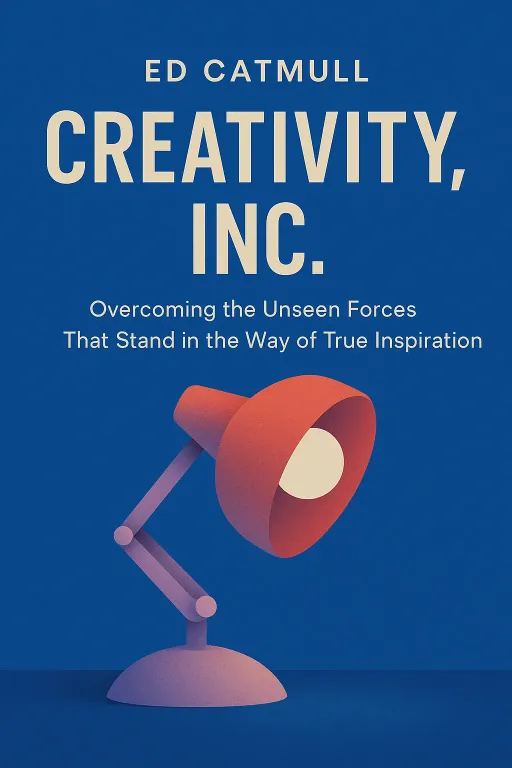
Nova: Well, today, we're peeling back the curtain on that very process, exploring how to build a culture where true creative thinking isn't just tolerated, but thrives. We're drawing insights from two absolute titans in the field. First, "Creativity, Inc." by Ed Catmull, the legendary co-founder of Pixar, who literally built a studio that redefined animation through a relentless blend of technology and artistry.
Atlas: And then we'll dive into "The Innovator's Dilemma" by the late, great Clayton M. Christensen. That book, coming from a Harvard Business School professor, fundamentally shifted how we understand why even the most successful companies can stumble and fall when new technologies emerge. It’s a foundational text for anyone wrestling with strategic foresight.
Building a Culture of Creativity and Psychological Safety
SECTION
Nova: Exactly. Let's start with Catmull. When you think of Pixar, you think of groundbreaking storytelling and animation, right? But Catmull's book isn't just about making great movies; it’s a masterclass in organizational psychology and leadership. He argues that true creativity isn't about hiring a few geniuses; it's about building a system, a culture, where everyone feels safe enough to contribute their wildest ideas and, crucially, to fail. Repeatedly.
Atlas: Wow. That's actually really inspiring. I imagine a lot of our listeners, especially those leading teams in high-stakes environments, might hear "fail repeatedly" and feel a jolt of anxiety. How do you implement that kind of radical candor and psychological safety without it feeling like a free-for-all, or worse, like criticism that stifles creativity instead of fostering it?
Nova: That's the million-dollar question, and Catmull addresses it head-on. Pixar developed something called the "Braintrust." It's a group of experienced directors and storytellers who meet regularly to review films in progress. The rule is simple: they offer brutally honest feedback, but they don't offer solutions. Their job is to identify problems, not fix them. This creates a space for candor ego. The director receiving the feedback still owns the film and the ultimate creative decisions. It’s about separating the idea from the person.
Atlas: Okay, but how does that translate to a less artistic, perhaps more corporate, setting? I mean, in a typical business, when you're reviewing a project, there's often an expectation to not just point out flaws but to propose fixes, to be prescriptive. How do you cultivate that Pixar-like "candor without ownership" in a diverse team where everyone has a different role?
Nova: It starts with leadership modeling it. Catmull talks about leaders admitting their own mistakes, creating an environment where vulnerability is seen as a strength. It's about proactive problem-solving, not reactive blame. For instance, if a project goes off the rails, instead of asking "Whose fault is this?", the question becomes "What did we learn from this, and how can we design our systems to prevent it next time?" It’s a subtle but profound shift from individual culpability to systemic improvement. This is where psychological safety truly lives: the belief that you won't be punished or humiliated for speaking up with ideas, questions, concerns, or mistakes.
Atlas: That makes sense. It's almost like you're creating a feedback loop for the entire organizational machine, not just the individuals. So, the "no blame" culture isn't about avoiding accountability, it's about channeling that energy into learning and improving the process itself. That's a powerful reframing for anyone trying to build an impactful, future-focused team.
Navigating Disruptive Innovation and Future Possibilities
SECTION
Atlas: That internal culture piece is absolutely vital for innovation. But what happens when your perfectly creative culture, your thriving Braintrust, is suddenly blindsided by something completely new from outside? Because even the most innovative companies can struggle when the entire market shifts.
Nova: Exactly. That's where Clayton Christensen's "The Innovator's Dilemma" comes in, and it's a sobering but essential read. Christensen explains why even well-managed, successful companies, doing everything "right" by conventional metrics, can fail when faced with what he calls "disruptive innovation."
Atlas: So you're saying being "too good" at what you do can actually be your biggest weakness? That sounds a bit out there, isn't it? What's the core idea here?
Nova: It's a fascinating paradox. Disruptive innovations typically start as products or services that are simpler, cheaper, and often, initially, inferior to what established market leaders offer. They target niche, underserved markets or create entirely new ones. Think about how personal computers, initially dismissed as toys, eventually disrupted mainframe computing. Or how mini-mills, producing lower-quality steel for specific applications, eventually challenged integrated steel mills. Established companies, focused on their most profitable customers and improving their existing products, tend to ignore these nascent threats because they don't fit their current business model or financial metrics.
Atlas: That makes me wonder, how do you convince a board, or even your own leadership team, to invest significant resources in something that looks unprofitable by current metrics? That's going to resonate with anyone who struggles with getting buy-in for long-term, speculative projects. It seems incredibly risky to abandon what's working.
Nova: It absolutely is. Christensen's key insight is that the very things that make successful companies great – their focus on customer needs, their efficient processes, their financial models – become their blind spots. They're excellent at innovation, making existing products better. But they struggle with innovation because it often requires a completely different business model, different customers, and different performance metrics. The solution often involves creating separate, autonomous organizational units to nurture these disruptive ventures, protecting them from the gravitational pull of the core business. It requires a willingness to, in effect, cannibalize your own future.
Atlas: So basically you're saying, to truly innovate for the future, you might have to be willing to break your own stuff first? That’s a tough pill to swallow for many. How do leaders even begin to identify these disruptive forces early on, when they're still small and seemingly insignificant?
Nova: It’s about actively looking for those initially unprofitable or niche markets, understanding emerging technologies, and developing a strategic foresight that goes beyond current customer demands. It requires a different kind of listening. Instead of just hearing what your best customers want, you need to listen for what future customers need, even if they don't know it yet. It’s about placing small bets, experimenting, and being prepared to pivot quickly. It’s a constant dance between optimizing the present and inventing the future.
Synthesis & Takeaways
SECTION
Nova: So, bringing these two powerful ideas together, we see that innovation isn't just about having the flashiest new product. It's a two-pronged approach: internally, fostering a culture of psychological safety, candor, and learning from failure, as Catmull teaches us. And externally, it's about understanding the forces of disruptive innovation, as Christensen articulates, so you're not blindsided by the future, but actively shaping it.
Atlas: That’s a great way to put it. It’s about building the internal capacity to innovate, and then having the strategic wisdom to know to direct that innovation. So, this isn't just about big, abstract strategies; it's about doing something as simple as genuinely learning from every project, even the ones that don't quite hit the mark, right? That tiny step you mentioned earlier, scheduling a post-mortem meeting to focus on lessons learned, not blame, that's exactly what you're talking about, isn't it?
Nova: Exactly! That tiny step, the post-mortem, is a micro-version of both. It's creating a safe space for candor and it's a data-gathering exercise to identify what worked, what didn't, and what future possibilities or shifts might be emerging from your own efforts. It’s about seeing every outcome as valuable data for growth, not just a success or a failure.
Atlas: Honestly, that’s actually really inspiring. It reframes the entire journey of leadership and innovation from a series of high-pressure gambles into a continuous process of learning, adapting, and building. It's less about being a lone genius and more about being a thoughtful architect of an adaptive system.
Nova: Precisely. And that's a system you can start building, or refining, today. We hope these insights spark some fresh thinking for you and your teams.
Atlas: Thank you for joining us on this journey to unlock innovation.
Nova: This is Aibrary. Congratulations on your growth!