Unlocking Creative Flow: The Path to Consistent Innovation
Golden Hook & Introduction
SECTION
Nova: You know, Atlas, there’s this pervasive myth out there, this idea that creativity is like lightning—it strikes randomly, unpredictably, and only a chosen few are ever touched by its brilliant, sporadic flash.
Atlas: Oh, I totally know that feeling. Like you're just waiting for the muse to show up, sipping a latte, hoping inspiration decides to grace you with its presence. But usually, it just ends up being a lukewarm latte and a blank page.
Nova: Exactly! That’s the myth we’re here to dismantle today. Because the cold, hard fact is, creativity isn't a random spark; it's a learnable process. Consistent innovation comes from intentional practices and environments. And we're diving into two absolute masters who prove this beyond a shadow of a doubt.
Atlas: Okay, so you’re saying we can actually creativity? Not just hope for it? That sounds almost too good to be true for anyone who’s ever stared down a deadline with a completely empty well.
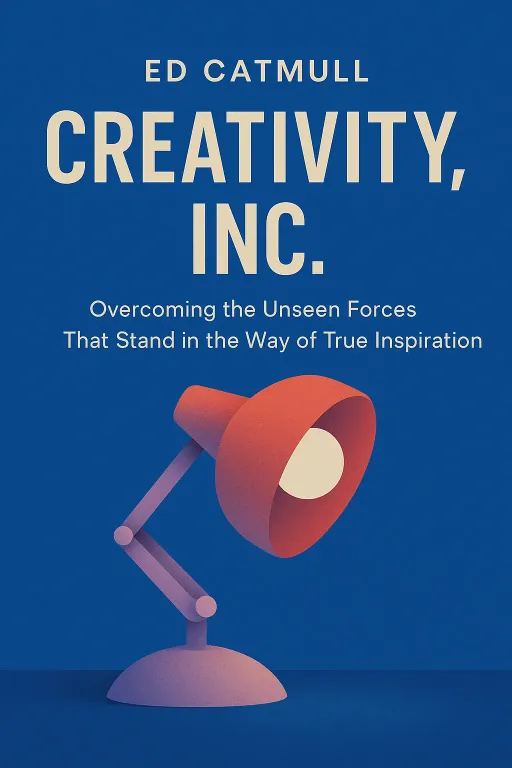
Nova: Absolutely. We’re looking at two incredible guides: first, "Creativity, Inc." by Ed Catmull, the co-founder of Pixar. This is a man who didn't just build a groundbreaking animation studio, he helped craft a culture where every single film consistently redefined what was possible. His insights aren't about individual genius; they're about building an entire innovative ecosystem.
Atlas: And then there’s Rick Rubin. The legendary music producer, from Johnny Cash to the Red Hot Chili Peppers. His book, "The Creative Act: A Way of Being," sounds like it approaches creativity from an entirely different angle. How do these two seemingly disparate worlds connect?
Nova: They are two sides of the same profoundly important coin, Atlas. Catmull shows us the external structures that support creativity, while Rubin guides us to nurture the internal mindset needed to access it consistently. It’s about creating both the fertile ground and the vibrant seed. And to truly unlock consistent creative flow, you need both. Let's start with Catmull and how Pixar built their innovation machine.
Cultivating Creative Environments: The Pixar Model
SECTION
Nova: So, imagine a place where everyone, from the most junior animator to the senior director, feels safe enough to tell the emperor he has no clothes. That’s the essence of what Ed Catmull engineered at Pixar. He understood that fear of failure is the silent killer of innovation.
Atlas: That’s going to resonate with anyone who’s ever been in a meeting and held back a half-formed idea because they were afraid of looking silly, or worse, being shot down. So, how did they actually make that happen? It sounds like corporate utopia.
Nova: It’s not utopia; it’s intentional design. Catmull introduced something called the "Braintrust." This isn't just a feedback session; it’s a group of experienced filmmakers who meet periodically to review films in progress, often when they’re still in their "ugly baby" phase.
Atlas: The "ugly baby" phase? I love that. So, it's not a polished presentation; it's seeing the messy, vulnerable beginnings.
Nova: Exactly. And the Braintrust’s rule is absolute candor, delivered without personal attack. They critique the film, not the filmmaker. It’s about making the film better, even if it means tearing it down and rebuilding. But the key is, the director of the film is never obligated to take the Braintrust's advice. They just have to listen.
Atlas: Wait, so they get brutal, honest feedback, but they don't to implement it? That sounds counter-intuitive. Doesn't that undermine the whole point?
Nova: Not at all. It’s brilliant, actually. It removes the ego. If you’re forced to accept feedback, it can feel like a personal attack or a power play. But if you have the autonomy to choose, then the feedback becomes a gift—a different perspective you can weigh. It fosters trust and psychological safety because you know your vision isn't being hijacked. It’s a collective ownership of the problem, not an individual’s failure.
Atlas: So it’s less about the hierarchy and more about a shared goal, where everyone is truly invested in the success, not just their own. But how does that translate for someone who isn't working at a multi-billion dollar animation studio? For our listeners managing small teams or even just trying to be more creative in their own work, how do you build that kind of "safe space" without a Braintrust?
Nova: It starts with the principles, Atlas. One, explicitly state that candid feedback is welcome, and that the goal is improvement, not criticism. Two, practice genuine humility—be open to the idea that your initial vision isn't perfect. Three, create a culture where people feel comfortable showing their "ugly babies"—their rough drafts, their half-baked ideas—without fear of judgment. You can do this by simply asking for "thoughts on this messy draft" rather than "feedback on my finished product." It’s about lowering the stakes.
Atlas: That makes sense. It's about shifting the language and the expectation. So, instead of a formal Braintrust, it could be as simple as having a trusted colleague you share those early, vulnerable ideas with, knowing they’ll give you honest but constructive input without making you feel stupid.
The Innate Creative Act: Rick Rubin's Philosophy
SECTION
Nova: Precisely. And that naturally leads us to the second key idea, which often acts as a counterpoint to what we just discussed: the internal, personal side of creativity, as explored by Rick Rubin. If Catmull shows us how to build the container, Rubin teaches us how to fill it from within.
Atlas: Alright, I'm intrigued. "The Creative Act: A Way of Being." That title alone suggests something far beyond just "how-to" tips. When you say creativity is something you, not just something you, that sounds a bit… ethereal, for people looking for practical steps.
Nova: It can sound that way, but Rubin grounds it in profound simplicity. He believes that creativity is a fundamental aspect of being human, a connection to a universal source that we all possess. His work is about reconnecting with that innate wellspring. It’s less about generating ideas and more about for them, the world, and cultivating a deep sense of presence.
Atlas: So, for someone who’s constantly trying to creative output, how do you actually 'reconnect' with this without just sitting around meditating all day? I mean, deadlines exist, right?
Nova: Absolutely. It’s not about passive waiting. It’s about intentional practices that sharpen your perception. Rubin talks about becoming a "vessel" for ideas. This means cultivating curiosity, being present in your surroundings, noticing patterns, listening deeply to conversations, and even just taking walks without your phone. It’s about making space for the subtle whispers of inspiration.
Atlas: You know, that makes me think of his work with Johnny Cash on the "American Recordings." Cash was already a legend, but Rubin helped him strip away all the artifice and connect with something raw and deeply authentic. Was that part of this 'reconnecting with the innate source' idea?
Nova: That’s a perfect example, Atlas. Rubin didn't tell Cash what songs to sing or how to sing them. He created an environment of trust and quiet, allowing Cash to tap into his deepest emotional truth. He famously just sat on the floor, listening, offering minimal words, but creating a profound sense of presence that allowed Cash to access a vulnerability and power that redefined his career. It wasn't about imposing a vision; it was about revealing one that was already there.
Atlas: Wow. That’s actually really inspiring. So, it's about shifting our perception, almost like a cognitive science experiment on ourselves—tuning into a different frequency. We’re so often focused on that we forget the importance of and.
Synthesis & Takeaways
SECTION
Nova: Exactly. And that’s where the magic happens when you bring these two perspectives together. Catmull gives us the external scaffolding—the culture, the systems, the psychological safety—that allows ideas to be born and developed without fear. Rubin reminds us that those ideas are always there, waiting to be discovered, if we just learn how to listen and be present enough to perceive them.
Atlas: So, it’s not either/or; it’s a powerful combination. It’s building the stage learning how to perform from your deepest self. For our listeners, especially those who are deep thinkers and curious explorers, this isn't just theory anymore. This is a profound shift in how we approach our own creative potential.
Nova: It truly is. So, if we’ve got these two powerful forces—the engineered culture and the innate being—what’s the one tiny step we can take this week to actually put this into practice? Something concrete, tangible, that aligns with both Catmull’s and Rubin’s philosophies?
Atlas: I think it goes back to that "ugly baby" idea, and the vulnerability Rubin encourages.
Nova: Absolutely. Your tiny step this week is to identify one fear holding back your creative ideas. Then, take a leap: share a raw, unpolished thought—an "ugly baby"—with a trusted colleague or friend. It’s about embracing that vulnerability, testing the psychological safety you’re building around yourself, and trusting that your innate creative source is there, waiting to be heard, even if it’s still a whisper. That act of sharing is an act of courage, and it’s the first step to consistent innovation.
Atlas: That's a powerful and actionable challenge. It’s about leaning into the discomfort to unlock the potential. I love that.
Nova: This is Aibrary. Congratulations on your growth!