The Photography Paradox: How Limits Spark Infinite Creativity
Golden Hook & Introduction
SECTION
Nova: What if everything you’ve been told about creative freedom is actually holding you back? That blank page, that endless possibility – what if it's the very thing stifling your genius?
Atlas: Whoa, hold on. That's a pretty bold claim, Nova. Most artists I know dream of unlimited resources and no rules. Are you saying that's… bad?
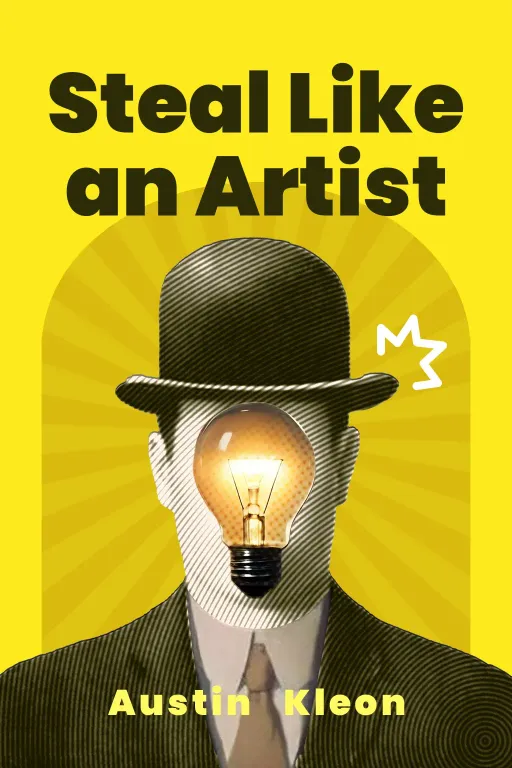
Nova: It’s not necessarily "bad," Atlas, but it's often a trap. Today, we're diving into what we call "The Photography Paradox," a concept that challenges our assumptions about creativity. While there isn't one singular book by that title, we’re drawing on the profound wisdom of creative giants. Think of Austin Kleon, the writer and artist who famously developed his "Steal Like An Artist" philosophy from his own struggle with originality, realizing that all creative work builds on what came before. And then there's Ed Catmull, co-founder of Pixar, who brought a deep computer science background to animation, pushing technological and narrative boundaries under strict production and storytelling constraints.
Atlas: So we're talking about ideas from people who actually the work, not just theorize about it. I like that. It goes against the conventional wisdom that you just need to "think outside the box" or "be totally original."
Nova: Exactly. It's about shifting our perspective to understand that sometimes, the most liberating thing you can do for your creativity is to embrace a boundary.
The Paralysis of Infinite Possibilities
SECTION
Nova: Too much freedom, especially in the creative realm, can be genuinely overwhelming. Think about it: when you have literally infinite possibilities, where do you even start? This is the paradox of choice, applied to art. You're staring at a blank canvas, or an empty document, or an entire world of photographic subjects, and suddenly, you can't move.
Atlas: I know that feeling! It’s like when you open Netflix and there are so many options, you just end up scrolling for an hour and watching nothing. Or you get a new camera with a thousand settings, and you just stick to auto mode.
Nova: That’s a perfect analogy, Atlas. That overwhelming feeling isn't a lack of talent or passion; it’s decision fatigue. For our listeners who are creative crafters, always looking for tangible growth and dedicated to their pursuits, this can be incredibly frustrating. You to create, you have the tools, maybe even the time, but the sheer vastness of choice paralyzes you. We often believe true originality means building something from scratch, in a vacuum, with no influence. But that belief can be a creative desert.
Atlas: So you're saying that overwhelming feeling isn't a personal failing, but a common psychological hurdle? That's actually kind of freeing to hear. But what does that look like in practice for someone who wants to create? Like, for a photographer, if they have all the lenses, all the locations, all the models… how does that become a problem?
Nova: It becomes a problem because without a specific question to answer, or a specific problem to solve, or a specific constraint to work within, every choice feels arbitrary. Imagine a photographer with an incredible array of gear, but no project, no theme, no particular vision. They might drive around aimlessly, taking a few snapshots here and there, but never truly delving deep into a cohesive body of work. The problem isn't their resources; it's a lack of focused direction. The pressure to come up with something entirely novel from nothing can be crippling.
Atlas: That makes so much sense. It’s like being told to build a house, but without any blueprints or even a plot of land. You know you build, but you don't know or.
Embracing Constraints to Spark Innovation
SECTION
Nova: Precisely. So, how do we break free from this creative quicksand? The answer, surprisingly, is to limits. Not just accept them, but actively seek them out.
Atlas: But isn't a limit, by definition,? How does that spark anything? My brain immediately goes to feeling trapped, not inspired.
Nova: That's the paradox! Let's look at Austin Kleon’s philosophy, beautifully captured in "Steal Like An Artist." He argues that nothing is truly original. Every new idea is a remix or a combination of existing ideas. "Stealing" isn't about plagiarism; it's about embracing influence, collecting ideas you love, and then transforming them through your own unique lens. It's giving yourself a starting point, a framework.
Atlas: So it's like having a starting kit, instead of having to invent every single tool from scratch? I can see that. For a photographer, what would they "steal"? Is it a specific filter, or a type of shot?
Nova: It could be anything! A photographer might "steal" a lighting technique from a Dutch master, adapt a composition style from a street photographer they admire, or even take a specific thematic approach from a documentary filmmaker. The key is to consciously engage with existing art, break it down, and then rebuild it with your own voice. It gives you a specific problem to solve: "How can I take this element I love and make it?"
Atlas: That's a powerful way to reframe it. And you mentioned Ed Catmull and Pixar. They’re known for being incredibly innovative. How do limits play into their world of seemingly boundless imagination?
Nova: Pixar is a masterclass in creativity constraints. Catmull shares how strict creative and technical limitations often led to their most innovative solutions. Think about the early days of computer animation. They didn't have the sophisticated software and processing power we have today. Those technical limits them to focus on what truly mattered: compelling characters and emotionally resonant stories. They couldn’t rely on hyper-realistic visuals; they had to make you.
Atlas: Wow, so they weren't just making it up as they went. The boundaries actually forced them to be more ingenious within those walls? Can you give a specific Pixar example?
Nova: Absolutely. Take. The early animation technology meant they couldn't realistically animate human skin or hair. So, what did they do? They created a world where the main characters were toys and a human child. This constraint wasn't a hindrance; it was a creative catalyst that shaped the entire narrative and visual style. It pushed them to develop ingenious ways to convey emotion and character through simpler forms, leading to a storytelling depth that resonated globally. The limits didn't stifle their imagination; they gave it a powerful, focused direction.
Synthesis & Takeaways
SECTION
Nova: So, what we see from both Kleon and Catmull, and indeed across countless creative fields, is this profound truth: true originality often emerges not from a blank slate, but from thoughtfully engaging with and transforming existing ideas and frameworks, and by intentionally working within boundaries.
Atlas: That’s a really profound insight. For our listeners who are curious explorers and creative crafters, always looking for ways to grow and make things, this isn't about boxing themselves in. It’s about giving themselves a powerful launchpad, isn't it? It’s about making the creative journey less intimidating and more productive.
Nova: Precisely. Embracing constraints provides focus, sparks ingenious solutions, and dramatically reduces the overwhelming paralysis of infinite choice. It frees up your mental energy to actually rather than just contemplate. It gives you a clear path forward, making the journey of creation far more joyful and fruitful.
Atlas: I love that – transforming overwhelm into a launchpad. So, for anyone listening right now, feeling that creative block or just wanting to enhance their process, what’s one tiny step they could take today?
Nova: Here’s your tiny step: Pick one photograph you admire – it could be by a famous artist, or just one you saw online – and identify three elements you would 'steal' or adapt for your next project. It could be the lighting, the composition, the subject's expression, or even the mood. Just three things. Try it out.
Atlas: That’s incredibly practical and something anyone can try right away. It takes the pressure off "being original" and puts it on "being inventive." I love it.
Nova: It’s about finding your infinite creativity, not in endless freedom, but within thoughtful, self-imposed limits.
Atlas: What an empowering idea.
Nova: This is Aibrary. Congratulations on your growth!