The Art of Creative Constraint: Why Boundaries Fuel Breakthroughs
Golden Hook & Introduction
SECTION
Nova: We've all been told that to be truly creative, you need boundless freedom. You need an open canvas, an empty schedule, and absolutely no limits. But what if that's the biggest lie we've ever been sold?
Atlas: Oh man, Nova, that's going to hit some people right where it hurts. I mean, the whole artistic dream is often about breaking free, right? No rules, just pure expression. Are you really saying that's... a lie?
Nova: Not a lie, Atlas, but definitely a myth. Today, we're diving into "The Art of Creative Constraint: Why Boundaries Fuel Breakthroughs." And the cold, hard fact at its core is this: true creativity often doesn't come from limitless freedom. In reality, too many options can actually paralyze you.
Atlas: That makes me wonder, how does that work? I can definitely relate to the paralysis part. Staring at an empty DAW with a million possibilities can be more daunting than inspiring. But how do you go from 'overwhelmed' to 'breakthrough' by adding limits? That sounds a bit out there.
Nova: Exactly! It's counter-intuitive, isn't it? But constraints, when thoughtfully applied, become the very boundaries that push you towards original and impactful work. Think of it less like a cage, and more like a high-tension spring.
The Counter-Intuitive Power of Creative Constraint (Part 1: Steal Like an Artist)
SECTION
Atlas: A high-tension spring, I like that. So, how does this actually manifest in the real world of art and creation? Give me an example of someone who actually embraced this idea.
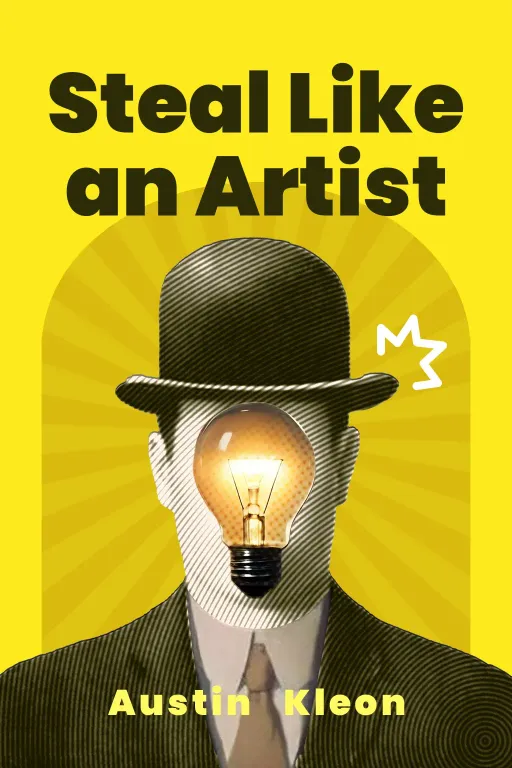
Nova: Well, let's start with a concept many artists are familiar with, but often misunderstand: "Steal Like an Artist" by Austin Kleon. Kleon argues that all creative work, fundamentally, builds on what came before. He encourages artists to embrace influence and remix existing ideas.
Atlas: Wait, so you're saying true creativity is...? That feels like it goes against the very core of being an original artist, someone who wants to create something authentic and deeply personal. Where's the soul in that?
Nova: That's a great question, and it's a common misconception. Kleon isn't advocating for plagiarism. He's saying that the world provides an endless library of existing ideas, forms, and styles. The 'constraint' here is recognizing that you're not creating in a vacuum. You're to work within or against a tradition, to mash up disparate influences, to see what happens when you combine two things that seemingly don't belong together. It's like a musical architect, taking existing sonic elements and re-configuring them into a structure no one has heard before.
Atlas: So you're building something new, but with pre-existing bricks, so to speak. That’s a perfect analogy. It’s not about copying the blueprint, but about using the materials in an entirely new way. So the constraint isn't a blank page, it's a page with influences that you then have to navigate and transform.
Nova: Precisely! That very act of navigation and transformation the creative work. The existing ideas become the boundaries that force you to innovate, to find your unique voice within that framework. It's about finding the novelty by remixing, not by inventing from absolute nothingness, which is often an impossible and paralyzing task.
The Counter-Intuitive Power of Creative Constraint (Part 2: Creativity, Inc. & Nova's Take)
SECTION
Atlas: That makes sense. It's like having a starting point, rather than an infinite void. But what about highly structured environments, like big studios? I imagine a lot of our listeners would think those are the ultimate creativity killers. How do constraints play out there?
Nova: That naturally leads us to a fascinating example from the world of animation, specifically Pixar, as detailed by Ed Catmull in "Creativity, Inc." Pixar's highly structured creative process, far from stifling creativity, actually fosters groundbreaking animation. They have incredibly specific 'rules' – like candid feedback sessions, the "Braintrust" where everyone is brutally honest, and iterative development where stories are torn down and rebuilt constantly.
Atlas: Oh man, candid feedback? Rules? Iterative development? That sounds like a corporate nightmare for someone who just wants to express their deepest emotions through art. How does that translate into soulful innovation? Isn't that just a recipe for bland, committee-approved content?
Nova: That's the brilliance of it, Atlas. These aren't arbitrary rules; they are and constraints to ensure the highest quality and most original storytelling. The constraint of the Braintrust, for example, forces creators to continuously refine their vision, to dig deeper into character motivations, to find the emotional core that resonates universally. It pushes them past their initial comfort zone. It's a disciplined approach to finding that profound connection to expression that you and many artists seek.
Atlas: So the constraint isn't about being stifled, it's about being until the authentic expression shines through. It's like having a really demanding editor for your soul. That's a great way to put it, I can see how that would be vital for innovation, ensuring that the work truly impacts people.
Nova: Exactly. And that brings us to Nova's Take on this: by consciously choosing limitations for your projects, you can transform overwhelming possibilities into a focused path for genuine artistic discovery. It’s about taking ownership of your boundaries. You're not just reacting to limits; you're designing them to serve your creative purpose.
Atlas: That makes me wonder, how does someone like me, who feels a profound connection to expression, actually those limitations without feeling like they're putting themselves in a box? I mean, my intuitive wisdom often tells me to explore everything.
Nova: And that intuitive wisdom is powerful! But sometimes, the wisest choice is to narrow the field. Imagine a sculptor with an infinite amount of clay. They might never start. But give them a specific block of marble, and suddenly the form within it begins to emerge. The constraint provides the resistance against which the art can be forged. It forces you to ask: "Given specific boundary, what's the most innovative, impactful thing I can create?" It unlocks ideas by giving your brain a specific problem to solve, rather than an abstract concept to conjure.
Synthesis & Takeaways
SECTION
Nova: So, whether it's Kleon urging us to remix pre-existing ideas or Catmull detailing Pixar's rigorous, feedback-driven process, the message is clear: intentional constraints aren't creative prisons. They are launchpads. They provide the necessary friction for true artistic discovery.
Atlas: That's actually really inspiring. It reframes the whole idea of boundaries from something restrictive to something generative. It's about finding freedom the frame, making the 'why' behind our creative choices even more crucial. So, for those of us who are ready to embrace this, what's one tiny step we can take?
Nova: For your next track, I challenge you to consciously choose one specific, unusual instrument or sound effect – something you wouldn't normally make the star of your composition – and make it the absolute focal point of your work. Build the entire piece around its unique qualities.
Atlas: Oh, I like that! So the constraint isn't just a limit, it's a creative prompt. It forces you to explore possibilities you never would have considered. That sounds like a powerful way to unlock new ideas and deepen our understanding of our own artistic process. I’m eager to see what our listeners come up with.
Nova: Absolutely! Share your experiments with us. It’s in those deliberate boundaries that we often find our greatest breakthroughs.
Atlas: Fantastic advice, Nova. This has been a truly insightful discussion.
Nova: This is Aibrary. Congratulations on your growth!