

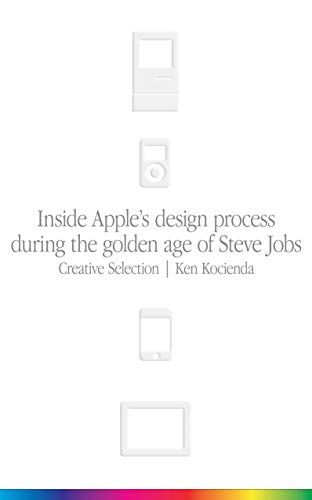
The Engineering Mindset Behind Apples Magic
Golden Hook & Introduction
SECTION
Nova: They say true genius is making the complex simple. But Apple's real secret? It's making the simple complex behind the scenes.
Atlas: Oh, so their magic is actually a meticulously crafted illusion? Sounds like a lot of work to look effortless.
Nova: Exactly! Today we're dissecting "The Engineering Mindset Behind Apple's Magic," exploring the deep principles that transform raw technology into that seamless, almost intuitive experience we all recognize.
Atlas: This isn't a book you'll find on the New York Times bestseller list, but it's a philosophy, a way of building, that has shaped one of the most influential companies on Earth for decades. It's the silent manifesto that powered Steve Jobs's vision and continues to drive innovation at Apple.
Nova: And it’s a mindset that’s far more than just sleek aesthetics. It starts with what we call "Invisible Engineering" – the paradox of simplicity. That's our first dive today.
Atlas: Invisible Engineering. I’m already intrigued. For anyone navigating complex projects, the idea of "invisible" anything usually means a hidden problem. How does Apple flip that on its head?
Nova: Well, picture this: when you pick up an Apple device, it just. It feels intuitive, clean, almost elemental. You don't see the millions of lines of code, the custom-designed chips, the intricate manufacturing processes. All that complexity is deliberately, painstakingly hidden.
Atlas: So, they're not just simplifying the interface, they're simplifying the by abstracting away the entire messy reality of technology.
Nova: Precisely. It’s a design philosophy that insists on removing friction wherever possible. Think about the original iPod. Before it, portable music players were clunky, with confusing menus, file transfers that felt like a chore, and often required a specific software just to get your music on.
Atlas: I remember those days. It felt like you needed an IT degree just to load an album.
Nova: Right! And then came the iPod. Thousands of songs in your pocket. How did you navigate them? With a single, elegant scroll wheel and a few buttons. No visible file system, no complex settings. You just scrolled and clicked. That simple.
Atlas: It was revolutionary. Everyone just it.
Nova: But consider the engineering behind that "getting it." To enable that seamless experience, they had to build robust software that automatically managed your music library, converted formats, synced flawlessly with iTunes – which itself was a marvel of software integration. The hardware had to be incredibly efficient to manage a vast library on a tiny device, with a battery that lasted. They poured immense computational power and design genius into making that single scroll wheel feel like magic.
Atlas: Hold on, so they're deliberately making things for themselves behind the scenes – adding layers of sophisticated engineering – just so it's for us, the end-user? That feels counterintuitive for efficient product development. You’d think the goal is to reduce complexity everywhere.
Nova: It's a redefinition of efficiency, Atlas. Their efficiency isn't measured by internal engineering effort, but by the effort. They believe the highest form of sophistication is simplicity. It means taking on the burden of complexity so the user doesn't have to. It's about designing a user experience that allows people to navigate complexity with clear focus, because the tool itself isn't adding to the cognitive load.
Atlas: That’s a powerful distinction. So, for someone trying to structure their own workflow or optimize daily efforts, the lesson isn't to complex tools, but to ensure the tools you to yourself or your team are as frictionless as possible, even if that means more setup work initially.
Nova: Absolutely. It's about becoming your own "invisible engineer." Identify the core problem, then design the simplest possible interface or process for to interact with it, even if the underlying mechanisms you build to support that simplicity are robust and intricate. It frees up mental bandwidth.
Ecosystem Thinking - The Power of Seamless Integration
SECTION
Nova: And that dedication to a singular, effortless experience extends beyond individual products. It’s what leads us to their second great engineering feat: the ecosystem.
Atlas: Oh, the dreaded "walled garden" that everyone loves to hate, but secretly can't live without.
Nova: Exactly! It's both a critique and a massive differentiator. Apple's "magic" isn't just in an iPhone or a Mac; it's in how they all work together. The seamless handoff between devices, the instant pairing of AirPods, the shared clipboard, the photos that appear on your Mac moments after you take them on your phone.
Atlas: That's the real mind-meld, isn't it? It feels like one continuous, fluid experience, rather than a collection of separate gadgets.
Nova: It does. And that's not accidental. It requires a holistic engineering mindset. While other companies might make great individual products, integrating them across different operating systems, different hardware components, from different manufacturers, can be a nightmare of compatibility issues. Apple controls the entire stack – hardware, software, and even many of the services.
Atlas: That makes sense. If you build everything yourself, you can make sure it all talks to each other perfectly. But can you give me a tangible example of the that makes that feel so magical?
Nova: Let's take AirDrop. The ability to instantly share a photo or document between your iPhone and your Mac, wirelessly, with just a few taps. It feels like magic, right? But behind that, there's incredibly sophisticated engineering. Your devices need to discover each other reliably, establish a secure peer-to-peer connection, transfer data at high speeds, and do all of this without you needing to manually connect to Wi-Fi networks or Bluetooth devices.
Atlas: So, it's not just "Bluetooth on steroids." It’s a complex dance of network protocols, security encryption, and device recognition happening in milliseconds.
Nova: Precisely. They've engineered trust and seamless communication between devices. They've built a robust, underlying architecture that anticipates your needs and makes the connection invisible. This level of tight integration is what allows them to build features like Handoff, where you can start writing an email on your iPhone and finish it on your Mac, picking up exactly where you left off.
Atlas: It's like they've built a digital extension of our own minds, anticipating our next move. But for someone trying to make a tangible impact, isn't that "walled garden" approach limiting innovation from outside? It feels like it could stifle broader collaboration or diverse solutions.
Nova: That's a valid point, and it's a common criticism. However, for Apple, the trade-off is control, which directly translates to consistency and quality. By tightly controlling the ecosystem, they can guarantee a level of performance, security, and integration that's incredibly difficult to achieve in an open system. For the user, it reduces cognitive load and troubleshooting, ultimately leading to greater mental clarity and less frustration.
Atlas: So, the "magic" of integration comes at the cost of some openness. Is there a lesson here for balancing focus with broader collaboration in our own work? It sounds like strategic integration, even if it means some deliberate boundaries, can lead to superior outcomes and reduce decision fatigue.
Nova: It absolutely does. For a focused innovator, it means understanding that sometimes, a curated, integrated set of tools or a tightly defined process can actually lead to effective and impactful work than a sprawling, disconnected collection. It’s about building your own personal or team ecosystem where everything works in harmony, allowing you to focus on the work itself, not the friction between your tools.
Relentless Iteration & Uncompromising Standards
SECTION
Nova: And none of this "invisible magic" or seamless integration would be possible without a culture of relentless pursuit – an almost obsessive dedication to quality and iteration.
Atlas: The stories of Steve Jobs demanding perfection even for the internal circuit boards that no one would ever see are legendary. That sounds like a fast track to burnout for anyone trying to achieve mastery.
Nova: It does, but it speaks to a profound engineering mindset: every detail matters, because every detail contributes to the overall feeling of quality and the user's perception of "magic." Jony Ive, their former chief design officer, famously obsessed over the tactile feel of materials, the curvature of a corner, the click of a button.
Atlas: So, it’s not just about functionality, but about the of interacting with the physical object itself.
Nova: Exactly. Consider the unibody MacBook design. Before it, laptops were assembled from multiple pieces of metal and plastic. Apple decided to machine the entire enclosure from a single block of aluminum. This wasn't just an aesthetic choice; it made the laptop lighter, stronger, and allowed for more precise component placement.
Atlas: That sounds like an enormous engineering challenge. I can imagine the headaches.
Nova: It was. They had to invent new manufacturing techniques, develop custom machinery, and refine the process through literally thousands of prototypes. They went through countless iterations, rejecting designs that were almost perfect, just to get to a point where the hinge felt, where the edges were smooth, where the chassis felt incredibly solid. All for details that many users might never consciously articulate, but they the difference.
Atlas: Wow, that sounds exhausting. As someone who strives for mastery, I get the drive for perfection, but how do you balance that relentless push with actual well-being and avoiding burnout? Where's the line between mastery and obsession, especially when you're protecting your focused time?
Nova: That's the critical distinction. It’s not about iterating for iteration's sake, or obsessing over single thing. It’s about channeling that intense focus effectively onto the and the. Apple’s obsession was always rooted in creating the best possible product for the user, not just pushing technology for its own sake. It’s a mindful pursuit of excellence, where you strategically apply that relentless drive to the areas that will make the most tangible impact.
Atlas: So, it’s about discerning to be uncompromising, and not getting lost in endless, unproductive perfectionism. That's a key insight for anyone trying to sustain their drive and achieve mastery without sacrificing mental clarity. It’s about purposeful refinement.
Nova: Indeed. It's about understanding that the journey of learning and improvement the process. It's not about achieving a static state of perfection, but about the continuous, focused effort to refine and enhance, always with the end-user – or in your case, your ultimate goal – in mind.
Synthesis & Takeaways
SECTION
Nova: Ultimately, Apple's "magic" isn't accidental. It's the culmination of a deeply intentional engineering mindset that prioritizes the human experience above all else. It's about abstracting away the digital noise so we can focus on what truly matters.
Atlas: And I think the real takeaway for our listeners, the pragmatic explorers and mindful achievers, is that this isn't just about building iPhones. It's about how we approach problem or project. How can we simplify the complex for others or for our future selves? How can we integrate our efforts and tools more seamlessly to create a cohesive workflow? And how can we apply focused, relentless iteration to achieve true mastery in our own lives without burning out, by knowing to be uncompromising?
Nova: Exactly. It’s about designing for delight, even in your daily routine. So, perhaps next time you pick up a device, or even tackle a complex project at work, ask yourself: 'Where can I apply this invisible engineering mindset?'
Atlas: What's one thing you can make effortlessly simple for someone else today, or for your future self, even if it means a little more complexity behind the scenes for you?
Nova: Think about it. We’d love to hear your thoughts on this episode and how these principles resonate with your own journey of mastery. You can find us on social media and share your insights.
Atlas: This is Aibrary. Congratulations on your growth!