

Old Business Models are a Trap: Why You Need a Creator-First Approach
Golden Hook & Introduction
SECTION
Nova: What if I told you that 'starving artist' isn't just a romantic tragedy, or some inevitable rite of passage, but a direct consequence of outdated business models specifically designed to keep creators perpetually struggling? It's not about a lack of talent; it's about the system itself.
Atlas: Whoa, Nova. That's a bold claim. I mean, I imagine a lot of our listeners, especially those looking to empower independent artists, probably feel that creative life is just inherently tough. That the grind is part of the glory, even.
Nova: Exactly, Atlas! And that's precisely the myth that the ideas presented in this groundbreaking framework, which we're calling "Old Business Models are a Trap: Why You Need a Creator-First Approach," aim to dismantle. It challenges the very foundations of how creative work is valued, arguing that true empowerment comes from systems built the artist, not just their output. It's a wake-up call, really, to the systemic flaws that perpetuate this struggle.
Atlas: I can see how that would resonate deeply with anyone who’s trying to reshape equitable revenue streams or build new business models. But how does this framework actually help? How do we move beyond just identifying the problem to truly empowering creators?
The 'Nobody Knows' Dilemma in Creative Industries
SECTION
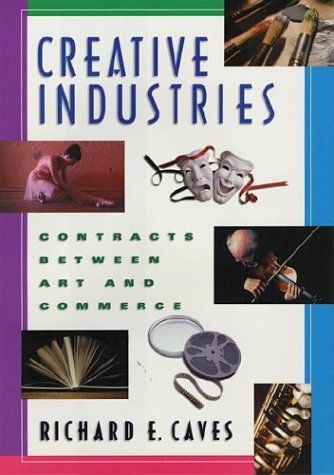
Nova: Well, it starts by understanding one of the core tensions in creative fields, what economist Richard Caves brilliantly termed the 'nobody knows' dilemma in his seminal work, "Creative Industries." It's this fascinating paradox: unlike manufacturing widgets, where you can predict demand with some accuracy, nobody truly knows if a new song, a painting, or a film will be a hit.
Atlas: I see. So, it’s not like making a thousand identical cars, where you know pretty much what you're getting. With art, it’s a total gamble.
Nova: Precisely. And this inherent unpredictability, this 'nobody knows' factor, has massive implications for how risks and rewards are distributed. In traditional models, who do you think bears most of that unpredictable risk?
Atlas: My gut says the artist. They're the ones pouring their life into it, often with no guarantee of income.
Nova: Exactly! Imagine a musician, pouring their heart and soul, and every penny they have, into recording an album. They fund the studio time, the mixing, the mastering, the artwork. They promote it themselves, hoping it catches fire. But without the backing of a large label or a robust, artist-centric ecosystem, it's a monumental struggle. They give away their rights, often for a pittance, just for a to be heard.
Atlas: That's rough. I mean, we've all heard stories of bands that were critically acclaimed but never broke through because they just couldn't get the distribution or the marketing. It’s like their art is incredible, but the system isn't built to find it.
Nova: It’s a classic example of how traditional models exploit that uncertainty. The gatekeepers—the labels, the publishers, the studios—they often offer advances that seem like a lifeline, but come with strings attached: ownership of masters, unfavorable royalty splits, and a take-it-or-leave-it attitude. Because 'nobody knows' if it'll be a hit, they assume all the risk is on their side, even though the artist is the one truly creating the value.
Atlas: But wait, isn't some level of risk inherent in any creative endeavor? How do you mitigate that without stifling innovation, without turning art into a predictable product?
Nova: That's the million-dollar question, and it's where the 'creator-first' approach shines. It's not about eliminating risk entirely, but about it fairly and transparently. Think about models where artists retain ownership of their work, where revenue splits are equitable, or where direct-to-fan platforms allow them to connect with and monetize their audience without predatory intermediaries. It's about building systems that acknowledge the 'nobody knows' dilemma but don't use it as an excuse for exploitation.
Atlas: So, it's about changing the rules of the game so that the artist isn't always holding the short straw when it comes to unpredictability. That makes a lot of sense, especially for listeners who want to build more equitable business models.
Balancing Economic and Cultural Value for Artists
SECTION
Nova: And this 'nobody knows' problem is deeply intertwined with another fundamental tension, which naturally leads us to our second key idea: how we truly value art itself. David Throsby, in "The Business of Culture," outlines the dual nature of cultural goods. They have an economic value, yes, but also a profound cultural value.
Atlas: So, it's not just about ticket sales, then? What about the intrinsic meaning, the emotional impact, the way art shapes our society?
Nova: Exactly! A painting isn't just canvas and paint; it's an expression, a commentary, a piece of history. A song isn't just sound waves; it's a shared experience, a memory, a cultural touchstone. The problem arises when business models only acknowledge and monetize the economic value, completely sidelining the cultural one.
Atlas: Oh, I see. So if a model only cares about how much money something makes, it ignores all the other reasons why art is important. That sounds rough for anyone who cares about legacy and lifting up others through art.
Nova: It is. Consider a visual artist whose work explores critical social issues, perhaps addressing climate change or advocating for marginalized communities. Their art achieves critical acclaim, sparks conversations, and even influences policy – immense cultural value. But if that work doesn't fetch high prices in a gallery or sell merchandise, they struggle to make a living. The system, in essence, tells them their profound impact isn't 'valuable' enough.
Atlas: That's kind of heartbreaking. It sounds like we're asking artists to choose between feeding themselves and feeding their soul. How can a new model possibly reconcile that? How do you put a price on cultural impact?
Nova: That's the genius of a creator-first approach. It integrates both. For instance, patronage models, subscription services, or even crowdfunding allow fans and patrons to support the and, not just their latest 'product.' It allows the artist to assign value to their cultural impact, knowing that their audience resonates with it.
Atlas: So, it’s about creating mechanisms where the audience can directly support the artist for the very cultural richness they bring, not just their commercial output. That makes me wonder, how does that shift the power dynamic for creators?
Nova: It's transformative! It means artists aren't forced to compromise their artistic integrity just to pay rent. They can pursue 'art for art's sake' not as a luxury, but as a sustainable path, because the audience is buying into their entire creative journey and impact. This balance is absolutely key to sustainable artist empowerment and truly allowing them to thrive.
Synthesis & Takeaways
SECTION
Nova: So, when we put these two ideas together—the 'nobody knows' dilemma and the dual economic and cultural value of art—we start to see the bigger picture. True artist empowerment isn't just about giving them more tools; it's about fundamentally redesigning the economic scaffolding around them. It's understanding these foundational tensions that helps us build resilient, artist-centric business models.
Atlas: That's actually really inspiring. For those of us who possess a visionary spirit and want to reshape the industry for good, it's about fundamentally rethinking the game, not just playing it better within the existing, flawed rules. It's about valuing the artist as a whole, not just their output.
Nova: Exactly. And the tiny step we can all take, even today, is to identify one current revenue stream in a creative field—maybe it's a streaming platform, a gallery commission, or a licensing deal—and brainstorm three ways to make it more artist-centric. Even small shifts can create ripples.
Atlas: That's a great action item. I imagine a lot of our listeners who are driven by impact and care about legacy will really appreciate that concrete step. So, what are your three ways to make that revenue stream more artist-centric? Share your ideas, because reshaping this industry starts with these kinds of conversations.
Nova: This is Aibrary. Congratulations on your growth!