

The Hidden Cost of Growth: Why You Need to Master Sustainable Systems
Golden Hook & Introduction
SECTION
Nova: What if everything you thought you knew about sustainability was actually holding us back? What if 'less bad' is still just... bad?
Atlas: Hold on, you're telling me all those efforts to reduce, reuse, and recycle, which we've been told are the gold standard, might actually be... insufficient? That feels like a punch to the gut for anyone trying to do their part.
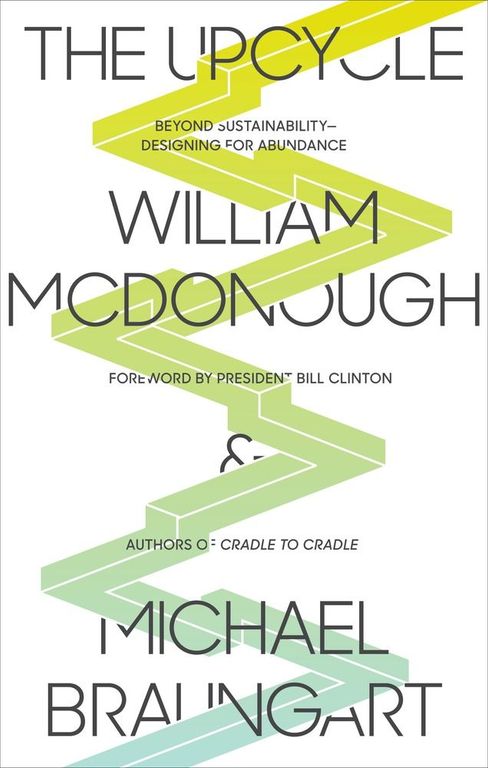
Nova: It’s a radical thought, isn't it? But that's exactly the provocative, game-changing premise we're unpacking today, drawn from the brilliant minds of William McDonough and Michael Braungart, particularly in their seminal works, "The Upcycle" and "Cradle to Cradle."
Atlas: Oh, I love those books. What's fascinating about those authors is their background – McDonough, a renowned architect, and Braungart, a chemist. They didn't just write about environmentalism; they literally brought together these seemingly disparate fields to forge a completely new vision for design.
Nova: Exactly! They weren't just environmentalists; they were literally building and formulating the future, which is why their ideas resonated so profoundly and are still pushing the boundaries of what we understand as sustainable development. They make you question the very foundation of how we build and create.
Atlas: That makes me wonder, if "less bad" isn't good enough, what's the alternative? What's the "more good" look like?
The Paradigm Shift – From 'Less Bad' to 'More Good'
SECTION
Nova: That’s the core of it, Atlas. This shift begins with recognizing what they call "The Blind Spot." We're so focused on growth metrics, on efficiency, on reducing our negative footprint, that we often ignore the deeper systemic health. It’s like a doctor saying, "Well, the patient is still breathing, so we're good," even if they're hooked up to a thousand machines.
Atlas: Wait, isn't "less bad" good enough? For strategic builders and leaders, isn't reducing waste and emissions already a huge win? That takes immense effort and strategic planning.
Nova: It absolutely is a win, in the traditional sense. But McDonough and Braungart argue it’s just mitigating damage. It’s like trying to make a toxic product slightly less toxic. It's still toxic. What they propose, through "The Upcycle" and "Cradle to Cradle," is a complete paradigm shift: moving from merely minimizing harm to actively designing for positive impact.
Atlas: So, are you saying our current "sustainable" practices are actually just delaying the inevitable, or worse, still causing harm, just at a slower rate? That’s a pretty bold claim.
Nova: It truly is. Think about traditional recycling. Most of what we "recycle" is actually "downcycled." A plastic bottle becomes a park bench, which eventually ends up in a landfill. A paper cup becomes tissue paper. The material quality degrades, and it eventually becomes waste. This is "less bad" because it’s not immediately going to the landfill, but it’s not truly regenerative.
Atlas: I see. So, you're not just reducing the speed of the problem; you're fundamentally changing the outcome so there no problem. That’s a massive distinction.
Nova: Precisely. They advocate for designing products and processes that are regenerative, where waste literally becomes a nutrient for another cycle. This isn't about doing less harm; it's about creating abundance. Imagine a building whose materials, at the end of its life, can either safely return to the earth as biological nutrients or be endlessly circulated as high-quality technical nutrients. That’s the "more good" they envision. It’s about embedding sustainability at the core, not as an add-on.
Designing for Abundance – Practical Implications of Cradle to Cradle
SECTION
Atlas: Okay, so this isn't just about 'reduce, reuse, recycle' anymore. It's a whole new framework. But how does this actually play out for someone who's building for tomorrow, aiming for lasting impact? What does 'Cradle to Cradle' look like in practice for a future-focused innovator?
Nova: That’s where the "Cradle to Cradle" framework truly shines, Atlas. It defines two main cycles: biological nutrients and technical nutrients. Biological nutrients are materials like organic fabrics or compostable packaging that can safely return to the earth and nourish it. Technical nutrients are durable materials like metals, glass, or high-performance polymers that are designed to be continuously reused and remanufactured without losing quality.
Atlas: Can you give an example? Because it sounds almost utopian. For a leader focused on efficiency and financial acumen, is this really scalable? Is it cost-effective, or is it just a niche dream?
Nova: Absolutely. Take, for instance, a carpet tile company like Interface. They've embraced Cradle to Cradle principles. Instead of selling you carpet, they lease it to you. When the carpet wears out, they take it back, separate the backing from the fibers, and turn those materials into new carpet tiles. Nothing goes to the landfill. The "waste" is a valuable resource.
Atlas: Wow. So the company retains ownership of the raw materials, ensuring they stay in a closed loop. That’s not just eco-friendly; that’s a brilliant long-term business strategy. It shifts the entire cost structure and creates a continuous revenue stream from materials that would otherwise be discarded.
Nova: Exactly! It redefines value. Or think about Herman Miller, the furniture company. They design their chairs so that every component can be easily disassembled and either safely composted or recycled into new, high-quality furniture parts. They're not just making chairs; they're managing material flows for perpetual use.
Atlas: That’s incredible. So, the deep question from the book – 'How can your next project be designed not just to minimize waste, but to actively create value and resources within its own lifecycle?' – is actually a business strategy, not just an eco-friendly wish? It’s about building in resilience and long-term value from the outset.
Nova: Precisely, Atlas. It's about designing for a world of abundance, where industry works like nature – everything is a nutrient for something else. It transforms sustainability from a cost center or a compliance issue into a driver of innovation, efficiency, and a competitive advantage. It's about creating systems that thrive, not just survive.
Synthesis & Takeaways
SECTION
Nova: So, what we're really talking about here is a profound shift in mindset. It's moving beyond simply trying to be "less bad" – which, while well-intentioned, often just slows down the rate of destruction – to actively designing for "more good." It's about saying, "How can my next project, my next product, my next system, not only have zero negative impact, but actually improve the world around it?"
Atlas: This really challenges the mindset of 'doing less harm' and pushes us to 'do more good.' It's about designing for a future where growth isn't at the expense of the planet, but in harmony with it. It’s a powerful call to action for anyone who leads, builds, or innovates.
Nova: It fundamentally redefines what it means to be a "strategic builder" or a "future-focused innovator." It's about building resilient systems that are inherently regenerative, creating value and resources within their own lifecycles. It’s about trusting your vision enough to allow for this kind of radical flexibility in your process.
Atlas: That’s a fantastic point. For our listeners, what’s one small area in your next project where you can shift your thinking from just minimizing waste to actively creating value? Even if it’s just one material, one process, one design choice.
Nova: It’s a powerful question to ponder. We invite you to share your thoughts on this, and how you see these regenerative principles applying to your own work. Let's keep this conversation going, because the future depends on this kind of visionary thinking.
Atlas: Absolutely.
Nova: This is Aibrary. Congratulations on your growth!