

The 'Futureproofing' Imperative: Designing for Enduring Value.
Golden Hook & Introduction
SECTION
Nova: Atlas, I was thinking about something wild the other day. Imagine you're an architect, right? And you design this incredible, cutting-edge building. It gets all the awards, it's on every magazine cover. But then, twenty years later, it's a tear-down. What went wrong?
Atlas: Oh, man, that's like being a rockstar with a one-hit wonder. You poured your soul into it, it was brilliant for a moment, and then… crickets. Or, in this case, a wrecking ball. That’s actually really depressing to think about, especially if you’re building something meant to last.
Nova: Exactly! And that’s the heart of what we’re exploring today, drawing from some profound ideas about what it truly means to build something with enduring value. We’re talking about "The Futureproofing Imperative: Designing for Enduring Value." It’s about looking beyond the immediate wow-factor.
Atlas: Oh, I like that. ‘Futureproofing Imperative.’ It sounds like something a visionary CEO would have tattooed on their arm. So, where are we starting with this deep dive?
Nova: We're starting by exposing what I call "The Blind Spot" in a lot of contemporary design. Many designs, whether it's a building or even a business strategy, prioritize immediate aesthetics or function. They want to look good now, or solve a problem right this second. The problem? They often completely overlook long-term adaptability.
Atlas: I can see that. It's the shiny new object syndrome, right? We’re so focused on what's trending this season that we don't think about what's going to be relevant in five, ten, or fifty years. For someone aiming to build something substantial, that short-sightedness sounds like a recipe for disaster.
The Blind Spot: Overlooking Long-Term Adaptability in Design
SECTION
Nova: It absolutely is. And it’s not just about aesthetics. Think about a building designed for one very specific purpose, with no flexibility. When that purpose changes, the building becomes a white elephant. It's a huge investment that quickly becomes obsolete. True value, the kind that lasts, comes from enduring relevance.
Atlas: So you’re saying it's not just about making something look pretty or work efficiently today, but making sure it can to tomorrow? That's going to resonate with anyone who’s ever had to scrap a perfectly good system because the world moved on. What’s an example where this blind spot really hurts?
Nova: Well, let's look at the mid-20th century, a lot of urban planning and architecture embraced rigid, monolithic designs. Think about some of those brutalist concrete structures. They were cutting-edge at the time, efficient for their intended use. But many of them quickly became isolated, difficult to update, and ultimately, unloved. Their initial 'functionality' didn't translate into enduring value because they couldn't evolve with the needs of the community or technology.
Atlas: That’s a great way to put it. I’ve seen this in tech too. Someone designs a piece of software that’s perfect for a very specific task, but it’s so tightly coupled to that task that when the business pivots, the software is useless. It feels like a massive waste of resources, and for someone trying to build sustainable enterprises, that’s a huge concern.
Nova: Exactly. It's a profound misallocation of resources. We build, we consume, we discard, because we didn't think beyond the immediate horizon. This cycle of obsolescence isn't just financially costly; it's environmentally devastating. It stems from a mindset that sees design as a static solution, rather than an evolving process.
Atlas: So, if the blind spot is focusing too much on the 'now' and forgetting the 'later,' how do we actually for later? What does that even look like in practice? Is it just about making everything modular, or is there a deeper philosophy at play?
The Shift: Designing for Enduring Relevance through Pattern Language and Circular Economy
SECTION
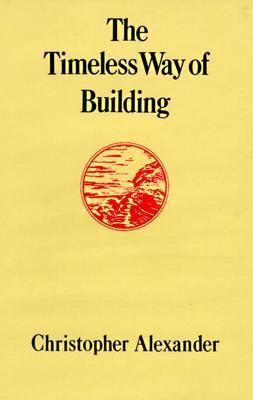
Nova: That’s where the profound shift comes in, and we can look to some incredible thinkers to guide us. One of the most influential is Christopher Alexander, particularly his seminal work, "The Timeless Way of Building." Alexander was an architect who essentially argued against the rigid, top-down planning that often led to those brutalist failures.
Atlas: Wait, hold on. Alexander? I've heard that name. Wasn't he a bit of a maverick, even controversial for his time? I remember reading something about his work being highly rated, but also having some polarizing reviews from within the architectural community.
Nova: Absolutely. He was, and still is, a fascinating figure. Alexander and his colleagues developed what they called a 'pattern language.' Instead of grand, abstract master plans, they proposed a vocabulary of design solutions—patterns—that had been proven over centuries to create spaces that feel alive, human, and adaptable. Think about it: a window seat, a sunny corner, a communal courtyard. These aren't just arbitrary features; they're solutions to recurring human needs, expressed in architectural form.
Atlas: So basically you’re saying, instead of inventing a whole new language every time, they said, "Let's use the words and phrases that already work, that resonate with people on a fundamental level?" That’s actually really powerful. It’s like saying, don't try to reinvent the wheel, just make sure the wheel fits the road and can handle different terrains.
Nova: Precisely! He emphasized designs that evolve naturally over time because they address fundamental human patterns. It’s about creating spaces where people instinctively feel comfortable and connected. This approach has gained widespread acclaim, with many designers acknowledging its profound impact on thinking about user-centric design, even if some traditionalists found it too 'soft' or less 'heroic' than grand architectural statements. It’s about building for the generations, not just the next design competition.
Atlas: That makes sense. It’s about designing for human nature, which doesn’t change as fast as architectural trends. But isn't there another side to that, beyond just the human experience? What about the actual materials, the resources we use? Because even a timeless design can be problematic if it’s made from unsustainable materials.
Nova: You've hit on the perfect segue, Atlas, because that leads us to another groundbreaking philosophy: "Cradle to Cradle" by William McDonough and Michael Braungart. Where Alexander focuses on the human experience and adaptability, McDonough and Braungart challenge the entire industrial paradigm.
Atlas: Oh, I remember hearing about this! It’s about zero waste, right? Like everything is designed to be endlessly reused?
Nova: Exactly. They coined the term 'eco-effectiveness,' which goes far beyond mere efficiency or 'doing less bad.' They argue that our traditional industrial model is 'cradle to grave'—we take resources, make a product, use it, and then it becomes waste. Their vision is 'cradle to cradle,' where every material is designed from the outset to be a nutrient in a biological or technical cycle. There is no such thing as waste.
Atlas: Wow. So, an entire building, or a product, isn't just built to evolve, but its are designed to perpetually nourish a new cycle? That sounds a bit out there. Like, how does a brick become a nutrient? Can you give an example?
Nova: Absolutely. Think about a textile. Instead of cotton blended with synthetics that can't be recycled, imagine a fabric made purely from organic cotton, dyed with non-toxic, compostable pigments. Once the shirt is worn out, it can literally be composted, returning nutrients to the soil. Or, a technical product like a computer. Instead of being a jumble of materials that are hard to separate, it’s designed so its plastics, metals, and circuits can be easily disassembled and reused at their highest value, becoming 'technical nutrients' for new products.
Atlas: That's actually really inspiring. It’s not just recycling; it’s a total re-think of manufacturing. And the combination of Alexander’s human-centric, adaptable design with McDonough and Braungart’s cyclical material use… that's truly futureproofing. It's designing not just for today, but for generations, creating structures that serve inhabitants and the planet indefinitely. For someone who wants to build things that actually matter and last, this is gold.
Synthesis & Takeaways
SECTION
Nova: It’s more than just gold; it's a paradigm shift. The deep question for us, as creators and builders, is to think about a building or even a product we admire for its longevity. What design principles allow it to remain relevant and beautiful across changing eras? Is it the inherent flexibility that Alexander championed, or the circular material flow of Cradle to Cradle, or perhaps a blend of both?
Atlas: That makes me wonder about things like classic furniture designs, or even ancient structures that are still standing and functional today. They weren't built with 'sustainability' in mind, at least not in our modern sense, but they embody timeless principles. It’s a powerful reminder that enduring value isn't an accident; it's a deliberate act of foresight and empathy.
Nova: Precisely. It’s about understanding that our impact extends far beyond the immediate horizon. When we design with enduring relevance in mind, we're not just building structures; we're building legacies. We're creating a world that adapts, that nourishes, and that continues to serve, rather than consume and discard.
Atlas: That’s a powerful note to end on. It really challenges us to think differently about everything we create, whether it's a building, a business, or even a personal habit. It’s about seeing the long game, the generational impact.
Nova: Absolutely. And that's what we hope you take away from today's discussion: the imperative to design for enduring value.
Atlas: This is Aibrary. Congratulations on your growth!