

Beyond the Veil: Unveiling the Esoteric for Deeper Understanding
Golden Hook & Introduction
SECTION
Nova: Alright, Atlas, quick game. I'll throw out a word, you hit me back with the first thing that pops into your mind, no filter. Ready?
Atlas: Oh, I like that. Always ready for a mental sprint, Nova. Hit me.
Nova: Mystery.
Atlas: Hmm, enigma. No, wait, secrets. Hidden passages. Yeah, hidden passages.
Nova: Hidden passages. Intriguing. Okay, next one: Reality.
Atlas: Reality… what we think we see. Or maybe, what we’re to see. A bit blurry, if I'm being honest.
Nova: A bit blurry. I'm sensing a theme here, my friend. And that blurry reality, those hidden passages, that’s exactly what we’re diving into today on Aibrary. We’re going Beyond the Veil: Unveiling the Esoteric for Deeper Understanding.
Atlas: And I’m already hooked. I imagine a lot of our listeners feel that same pull towards something just beyond the everyday. What are we exploring to help us peek behind that veil?
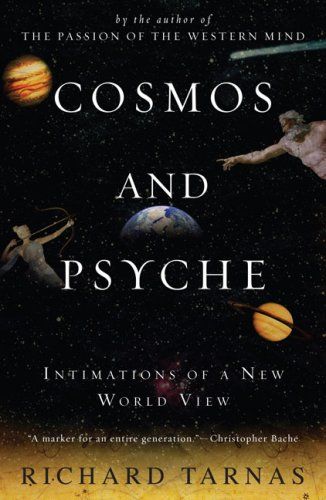
Nova: Well, today, we’re looking at two absolutely monumental works that challenge our perception of reality: Richard Tarnas's "Cosmos and Psyche," and Manly P. Hall's "The Secret Teachings of All Ages."
Atlas: Tarnas and Hall, big names in this space. What makes them so pivotal for our journey today?
Nova: Richard Tarnas, for instance, isn't your typical academic. He's a cultural historian who boldly weaves together Western thought with planetary cycles, suggesting a profound, synchronistic order to existence. It’s a brave and brilliant synthesis that few dare to attempt. And then Manly P. Hall – his "Secret Teachings" isn't just a book; it's an encyclopedic, self-published magnum opus, a lifelong dedication to compiling ancient mystery traditions and philosophies, literally a treasure chest of universal wisdom. He spent his life preserving knowledge that mainstream academia often overlooked.
Atlas: So, we’re talking about authors who really went against the grain to bring these deeper insights to light. That’s already challenging my "what we’re told to see" idea of reality.
Nova: Exactly. And that naturally leads us to our first big idea: the "blind spot" that often keeps us from seeing these profound connections.
The Blind Spot of Modern Perception
SECTION
Nova: We often operate with what I call a "blind spot" in our understanding of reality. Think of it like this: imagine a magnificent, intricate tapestry. The threads are woven with dizzying complexity, telling a grand story. But we, in our modern perspective, are often only looking at the front, the visible, tangible surface. We admire the picture, sure, but we completely miss the intricate weaving, the knots, the hidden patterns on the back that give the whole thing its structure, its meaning, its very existence.
Atlas: Oh, I like that analogy. So, we're appreciating the painting, but not understanding the artist’s hand, or even the loom itself. What does that feel like in our daily lives, this "blind spot"? I imagine a lot of our listeners who are constantly seeking deeper meaning might resonate with feeling like something's missing.
Nova: Absolutely. It often manifests as a subtle, persistent feeling of unfulfillment, even when everything on the surface seems to be going well. We chase success, accumulate possessions, gather information, but there's a nagging sense that we're missing a crucial piece of the puzzle. It's like having all the ingredients for a feast but no recipe, no understanding of how they all come together to create something truly nourishing.
Atlas: So, it's not about a lack of information, or even a lack of "stuff." It’s a qualitative gap, a sense of disconnection from something fundamental. I can see how that would be a perpetual quest for someone who tries to integrate all aspects of their life, from career to consciousness. But how did we get this blind spot? Was it always there?
Nova: That’s a great question, Atlas. Historically, many cultures had a much more integrated view of the cosmos and human experience. But over centuries, especially with the rise of empirical science, we've increasingly prioritized what can be measured, observed, and replicated. That’s been incredibly powerful for technological advancement, but it also inadvertently sidelines anything that feels subjective, symbolic, or non-quantifiable. We started to believe that if we can't put it under a microscope, it's not "real" in the same way.
Atlas: So, the very tools that gave us incredible understanding in one domain, inadvertently created a limitation in another. It sounds like we traded depth for precision, in a way.
Nova: Precisely. And in doing so, we sometimes lose touch with the profound, synchronistic order that permeates existence, the very idea that Tarnas and Hall explore so brilliantly. We become disconnected from the subtle currents, the echoes between our inner lives and the larger cosmos. We’re left with a very flat, two-dimensional view of a multi-dimensional reality.
Unveiling the Esoteric: Synchronicity and Universal Wisdom
SECTION
Atlas: So, if we’ve got this blind spot, how do we begin to even perceive these deeper dimensions? What's the first step to shifting our perspective?
Nova: That’s where the "shift" comes in, and it's where these esoteric traditions become incredibly illuminating. They invite us to look beyond surface appearances. Let’s start with Tarnas and his idea of a participatory universe. In "Cosmos and Psyche," he argues that our inner world and the outer cosmos aren't separate, but rather mirror each other in profound, meaningful ways.
Atlas: Okay, a participatory universe. That sounds a bit… cosmic. Can you give me an example that makes it feel less like abstract philosophy and more like something we can actually grasp?
Nova: Absolutely. Tarnas, through meticulous historical analysis, shows how major epochs in human history—periods of intense creativity, profound social upheaval, or significant philosophical shifts—often correlate with specific planetary alignments. He's not saying the planets events, but that they or in the archetypal patterns unfolding in human consciousness and collective experience.
Atlas: So it’s not astrology in the "what's my horoscope today" sense, but a deeper, archetypal resonance between cosmic patterns and human experience?
Nova: Exactly! Think about the Renaissance, a period of rebirth, radical humanism, and explosive artistic and scientific innovation. Tarnas might point to specific long-term planetary cycles that were culminating or beginning during that era, suggesting an archetypal impulse towards renewal and expansion was active both in the cosmos and in the human psyche. It’s like the universe and humanity are singing the same song, just in different octaves. It invites us to see meaningful patterns, not just random occurrences.
Atlas: That’s actually really inspiring. It suggests there's a grander narrative unfolding, and we're not just isolated observers. How does Hall’s work, with its ancient mystery traditions, connect to this idea of a meaningful, interconnected reality?
Nova: Hall takes us even further back, across millennia and cultures. In "The Secret Teachings of All Ages," he compiles and decodes the symbols, myths, and philosophies of ancient traditions—from Egyptian mysteries to Gnostic teachings, from Pythagorean philosophy to Kabbalah. What he reveals are recurring patterns, universal symbols, and fundamental truths that echo across time and geography.
Atlas: So, it’s like different cultures, separated by vast distances and eras, were all tapping into the same underlying source code of reality?
Nova: That’s a perfect way to put it! Imagine the symbol of the serpent. In one culture, it might represent healing; in another, wisdom; in another, rebirth. Hall would show how these aren't random, but different facets of a universal archetype of transformative energy, found in the deepest layers of human consciousness and mirrored in nature. He demonstrates how esoteric knowledge isn't some fringe belief, but the very bedrock of much human thought and spiritual endeavor, often hidden in plain sight within our myths and monuments.
Atlas: So, these traditions offer us a way to understand the 'grammar' of the universe, the symbolic language that connects everything. It’s about learning to read the deeper narrative.
Nova: Absolutely. It's about cultivating a deeper sensitivity to the subtle energies and symbolic meanings that permeate our world. It's about recognizing that the "unseen order" isn't a fantasy, but a profound dimension of reality waiting to be unveiled. It's a journey from simply observing the tapestry to understanding the weaver and the threads themselves.
Synthesis & Takeaways
SECTION
Nova: So, what Tarnas and Hall ultimately invite us to do is to expand our perceptual aperture. To move beyond that initial "blind spot" and embrace a richer, more interconnected understanding of life's mysteries. It’s not about abandoning science or logic, but about integrating what we see with what we sense, what we measure with what we intuitively know to be true.
Atlas: Right, it’s not either/or, it’s both/and. It's about integrating these profound insights into our daily lives, so we can finally feel that sense of inner peace and holistic understanding that many of us are searching for. It’s about grounding our insights in the natural world, as well as the cosmic one.
Nova: Exactly. It's about recognizing that the quest for deeper understanding isn't some abstract academic exercise. It’s a profoundly personal journey towards authentic self-awareness, where the inner and outer worlds begin to resonate with each other. It's about finding meaning in the synchronistic moments, in the recurring symbols, in the echoes of ancient wisdom that still speak to us today.
Atlas: That’s actually really powerful. It makes me wonder, for anyone listening right now, where in your own life do you sense an unseen order or a deeper meaning waiting to be unveiled? Perhaps it’s in a recurring dream, a chance encounter, or a persistent feeling that something more profound is at play. That's a question worth sitting with.
Nova: It truly is. That intuition, that sense of a deeper order, is often our first guide beyond the veil.
Atlas: This is Aibrary. Congratulations on your growth!