

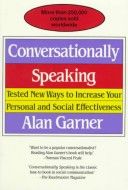
Conversationally speaking
Introduction
The Million-Copy Secret to Small Talk
Nova: Welcome back to The Scripted Life. Today, we are diving into a book that has quietly shaped how millions of people navigate social gatherings, networking events, and even first dates. We’re talking about Alan Garner’s classic, "Conversationally Speaking: Tested New Ways to Increase Your Personal and Social Effectiveness."
Nova: It is! And that longevity tells us something crucial: the fundamental human need to connect, and the persistent difficulty we have in doing it smoothly, hasn't changed. We all know that feeling—standing awkwardly at a party, desperately trying to think of something interesting to say that isn't just, "Nice weather we're having."
Nova: That’s the perfect question to kick us off, Alex. The research suggests Garner deliberately steers clear of gimmicks. His philosophy is rooted in creating genuine, reciprocal interaction. He’s not teaching you to perform; he’s teaching you to facilitate.
Nova: The promise is simple: conversation is a skill, not an innate talent. And like any skill, it can be broken down into testable, repeatable methods. It’s about moving from being a conversational drain to a conversational magnet.
Nova: Not at all. Garner defines success by the of conversation. If the other person leaves feeling heard, engaged, and eager to talk to you again, you succeeded. It’s about creating momentum, not delivering a monologue.
Nova: Absolutely. And this leads us directly into the first major pillar of his teaching: the art of asking the right questions. It’s foundational, but often done poorly.
Nova: They are the, Alex. They invite one-word answers. Garner emphasizes questions that demand elaboration, questions that open a door instead of closing it with a dead-end.
Nova: Certainly. Instead of the standard, "What do you do for a living?" which forces them into a job title box, Garner might suggest something like, "What’s the most interesting challenge you’ve tackled at work recently?" or "What drew you to that field in the first place?"
Nova: Precisely. It’s about digging one layer deeper than the surface level. If you only ask surface questions, you only get surface answers, and the conversation stalls out like a car on a cold morning.
Nova: It shifts the pressure entirely. You become the curator of their story, which is a much easier role to play than being the star performer. Now, let’s move to the second major technique, which I found incredibly practical: the delivery of honest positives.
Nova: He insists on specificity and directness. The research pointed out a perfect example: instead of the vague, "I like your shoes," Garner advocates for something like, "I really like your shoes; the way the leather is stitched on the side gives them a fantastic texture."
Nova: Exactly. It shows you were actually paying attention, not just scanning the room for someone to talk to. It validates their choice, which is far more rewarding for the recipient than a generic platitude.
Nova: You’ve got the method down. It forces you to engage with the of what they said, not just the that they said something. It’s the difference between acknowledging their existence and acknowledging their effort.
Nova: Garner suggests practice in low-stakes environments. Start by complimenting inanimate objects—a piece of art, a well-designed menu, the architecture of the building you’re in. Train your observation muscles first. Then, when you apply it to people, it becomes second nature.
Nova: It is. And this brings us to the third, and perhaps most profound, insight from the book, which touches on emotional intelligence: the role of listening. Garner states clearly that listening is more powerful than talking.
Nova: Because most people listen only to reply. They are formulating their next brilliant statement while the other person is still speaking. Garner champions —listening to truly understand the underlying feeling or intent.
Nova: Precisely. The Garner listener might respond with, "That sounds incredibly draining. It takes a lot of mental energy to navigate that kind of organizational change." See the difference? You’ve validated the emotion, not just hijacked the topic to talk about yourself.
Nova: It is the ultimate conversation promoter. When you listen well, the other person feels compelled to keep talking because they feel respected. You don't have to worry about what to say next because your job is simply to absorb and reflect.
Nova: He offers specific strategies for sustaining engagement. One technique involves using 'bridge statements' that connect what they just said to a related, but slightly different, area of inquiry. It’s like finding a hidden side door off the main road.
Nova: Let’s say someone is talking about their passion for restoring vintage motorcycles. They mention how difficult it is to source original parts from the 1950s. A weak transition would be, "Oh, I like old cars." A bridge statement might be: "That sourcing challenge you mentioned—it sounds like it requires a real detective mindset. Does that problem-solving skill translate into other areas of your life, like planning a trip or tackling a home project?"
Nova: It keeps the focus on them, but allows the conversation to evolve naturally, rather than forcing a hard pivot. It’s about finding the thread that connects their last sentence to a new, interesting area.
Nova: He does, and this is where the 'tested new ways' part of the title really shines. He provides techniques for resisting unwanted conversational paths without being rude. It’s about deflection with grace.
Nova: Garner suggests a technique often called 'acknowledge and pivot.' You first acknowledge the validity of their statement—even if you disagree or don't want to engage—and then immediately pivot back to a safer, pre-established common ground or a question you know they enjoy answering.
Nova: Exactly. You’ve validated their presence in the conversation, but you’ve firmly, yet politely, redirected the energy flow back to a topic you both agreed was pleasant. It’s assertive without being aggressive.
Nova: And this entire framework—asking better questions, giving specific positives, listening deeply, and pivoting gracefully—all serves the ultimate goal: increasing your personal and social effectiveness. It’s about making every interaction count, whether it’s a five-minute chat in an elevator or a two-hour dinner.
Nova: That’s the core takeaway, Alex. It’s about moving from passive participation to active, intentional engagement. The book isn't about becoming an extrovert; it’s about becoming a more effective communicator, regardless of your natural inclination.
Nova: I think it has to be the commitment to specificity in your positive feedback. Stop saying "good job" or "nice." Start noticing the that made it good or nice. That small shift—from general acknowledgment to specific observation—is the spark that ignites genuine connection.
Nova: And when you apply that trained eye to people, you stop seeing them as obstacles to small talk and start seeing them as sources of fascinating, specific stories. That’s the magic Garner bottled up nearly half a century ago.
Nova: My pleasure, Alex. Mastering conversation isn't about having the perfect lines; it's about mastering the art of genuine curiosity and thoughtful response. Keep practicing those specific positives, keep asking those deep-dive questions, and remember that every interaction is an opportunity for growth.
Nova: This is Aibrary. Congratulations on your growth!
Conclusion
Final Takeaways and Growth
Nova: We’ve covered a lot of ground today, Alex, moving from the book’s core philosophy of to the practical application of and.
Nova: Absolutely. The actionable takeaway, as we highlighted, is to consciously practice noticing details. Train yourself to move beyond generic compliments. If you like someone’s presentation, don’t just say it was good; mention the clarity of their data visualization or the compelling narrative arc they used.
Nova: Ultimately, "Conversationally Speaking" teaches us that effective communication isn't about being witty or charming on demand. It’s about being present, being curious, and applying simple, tested techniques to facilitate a shared experience.
Nova: Indeed. The world is full of people waiting for someone to truly listen to them. Garner gives us the tools to be that person.
Nova: This is Aibrary. Congratulations on your growth!