The Unseen Drivers: Why People Buy (It's Not Always What They Say)
Golden Hook & Introduction
SECTION
Nova: What if I told you that 'viral' isn't accidental, and 'addictive' isn't just a dirty word, but both are predictable outcomes of understanding human psychology?
Atlas: Whoa, that's a bold claim, Nova. I think a lot of our listeners, especially those trying to get their ideas or products to stick, might feel like virality is just lightning in a bottle, and habit formation is… well, something other companies do.
Nova: Absolutely. And that's exactly the 'blind spot' we're diving into today. We often assume consumer decisions are purely rational, based on a spreadsheet of features and benefits. But beneath that surface, powerful emotional and social forces are constantly at play. And ignoring them means missing massive opportunities.
Atlas: Right. So, we're talking about the unseen drivers, the stuff that really moves people, even when they can't articulate it themselves.
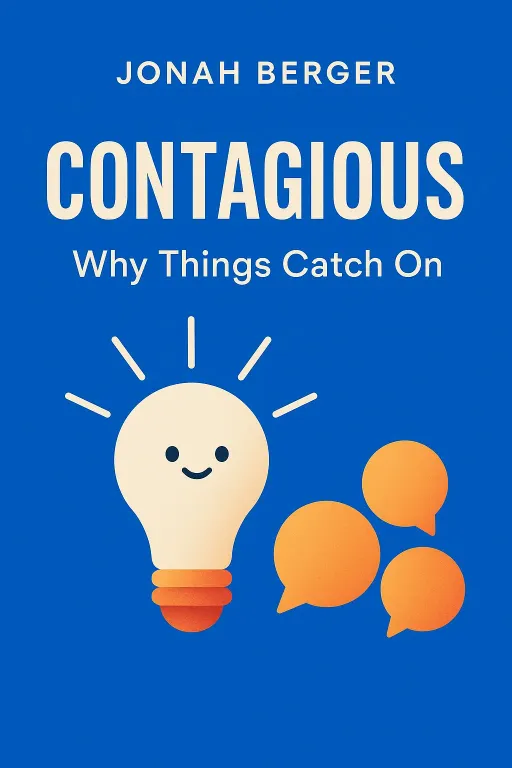
Nova: Precisely. And to unpack this, we're drawing insights from two phenomenal books. First, we have Jonah Berger's "Contagious: Why Things Catch On." Berger, a professor at the Wharton School, is acclaimed for his research on social influence and how he translates complex academic concepts into incredibly accessible and actionable frameworks. He really demystifies why some things just spread like wildfire.
Atlas: And then we're pairing that with Nir Eyal's "Hooked: How to Build Habit-Forming Products." Eyal’s work is a go-to for anyone in tech and product development, offering a practical, step-by-step model for creating engaging experiences. Though, I know that book has also sparked some fascinating and important conversations around the ethics of designing for habit.
Nova: It certainly has. But together, these two books offer a comprehensive look at how to get people not just to pay attention, but to truly engage and keep coming back. It’s about building something that resonates, then spreads, and then sticks.
Atlas: Okay, so if we’re talking about things spreading, let’s start there. How do we actually make something 'contagious'? Because for a lot of our listeners, the idea of something going viral feels like pure luck.
The Science of Contagion: Making Ideas Spread with Jonah Berger's STEPPS
SECTION
Nova: That’s where Berger’s work is so illuminating, Atlas. He argues that virality isn't about luck; it's about science. He breaks it down into six core principles he calls STEPPS: Social Currency, Triggers, Emotion, Public, Practical Value, and Stories. Think of them as psychological levers you can pull.
Atlas: Social Currency. That makes me wonder, isn't that just showing off? How does that actually make something contagious?
Nova: It's deeper than just showing off. Social Currency is about making people feel smart, cool, or in the know when they share something. Like a speakeasy bar. It's not just a place to drink; it's a secret, an experience. When you tell a friend about it, you're not just giving them a recommendation; you're conferring a piece of your 'insider' status onto them. You gain social capital by sharing it.
Atlas: I can see that. It's like, "I know about this cool thing, and now you do too, thanks to me." So what's a good example of that in a non-bar context? For someone building, say, a new B2B software, how do they create social currency?
Nova: Great question. For a B2B software, it could be an exclusive beta program that only a select few get invited to—making them feel like they're innovators and early adopters. Or a feature that allows users to generate unique, visually appealing reports that they can then share with their team or on LinkedIn, instantly elevating their professional image. It makes them look good.
Atlas: Ah, so it's not just about the software's functionality, but how using and sharing it reflects positively on the user. That's a clever reframing. What about 'Public'? How does that make something contagious?
Nova: Public is about making things observable. The more public something is, the more likely people are to imitate it. Think of the old Livestrong bracelets. You wore one, and everyone knew you supported cancer research. It was a public signal. Compare that to a private fitness app. You might use it every day, but unless you tell someone, it’s not visible, so it doesn't spread as easily through observation.
Atlas: That makes sense. We're inherently social creatures, and we look to others for cues. But what if your product or service isn't inherently 'public'? How do you make it so without being intrusive?
Nova: You design for public visibility where it matters. For a B2B software, it might be public leaderboards for active users, or badges that appear on a user’s profile linked to their expertise with the software. Or even simple things like branded merchandise that employees proudly wear. It creates subtle, observable signals.
Atlas: It's fascinating how these principles aren't just about consumer products. They can be applied to any idea or behavior you want to spread. But often, getting something to spread is one thing. Keeping people engaged, making it a part of their routine, that’s another challenge entirely.
Nova: Exactly. And that naturally leads us to the second key idea we need to talk about, which often acts as a counterpoint to what we just discussed. Because while Berger helps us understand why things catch on, Nir Eyal helps us understand how they.
Building Habits, Not Just Products: Nir Eyal's Hook Model and Lasting Engagement
SECTION
Atlas: Okay, so from contagiousness to stickiness. Eyal’s Hook Model. I’ve heard it mentioned a lot, especially in tech circles. What’s the core idea there?
Nova: Eyal’s Hook Model is a four-phase cycle: Trigger, Action, Variable Reward, and Investment. It's a framework for building products that create unprompted user engagement, forming habits. Think of your favorite social media app. It uses this cycle constantly.
Atlas: Give me an example. How does this cycle actually work in practice? Let’s take Instagram.
Nova: Perfect. So, the could be an external notification: your phone dings, a friend tagged you. Or, more powerfully, an: you're bored, lonely, or anxious. That feeling prompts you to open the app. The is simple: scroll through your feed, post a photo. It’s effortless. Then comes the: you see likes, comments, interesting content. You don't know you'll find, or validation you'll get, and that variability makes it incredibly compelling.
Atlas: The variability is key. It's like a slot machine. You keep pulling the lever because you never know when you'll hit a jackpot.
Nova: Absolutely. And finally,. This is where users put something into the product, which then loads the next trigger. On Instagram, it could be uploading more photos, following more people, curating your profile. The more you invest, the more valuable the product becomes to you, and the more likely you are to return. You’ve built up social capital, content, connections.
Atlas: Now, this is where the ethical discussion comes in, right? Because building a habit-forming product sounds a lot like designing something addictive, and that can feel manipulative. For our listeners who are impact-driven, how do they reconcile that?
Nova: That's a crucial point, Atlas, and Eyal himself addresses this. He argues that the Hook Model is a tool, and like any tool, it can be used for good or ill. The critical distinction is whether you're building a product that genuinely improves users' lives – a 'vitamin' product that creates positive habits, like a language learning app – or if you're selling 'painkillers' that offer temporary relief without long-term benefit, or worse, exploiting vulnerabilities.
Atlas: So the intention behind the hook matters. It's about understanding human psychology to create value, not just to capture attention for attention's sake.
Nova: Precisely. And the 'Investment' phase is where ethical design truly shines. If users are investing their time, data, or effort into something that genuinely enriches their lives – learning a new skill, connecting with loved ones, improving their health – then the habit formed is beneficial. It’s about cultivating loyalty through shared value, not just fleeting engagement.
Synthesis & Takeaways
SECTION
Nova: So, when you combine Berger's STEPPS with Eyal's Hook Model, you get a powerful roadmap. Berger helps you understand how to design an idea or product that people to talk about and share, making it contagious. Eyal then shows you how to build that product or service so that people to keep coming back, turning it into a lasting habit.
Atlas: It’s not just about features anymore, is it? It’s about designing for human nature. The emotional, the social, the psychological. Ignoring these unseen drivers means you're leaving so much potential impact on the table. You might have the best product in the world, but if it doesn't spread and it doesn't stick, what's the point?
Nova: Exactly. It’s about moving beyond superficial appeals to create genuine engagement and lasting customer loyalty. For any strategic analyst, any future-proof innovator, understanding these levers isn't just a marketing tactic; it's a fundamental understanding of how to build things that truly matter and endure.
Atlas: That's a profound thought. It makes you re-evaluate everything. So, for our listeners today, consider a product or service you're building or marketing. Which of these unseen drivers – contagiousness or habit formation – are you underestimating, and what small shift could you make this week to leverage it for genuine impact?
Nova: This is Aibrary. Congratulations on your growth!