The Network Effect: How Small Actions Create Exponential Growth
Golden Hook & Introduction
SECTION
Nova: What if I told you that 'going viral' isn't some mystical, accidental stroke of luck, but a meticulously designed outcome?
Atlas: Wait, really? So it's not just a lucky break, some random internet phenomenon that happens to the chosen few? Because honestly, that's how it often feels when you're trying to build something impactful.
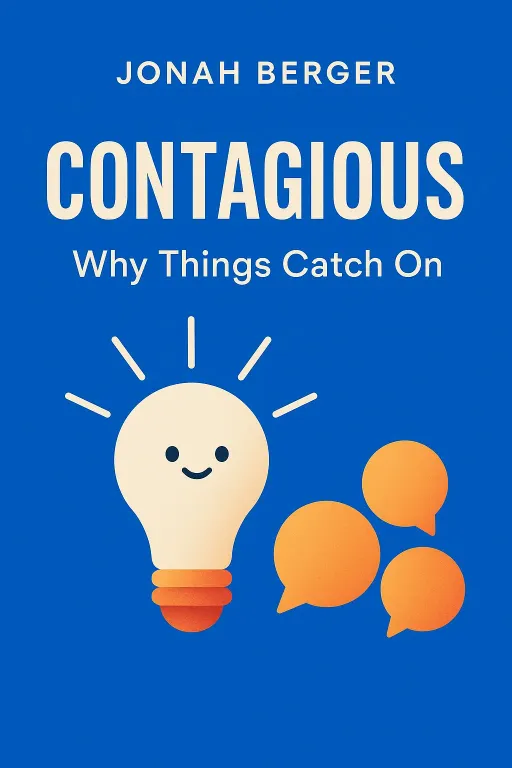
Nova: Exactly! That's the myth we're busting today. We're diving into the fascinating world of predictable virality and habit formation, guided by two brilliant minds: Jonah Berger, author of "Contagious," and Nir Eyal, who gave us "Hooked." These aren't just academics; they're strategists who've systematized what makes things spread and stick. They show us that viral growth isn't magic; it's a design challenge.
Atlas: A design challenge. I like that framing. It sounds like something a strategic builder can actually, rather than just hope for. So, for someone who wants to build something that truly resonates and grows, how does this 'design' actually work? Where do we even begin to make something... contagious?
The STEPS to Contagious Ideas: Engineering Virality
SECTION
Nova: Well, we start with Jonah Berger's "Contagious: Why Things Catch On." Berger argues that there are six core principles, or "STEPPS," that drive virality. He breaks down why certain ideas, products, and behaviors simply spread like wildfire, while others fizzle out.
Atlas: Six principles? Lay them on me. I'm always looking for frameworks to make complex things actionable.
Nova: Absolutely. Let's start with Social Currency. This is about making people feel good when they talk about your product or idea. Think about it: we share things that make us look smart, cool, or in-the-know.
Atlas: Oh, I get that. Like when you discover a hidden gem of a restaurant and you can't wait to tell your friends, because it makes look like the foodie expert.
Nova: Precisely! Or remember those Blendtec "Will It Blend?" videos? They were hilariously destructive, but they generated immense social currency. People shared them because they were entertaining, surprising, and made them look clever for being in on the joke. The product itself, a blender, became a conversation starter because of the clever content around it. The cause: a unique, engaging demonstration. The process: the company created short, viral videos. The outcome: millions of views, massive brand awareness, and a cult following, all because people wanted to share something that made them look cool.
Atlas: Wow. So it’s not just about having a good product, it’s about making the of the product inherently valuable to the person doing the sharing. But for a builder, how do you inject that 'social currency' into something that might not be as inherently dramatic as blending an iPhone?
Nova: It's about finding the remarkable within the mundane. Can you make a feature exclusive? Can you gamify it so people earn status by sharing? Can you highlight an unusual benefit? The key is to make it something people genuinely to talk about.
Atlas: Okay, that makes sense. It’s about crafting the narrative around the product, not just the product itself. What's another one of these STEPPS?
Nova: Next up, Triggers. These are stimuli that remind people to think about and talk about your product or idea. Think about peanut butter. What's almost always mentioned with it? Jelly. The two are strongly linked.
Atlas: Right, like that old ad campaign for KitKat: "Have a break, have a KitKat." The trigger is 'taking a break.'
Nova: Exactly! That campaign was brilliant because "taking a break" is a frequent, everyday occurrence. So, every time you felt like taking a break, the KitKat brand popped into your head. They linked their product to a pervasive environmental trigger, causing people to think about it, and then often act on it. The cause: a common, daily human behavior. The process: the brand strategically associated itself with that behavior. The outcome: increased mindshare and sales because the product became the go-to solution for a recurring trigger.
Atlas: That's fascinating. So it's about identifying those daily cues, those natural moments, and then gracefully inserting your product into that mental space. But how do you do that without it feeling forced or, let's be honest, annoying? Because nobody wants to be constantly reminded of something they don't care about.
Nova: It's about relevance and context. The trigger needs to be natural and aligned with your product's value. If your product helps people relax, then a 'stressful day' is a perfect trigger. If it helps with productivity, 'starting work' could be one. It's not about shouting; it's about a subtle, helpful connection.
The Hook Model: Building Unstoppable Habits and Viral Loops
SECTION
Nova: And once you've sparked that initial spread with social currency and triggers, how do you keep people coming back, making your product not just a fleeting trend, but an indispensable part of their lives? That's where Nir Eyal steps in with his "Hooked: How to Build Habit-Forming Products."
Atlas: Ah, the habit-forming side of the equation. This is crucial for sustainable growth, not just that initial viral burst. For a strategic builder, it's about creating an ecosystem where people genuinely want to stay and contribute.
Nova: Precisely. Eyal's Hook Model is a four-step cycle: Trigger, Action, Variable Reward, and Investment. It's how companies create products people can't put down. Let's take Instagram as a prime example.
Atlas: Instagram. Okay, walk me through the hook there.
Nova: It starts with a Trigger. These can be external—a notification on your phone, seeing a friend's post—or internal, like boredom, loneliness, or a desire for connection. You're feeling a bit down, or just have a few minutes to kill. That's an internal trigger.
Atlas: Oh, I know that feeling. Pick up the phone, open the app, almost subconsciously.
Nova: Exactly. That leads to the Action. The simplest behavior done in anticipation of a reward. On Instagram, it's scrolling through your feed, liking a picture, or posting your own. It's a low-effort action.
Atlas: And then comes the reward, right? The dopamine hit.
Nova: But it's not just any reward; it's a Variable Reward. This is the critical part. You don't know what you'll see next. It could be a hilarious meme, a stunning photo from a friend, a comment on your post, or nothing particularly interesting. That unpredictability makes it incredibly engaging. Slot machines use variable rewards. Fishing uses variable rewards.
Atlas: That's actually really inspiring. So it’s the of the reward that keeps you coming back, not just the reward itself. For a culture architect, how do you build this into a product without it feeling manipulative, especially if you're trying to foster positive habits?
Nova: That's a vital question. Eyal himself emphasizes that the Hook Model is a double-edged sword. It can build positive habits, like Duolingo making language learning addictive, or it can be used for less ethical purposes. For a builder, the key is to ensure your product provides genuine utility and value. If your variable reward is simply engagement for engagement's sake, it can feel empty. If it's variable, or variable, or variable towards a goal, that's where the magic happens ethically.
Atlas: So the intention behind the hook really matters. It's not just about getting people hooked, but getting them hooked on something that genuinely enriches their lives. What's the final step?
Nova: Investment. This is where users put something into the product: time, data, effort, social capital, skills. On Instagram, it's uploading photos, curating your profile, following new accounts, commenting. These investments increase the likelihood of future engagement because you've committed resources, making it harder to leave. You've built up followers, memories, connections.
Atlas: That makes perfect sense. The more you put in, the more value you perceive, and the more entrenched the habit becomes. So, for our listeners looking to build sustainable engagement, where do they even start with designing this model into their product?
Nova: Start by identifying the internal triggers your users experience. What pain points or desires does your product address? Then, design the simplest possible action to alleviate that pain or fulfill that desire. Then, layer in those variable rewards, ensuring they're genuinely fulfilling. And finally, create opportunities for users to invest in the product, making it more valuable to them over time.
Synthesis & Takeaways
SECTION
Nova: So, what we've really seen today is how small, intentional actions in product design can create exponential growth. Jonah Berger shows us how to get that initial spark, making your ideas contagious through social currency, triggers, and the other STEPPS.
Atlas: And then Nir Eyal comes in and says, "Okay, once you've got their attention, how do you build a lasting relationship? How do you create those deep, ingrained habits that fuel a sustainable network effect?" It's a powerful one-two punch. It’s not just about getting noticed once, but building an ecosystem where people genuinely want to stay and contribute. It's about designing for human nature.
Nova: Exactly. It's about moving beyond hoping for virality to actively designing for it. By understanding these psychological levers, strategic builders can significantly increase the likelihood of their product spreading organically and sticking around. It’s about building a better, more impactful product, not just a louder one.
Atlas: That gives me chills, honestly. It's empowering to know that impact and growth can be engineered with intention. So, for our listeners, what's one tiny step they can take today, after hearing all this?
Nova: Choose one feature of your product, or even an idea you're trying to spread. How can you tweak it to leverage 'Social Currency' or 'Practical Value' to encourage sharing? Or, how can you identify an internal trigger your audience feels, and design a simple action and variable reward around it? Start small, experiment, and watch the network effect begin to unfold.
Atlas: Absolutely. The journey of building an ecosystem starts with that single, well-designed step.
Nova: This is Aibrary. Congratulations on your growth!