Beyond the Algorithm: Crafting Irresistible Marketing for Independent Artists
Golden Hook & Introduction
SECTION
Nova: Atlas, what do you know about marketing for independent artists?
Atlas: Oh, I know it’s usually a desperate plea for likes, followed by the crushing silence of an algorithm that just doesn’t care. Is that about right?
Nova: Ha, Atlas, you've painted a tragically accurate picture for so many. But what if I told you that the secret to 'marketing' isn't about shouting louder, but about quietly, authentically... connecting?
Atlas: Okay, 'quietly connecting' in a digital world that thrives on noise? That sounds almost counter-intuitive, especially for independent artists who often feel like they're screaming into the void.
Nova: It absolutely does, doesn't it? And that's the core of what we're dissecting today, as we dive into a philosophy we're calling 'Beyond the Algorithm: Crafting Irresistible Marketing for Independent Artists.' This isn't a single book, but a powerful framework we've built, deeply inspired by marketing giants like Seth Godin and Jonah Berger, and our own Nova's Take on truly empowering artists. It’s about reshaping the industry for good, not just participating in it, for those visionary spirits out there.
Atlas: That’s a bold statement, reshaping the industry. For many artists, the industry feels like an unmovable monolith. How do we even begin to think about marketing in a way that feels authentic and impactful, rather than just another chore on an already overwhelming to-do list?
Marketing as Authentic Connection & Storytelling
SECTION
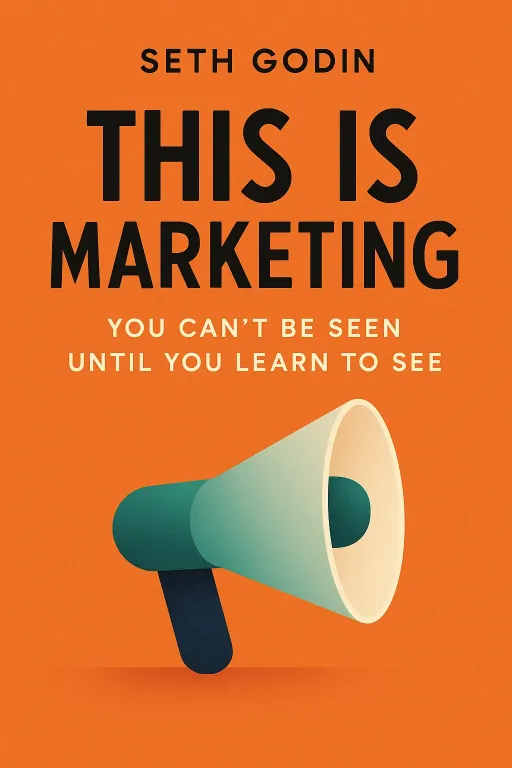
Nova: That's precisely where we start, Atlas. We have to challenge the fundamental assumption about what marketing even is. Seth Godin, in his transformative work, 'This Is Marketing,' completely flips the script. He argues that real marketing isn't about interruption, or shouting, or even traditional advertising. It's about something far more profound: understanding who you want to serve, making something truly remarkable for them, and then telling a story that resonates so deeply, they can't help but want to share it.
Atlas: So, it’s about making art that's so good, it markets itself? That sounds like a dream, but what does 'remarkable' actually look like for an independent artist, especially when everyone's striving for attention?
Nova: It often means being a 'purple cow,' as Godin famously puts it. Imagine driving down a road and seeing hundreds of brown cows. They're all the same. But then, you see a purple cow. You stop, you stare, you tell everyone. That's what remarkable means. It’s about being different in a way that adds clear value, not just for the sake of being different.
Atlas: A purple cow. I like that. But how does an artist, perhaps a musician in their home studio, become a purple cow without a massive budget for elaborate music videos or flashy campaigns?
Nova: It's not about budget; it's about perspective and intention. Think of an artist who decided to only perform their music in abandoned historical sites. They don’t just play songs; they create an immersive, ephemeral experience that breathes new life into forgotten spaces. Or a painter who uses only reclaimed materials found within their city to depict its evolving landscape, telling a story about urban decay and renewal with every brushstroke.
Atlas: That's a great example. The art itself becomes the story, the experience.
Nova: Exactly. The cause here is that the artist isn't just making art; they're solving a problem or fulfilling a deep desire for a specific, often underserved audience – whether it's a craving for unique experiences, or a connection to local history. The process involves crafting a narrative around this unique approach, making the 'why' behind their art as compelling as the art itself. They build a tribe around this shared value, not just a passive fanbase.
Atlas: So the outcome is that their work stands out, creates genuine connection, and spreads through word-of-mouth because it's inherently interesting and valuable to a specific community. It’s not just about the notes or colors, but the entire ethos.
Nova: Precisely. It’s about being the only one doing for of people. It requires empathy, understanding your audience's deepest needs and desires, and then courageously creating something that speaks directly to them, in a way no one else can.
Atlas: I imagine a lot of our listeners, especially those trying to build equitable revenue streams as independent artists, are thinking, 'This sounds beautiful, but how do I translate that purple cow concept into actual, tangible steps?' What's the practical application for someone who maybe isn't performing in ancient ruins?
Nova: It starts with a simple question: What unique problem does my art solve? Or what specific desire does it fulfill that no one else is addressing in quite the same way? It could be music that helps people meditate, or art that empowers a marginalized community, or stories that explore a niche historical period. The 'purple cow' isn't always grand; sometimes it's exquisitely subtle and deeply personal. And when you find that unique intersection, the story tells itself.
The Science of Shareability: Making Art 'Contagious'
SECTION
Nova: And this idea of remarkable art and compelling stories naturally leads us to the second key idea we need to talk about, which often acts as a powerful amplifier for that authentic connection: how do we make art truly 'contagious'?
Atlas: Contagious? As in, goes viral? That feels like chasing the algorithm again, Nova. Is there a way to make something spread without losing that authenticity we just discussed?
Nova: Absolutely, and this is where Jonah Berger's groundbreaking book, 'Contagious: Why Things Catch On,' becomes indispensable. Berger unpacks the science behind why certain ideas, products, and even art, catch on and spread organically. It’s not random; there are psychological principles at play. He calls them STEPPS: Social Currency, Triggers, Emotion, Public, Practical Value, and Stories.
Atlas: STEPPS. That sounds like a formula. Can artists actually engineer their work to be contagious without it feeling... calculated?
Nova: That's the beauty of it. When done authentically, these aren't manipulative tricks; they're insights into human nature. Let's take 'Social Currency.' People share things that make them look good or feel smart. If an artist creates a piece of music or visual art that aligns with a specific social cause, and sharing that art signals the sharer's values or identity, it provides social currency.
Atlas: So, it’s like sharing an indie song by a new artist because it makes you feel like you're 'in the know' or part of a cool, underground movement.
Nova: Exactly! Or sharing a powerful song about climate change because it signals your commitment to environmentalism. Now, let’s consider a real-world example: an independent musician who released a track that became an anthem for a specific social cause. This wasn't a mega-hit overnight, but it grew steadily, deeply, and organically.
Atlas: How did they manage that? What was the secret sauce beyond just a good song?
Nova: The cause was deliberate. The artist intentionally infused their song with strong emotional resonance and a clear message perfectly aligned with a passionate community. They understood their audience's pain points, their hopes, their activism. The process then activated those STEPPS principles. The song provided 'social currency' for listeners who shared it to express their identity and values. It acted as a 'trigger' for conversations about the cause, often played at rallies or in social media posts related to the movement. It evoked powerful 'emotion' and had 'practical value' by offering a voice and a sense of solidarity to the movement. And crucially, the artist shared the 'story' behind the song's creation—their personal connection to the cause, their struggles, their inspiration—making it even more relatable and human.
Atlas: That’s fascinating. So the outcome wasn't just passive listening; the song was and shared organically. It became an integral part of that community's narrative, leading to widespread recognition far beyond what traditional, top-down marketing could ever achieve.
Nova: It's the difference between fleeting virality, which often relies on novelty or shock value, and sustained contagiousness, which is rooted in intrinsic value and genuine connection. True contagiousness for artists means creating work that people feel compelled to share because it reflects who they are, what they believe, or what they care about. It's about making your art an extension of your audience's identity.
Atlas: I imagine a lot of artists might hear this and think, 'Okay, I get the theory, but how do I actually bake this into my creative process without feeling like I'm compromising my artistic integrity or just trying to manipulate people?'
Nova: That's a crucial distinction. It's not about manipulation; it's about empathy. It starts with asking: 'Who am I creating this for, and what emotional resonance or practical value will it bring?' When you lead with authenticity and a desire to serve that specific audience, applying these principles becomes a natural extension of your art, not a separate marketing task. It’s about understanding the human element that makes us want to connect and share.
Synthesis & Takeaways
SECTION
Nova: So, what we’re really talking about today, Atlas, is that true artist marketing isn't about fighting the algorithm or yelling into the digital void. It's about something far more powerful: creating art and stories so compelling, so authentic, and so deeply shareable that the algorithm actually the artist.
Atlas: That’s a profound reframing. It’s not about beating the system, it's about being so genuinely good and connected that the marketing becomes an organic extension of the art itself, almost like a natural phenomenon.
Nova: Exactly. It's about building a legacy through genuine connection and remarkable work, rather than just chasing fleeting trends or algorithmic approval. When an artist understands their audience, crafts remarkable work infused with their unique story, and taps into the human desire to share, they move beyond being just another voice in the crowd. They become a resonant force, creating not just fans, but advocates.
Atlas: That gives me chills, honestly. It’s a hopeful vision for independent artists, especially those visionary spirits who want to build thriving careers and unlock new value through digital business models. It truly does empower them.
Nova: It absolutely does. So, for our listeners, here’s a tiny step you can take this week: identify one unique story about your music or creative process that you can share. Think about the 'why' behind your art, the journey, the inspiration—something that resonates with empathy and authenticity. Share that story, not just the art itself.
Atlas: That's a practical, actionable step that feels aligned with everything we've discussed. It's about finding that unique narrative that makes your art truly compelling.
Nova: That's the heart of it. That’s how you start to craft irresistible marketing.
Nova: This is Aibrary. Congratulations on your growth!