The Geography of Power: Geopolitics and Global Trade
Golden Hook & Introduction
SECTION
Atlas: Okay, Nova, I’ve got a confession. Sometimes, I hear people talk about "globalization" and "the internet," and a little voice in my head says, “Hasn't all that made geography… kind of irrelevant? Like, we just fly over mountains now, right?”
Nova: That little voice, Atlas, is not alone. Many of us fall into that trap, thinking we’ve conquered distance and physical barriers. But what if I told you that geography is not only irrelevant, but it’s actually exacting its "revenge" on global power structures and trade right now?
Atlas: Revenge? That sounds dramatic. Like a map just woke up one day and decided to get even.
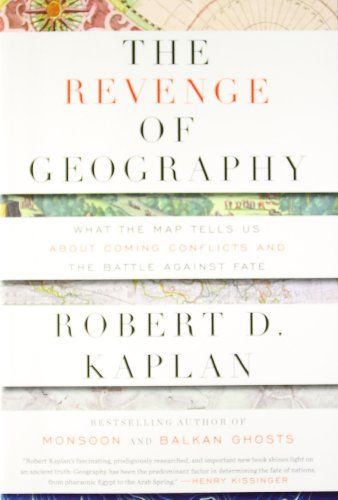
Nova: Exactly! And that’s the powerful, often overlooked, insight at the heart of our discussion today on "The Geography of Power: Geopolitics and Global Trade." We’re diving into two pivotal books that, together, paint a comprehensive picture of our interconnected world. First, Robert D. Kaplan’s seminal work,, and then Parag Khanna’s equally vital.
Atlas: Kaplan, a seasoned journalist and war correspondent, has always had this gritty, on-the-ground perspective, seeing how the physical world dictates so much. And Khanna, a global strategist, is looking forward, seeing how we’re rewiring that world. It sounds like two sides of the same coin.
Nova: Precisely. Kaplan reminds us of the immutable truths of the earth, while Khanna shows us how we’ve built complex, fragile webs across it. And understanding both is crucial for anyone trying to anticipate and adapt to change in our global supply chains.
The Enduring Power of Geography
SECTION
Nova: So, let’s start with Kaplan and this idea of "the revenge of geography." His central argument is that physical geography – mountains, rivers, oceans, deserts, access to sea lanes – these aren't just features on a map. They are fundamental, enduring forces that shape a nation's destiny, its foreign policy, its economic development, and crucially, its trade routes, often more so than any ideology or political system.
Atlas: Wait, are you saying that despite all our drones and satellites and supertankers, a mountain range is still more powerful than a G20 summit? That sounds… almost fatalistic.
Nova: Well, Kaplan would argue it's less fatalism and more realism. Think about it: why has Russia historically sought warm-water ports? Why is the control of the South China Sea so fiercely contested? Why has the Suez Canal been a flashpoint for centuries? These aren't random political squabbles. They are direct consequences of geographical imperatives. Kaplan, drawing on decades of experience as a foreign correspondent, saw firsthand how the land itself, its resources, and its barriers dictated human behavior and conflict.
Atlas: I can see how historical trade routes like the Silk Road were shaped by mountains and deserts. But for our listeners who are, say, managing complex global supply chains, how does this ancient thinking translate to their modern-day vulnerabilities? Are we still talking about medieval chokepoints?
Nova: Absolutely, but with modern stakes. Consider the Strait of Hormuz, that narrow passage connecting the Persian Gulf to the open ocean. It's only about 21 miles wide at its narrowest point. A huge percentage of the world’s oil supply passes through there daily. That's a geographical chokepoint. Or the Malacca Strait, connecting the Indian Ocean to the Pacific, another vital artery for global trade. If either of those were severely disrupted, the cascading effects on global commerce and supply chains would be catastrophic.
Atlas: So, for a strategic innovator, it means understanding that simply having a diverse supplier base isn't enough if all those diverse suppliers still rely on the same few geographical bottlenecks.
Nova: Exactly. Kaplan’s work prompts us to look beyond the immediate political headlines and see the deeper, almost geological forces at play. It’s about recognizing that some constraints are simply immutable, dictated by the earth itself. His perspective is a powerful antidote to any naive belief that technology or global cooperation can entirely erase the hard realities of physical space.
The Rise of Networked Power
SECTION
Nova: Now, if Kaplan gives us the foundational map, Parag Khanna in essentially shows us how we’re drawing new lines and building new structures on top of it. He argues that the future of global order isn't about traditional borders or military might, but about the intricate, sprawling networks of infrastructure, supply chains, and megacities.
Atlas: So, if Kaplan is about the 'hard', unyielding geography, Khanna is about the 'soft' infrastructure, the connections we painstakingly build on top of it. How does this actually shift power? Are traditional borders just quaint relics then, or are they still relevant within these new networks?
Nova: Khanna would contend that borders are certainly less relevant in many ways. Power, he argues, is increasingly flowing through these networks. Think of the massive investment in China’s Belt and Road Initiative – it’s a physical manifestation of this "connectography." It’s about building roads, railways, ports, and pipelines to create new arteries of trade and influence, essentially rewiring vast regions of the world. Power shifts from those who control territory to those who control the across that territory.
Atlas: That makes me wonder how this impacts process innovation. If your supply chain is now a complex web of interconnected nodes, what happens when one node, say, a port or a data center, goes down? It sounds like new forms of vulnerability emerge, even as we become more connected.
Nova: You’ve hit on a crucial point. While these networks create incredible efficiencies and interdependence, they also introduce new points of fragility. A cyberattack on a critical piece of infrastructure, a natural disaster hitting a key port, or even political instability in a region that hosts a vital fiber optic cable – these can have ripple effects across the entire global system. Khanna’s work highlights that understanding these networks is paramount for strategic foresight, not just in terms of where goods move, but where data flows, where energy is distributed, and where talent congregates in megacities.
Atlas: So, it sounds like a constant dance between the immovable mountain and the ever-flowing network. For someone trying to anticipate and adapt to change, how do you even begin to map these overlapping realities? It’s not just one map, it’s like a dozen maps overlaid on top of each other.
Synthesis & Takeaways
SECTION
Nova: That’s the deep question, isn’t it? Nova’s take, after synthesizing both Kaplan and Khanna, is that a truly comprehensive understanding of global supply chains and geopolitical dynamics requires a dual vision. You recognize the enduring influence of physical geography – those mountains and oceans that simply aren't going anywhere. But you also overlay that with the evolving landscape of interconnected networks – the supply chains, data cables, and infrastructure projects that are constantly being built, rerouted, and sometimes, broken.
Atlas: So, for our listeners who are navigating complex global realities, it’s about seeing both the ancient river and the fiber optic cable running alongside it? It’s not an either/or, but a both/and.
Nova: Exactly. Strategic foresight isn't about predicting the future with a crystal ball. It’s about deeply understanding the forces at play. For us, that means asking: How do the geographical realities and evolving infrastructure networks discussed in these books impact current global supply chain vulnerabilities and opportunities?
Atlas: For leaders driven by mastery and creating meaningful change, that question isn't just academic. It’s about resilience, about efficiency, and about understanding the true cost and opportunity of global connectivity.
Nova: My one actionable insight would be this: Map your critical supply chains not just for cost or efficiency, but for their geographical chokepoints and network dependencies. Identify where immutable physical geography creates constraints, and where the human-made networks create new forms of leverage or fragility. Only then can you truly innovate and adapt.
Atlas: That’s a powerful call to action. It forces you to look beyond the spreadsheet and onto the actual map of the world.
Nova: It's about seeing the world as it truly is: a complex interplay of ancient landforms and modern arteries. What a journey.
Atlas: What a journey indeed.
Nova: This is Aibrary. Congratulations on your growth!