

The Network Effect: Understanding How Ideas and Influence Truly Spread.
Golden Hook & Introduction
SECTION
Nova: Forget everything you thought you knew about influence. It's not about who you know, or even what you say. The real power lies in something far more subtle, a hidden architecture that dictates how every idea, emotion, and behavior truly spreads.
Atlas: Whoa, that's a bold claim, Nova. I imagine a lot of us, especially those trying to build authentic communities or share valuable ideas, tend to focus on direct communication, on the obvious connections. Are you saying we've been looking at influence all wrong?
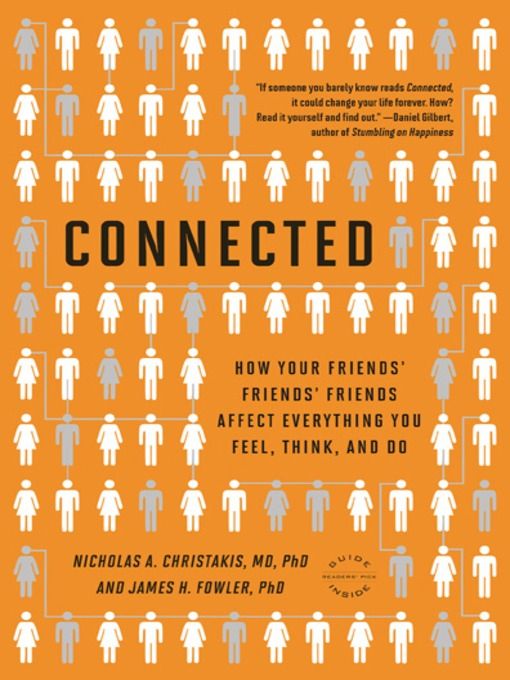
Nova: Absolutely, Atlas. We often operate with a blind spot, assuming influence is a straightforward, one-to-one interaction. But the truth, as revealed by two incredibly insightful books, is far more complex and interconnected. Today, we're diving into "Connected: The Surprising Power of Our Social Networks and How They Shape Our Lives" by Nicholas A. Christakis and James H. Fowler, and "Contagious: Why Things Catch On" by Jonah Berger.
Atlas: Oh, I like that pairing! Christakis, a physician and sociologist, and Fowler, a political scientist, bring this fascinating interdisciplinary lens to their work on social networks. And Berger, a marketing professor, gives us the practical mechanics. It already sounds like it’s going to fundamentally shift our understanding.
Nova: Precisely. Their work shows that influence isn't just about individual persuasion; it’s about the dynamic flow within a collective. For anyone who's an ethical innovator or adaptive leader, this is about understanding the invisible forces at play.
Atlas: And I can see how that immediately challenges conventional wisdom. We're often taught to target specific people, but you're hinting at something much grander, a system. So, where do we even begin to unpack this hidden architecture?
Nova: We'll start by seeing beyond the individual. Today, we'll dive deep into this from two perspectives. First, we'll explore the hidden architecture of influence within social networks, then we'll discuss the practical science behind why things truly catch on.
The Hidden Wires: Unpacking Social Network Influence
SECTION
Nova: So, let's kick off with Christakis and Fowler's "Connected." Their core premise is revolutionary: your social network, not just your direct contacts, has a profound impact on everything from your health to your happiness, and even your political views. It’s a concept they call the 'three degrees of influence.'
Atlas: The 'three degrees of influence'? So you're saying I don't just influence my friends, but my friends' friends, and my friends' friends' friends? How is that even possible? I mean, I barely keep up with my direct connections!
Nova: That's the magic of it. They illustrate this beautifully through their analysis of the Framingham Heart Study, a decades-long research project that followed thousands of people and their social ties. What Christakis and Fowler discovered by mapping these intricate networks was astonishing. They found that if your friend's friend's friend gained weight, you were more likely to gain weight too, even if you didn't know that person directly. The same applied to things like quitting smoking, happiness, and even the spread of specific behaviors.
Atlas: Wow. That's incredible. So I can be influenced by someone I've never even met? This really does challenge the idea of one-to-one influence. For leaders trying to cultivate ethical communities or build authentic connections, this sounds like both a powerful tool and a huge responsibility. How do we even begin to 'see' these hidden connections, let alone leverage them ethically?
Nova: It's about shifting our perception. We tend to focus on the 'nodes'—the individuals. But "Connected" urges us to look at the 'edges'—the relationships—and the overall structure. It's about understanding who are the 'central' figures, who are the 'bridges' connecting different groups, and where the 'clusters' of dense connections lie. This isn't about manipulation, Atlas. It's about recognizing that if you want an idea to spread, or a positive behavior to take root, you need to understand the currents of the network, not just shout into the wind.
Atlas: Okay, so it’s less about picking a single 'influencer' and more about understanding the ecosystem. For someone looking to make a meaningful impact, this means thinking beyond direct outreach. It's about designing for a ripple effect, isn't it? But how do we ensure that ripple is positive and ethical, especially when the influence can be so subtle and far-reaching?
Nova: That's the crucial question. The ethical innovator recognizes that this understanding empowers them to foster a healthier, more connected environment. It means prioritizing the well-being of the network itself, rather than just pushing a message. If you understand how a network carries ideas, you can ensure the ideas you introduce are genuinely valuable, beneficial, and resonant with the community's core values. It’s about cultivating the soil, not just planting a single seed.
Atlas: That makes sense. It's about creating conditions for positive influence to flourish organically, rather than forcing it. We're talking about a more strategic, holistic approach, which aligns perfectly with the adaptive leader's mindset. But once we understand influence flows, the next question becomes: actually makes things flow those wires?
The Viral Blueprint: The Science Behind 'Why Things Catch On'
SECTION
Nova: Exactly! Once we understand the invisible architecture, the next question is: what actually through those wires? And that's where Jonah Berger's "Contagious" comes in, giving us the practical playbook. Berger, a marketing professor, spent years researching why certain ideas, products, and behaviors go viral, while others, equally good, languish in obscurity. He distilled it down to six key principles, which he calls the STEPPS framework: Social Currency, Triggers, Emotion, Public, Practical Value, and Stories.
Atlas: So he's essentially demystifying "going viral," making it less about luck and more about a repeatable science? For anyone trying to get their message across, especially in a crowded digital space, that sounds incredibly appealing. Can you give me an example of how a couple of these principles work in the real world?
Nova: Absolutely. Let's look at Social Currency and Triggers. Social Currency is all about making people feel good when they share something. We share things that make us look smart, cool, or in-the-know. Think about the famous "Please Don't Tell" speakeasy in New York City. To get in, you had to enter through a phone booth in a hot dog restaurant. That exclusivity, that hidden knowledge, made talking about it feel like having "social currency." You weren't just going to a bar; you were part of a secret club, and sharing that secret made you feel special.
Atlas: Oh, I've heard of places like that! It's like we're always looking for ways to signal our status, our unique experiences. That's actually really inspiring. So, if we want an idea to spread, we need to make sharing it feel like a badge of honor? What about Triggers?
Nova: Triggers are about associating your product or idea with something that people encounter frequently in their daily lives. Berger gives the fantastic example of Kit Kat. They repositioned their candy bar not just as a chocolate snack, but as the perfect companion for a coffee break. "Have a break, have a Kit Kat." Coffee breaks happen daily, multiple times for some. By linking Kit Kat to this frequent, ingrained habit, they created a constant trigger, and sales soared. The product itself didn't change, but its association did.
Atlas: That's brilliant! So it's like certain ideas are just 'primed' to be remembered because they're constantly brought to mind by our environment. For those of us building authentic connections and trying to spread genuine value, how do we leverage these principles without feeling manipulative? Because "social currency" and "triggers" could easily be used for less-than-ethical purposes.
Nova: That's a critical distinction. Berger's principles are tools. Like any tool, they can be used for good or ill. The ethical innovator uses them to amplify ideas. If your product or message genuinely helps people, provides real practical value, or sparks positive emotion, then understanding Social Currency simply helps you frame it in a way that people are proud to share. Triggers help ensure that your valuable message isn't forgotten. It's about making goodness visible and memorable, not creating artificial hype.
Atlas: That makes a lot more sense. It connects back to the ethical framework the user profile emphasizes. But what about the "Public" principle? Does that mean everything needs to be visible to spread? What about private communities or more sensitive, nuanced topics that thrive in smaller, trusted circles?
Nova: That's a great point. "Public" doesn't necessarily mean everything has to be broadcast to the entire world. It means making observable behavior easy to imitate. For example, if you're trying to encourage a new, positive habit within a private community, making that habit visible and celebrated serves the "Public" principle. It could be a shared challenge where members report progress, or a system that visibly acknowledges participation. The goal is to design for visibility where appropriate, or to make the of an idea visible, fostering social proof and encouraging adoption.
Synthesis & Takeaways
SECTION
Nova: So, bringing it all together, we've seen how "Connected" shows us the invisible architecture— influence flows—and "Contagious" shows us flows and to make it flow effectively. The real power, for any strategic integrator or adaptive leader, is in combining both these understandings.
Atlas: Absolutely. For our listeners, thinking about their own brand's community or the ideas they want to see spread, the question isn't just 'who are my obvious influencers?' but 'what kind of network architecture am I building, and what principles am I using to make my valuable ideas genuinely contagious?' It’s about mapping the subtle currents, not just navigating the obvious channels.
Nova: Exactly. Ethical influence comes from understanding these deep dynamics to build stronger, more resilient communities and spread genuinely valuable ideas. It's about moving from a simplistic view of persuasion to a profound appreciation for interconnectedness and the science of human behavior.
Atlas: My big takeaway is to stop thinking about a single viral moment and start mapping the subtle currents. Maybe even dedicate 30 minutes this week to just observing the 'triggers' in your own daily life and how they shape your actions. Or consider what 'social currency' your community members are already seeking, and how your message can genuinely provide it.
Nova: That's a fantastic, actionable step, Atlas. Understanding these forces empowers us to be more deliberate, more ethical, and ultimately, more impactful in the way we connect and inspire.
Atlas: This is Aibrary. Congratulations on your growth!