

The Art of Authentic Connection: From Small Talk to Deep Bonds
Golden Hook & Introduction
SECTION
Nova: We’ve all been there: trapped in a conversation that feels like pulling teeth, desperate for an escape. That awkward silence stretches, punctuated only by the clinking of glasses. But what if that very moment, that seemingly superficial small talk, isn't the problem, but the critical gateway to unlocking profound human connection?
Atlas: Oh, I love that. Because honestly, for so many of us, small talk feels like a necessary evil, a hurdle to jump before the "real" conversation starts. It's not usually seen as the.
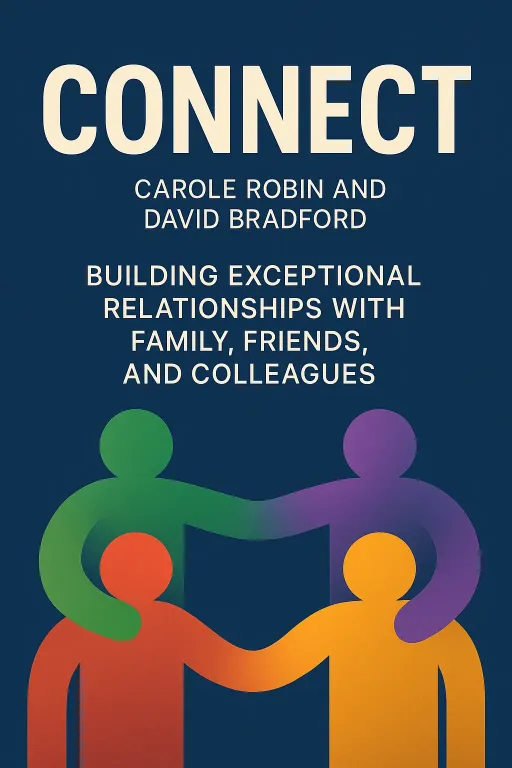
Nova: Exactly! And that’s why today, we’re diving into two brilliant books that, when combined, offer a revolutionary approach to how we interact. First, we have by David Bradford and Carole Robin, which emerged from their legendary course at Stanford’s Graduate School of Business—a course that taught future leaders how to build high-quality, lasting relationships through radical honesty and vulnerability.
Atlas: Right, and then we have Patrick King’s, which is this incredibly practical, tactical toolkit for navigating those initial social interactions. King is known for his direct, actionable advice that helps people move past the awkwardness. It sounds like two very different approaches to the same fundamental human need.
Nova: They are, and that's what makes their synergy so powerful. One gives you the foundational tactics, and the other provides the deep, intentional framework. Together, they show us how to transform those fleeting social exchanges into profound, lasting relationships.
The Art of Better Small Talk
SECTION
Nova: So, let's start with the groundwork. Patrick King, in, essentially gives us a blueprint for making those initial conversations not just bearable, but actually engaging. He emphasizes active listening, open-ended questions, and genuine curiosity.
Atlas: Okay, so, active listening. We hear that phrase a lot, but what does it actually like in practice, beyond just nodding along? Because I think a lot of people think they're doing it, but they're really just waiting for their turn to speak.
Nova: That’s a brilliant distinction, Atlas. King would say active listening is about truly processing what the other person is saying, not just the words, but the underlying emotions and intentions. It means asking follow-up questions that go deeper than a simple yes or no. For example, imagine you’re at a networking event, and someone mentions they’re a software engineer. Instead of just saying, "Oh, that's interesting," and moving on, you could ask, "What’s one of the most surprising challenges you’ve faced in a recent project, and how did you overcome it?"
Atlas: That makes sense. That's a "how" question, right? It forces them to elaborate, to tell a story, rather than just state a fact. It's like you're inviting them into a narrative.
Nova: Precisely. And that's where genuine curiosity comes in. King argues that it's a skill you can cultivate. It’s not about faking interest, but about finding a thread, however small, that genuinely piques your interest. Perhaps it’s a shared passion you discover, or even just the universal human experience of overcoming a challenge. Your goal is to uncover something authentic, even if it feels like digging through a lot of surface-level dirt.
Atlas: But wait, what if you're just not interested in someone's job or their hobbies? For listeners who might be introverted or just find it hard to connect with strangers, cultivating "genuine curiosity" can feel like a tall order. What happens if you can't find that thread?
Nova: That’s a completely valid point. King isn't suggesting you force yourself to be fascinated by everything. The key is in the behind the question. If you ask a "how" or "why" question, you're signaling that you're open to hearing more, even if the initial topic isn't your passion. If the conversation still doesn't spark, he offers graceful ways to pivot or exit. The goal is to make the other person feel heard and valued, even in a brief exchange. It's about respect, not necessarily finding your new best friend in five minutes.
Atlas: So it's not about faking interest, but about creating an for connection, and if it doesn't materialize, you've still practiced a valuable social skill and made someone feel acknowledged. That’s a great way to put it.
Building Deep Bonds with Authenticity
SECTION
Nova: Now, once you’ve mastered those initial interactions, how do you actually the ball rolling into something truly meaningful? This is where Bradford and Robin’s comes in, building on decades of teaching at Stanford. They talk about three pillars: vulnerability, authenticity, and directness.
Atlas: Hold on, "vulnerability" and "directness" in a professional setting? For someone navigating a corporate ladder or trying to build a new business, that sounds like a massive risk. What if being vulnerable makes you look weak, or being too direct offends someone crucial? I imagine a lot of our listeners in high-stakes environments would find that counter-intuitive.
Nova: That’s the critical tension, isn't it? And it’s precisely what their Stanford course addresses. They differentiate between appropriate and inappropriate vulnerability. It's not about oversharing your deepest fears with a new colleague on day one. Instead, it's about sharing a relevant piece of yourself, a challenge you faced, or an uncertainty you’re grappling with, in a way that builds trust and invites reciprocity. For instance, imagine a project manager leading a new team. Instead of presenting an unshakeable, perfect front, they might say, "Look, this is a new challenge for all of us, and honestly, I'm feeling a bit daunted by X aspect, but I'm confident that together, we can figure it out."
Atlas: Wow, that’s actually really inspiring. It’s a measured vulnerability that humanizes you, rather than making you seem fragile. It shows you trust your team.
Nova: Exactly. It shows you're a human being, not a robot. And that leads directly to authenticity—being true to who you are and what you value, even when it’s uncomfortable. It means aligning your actions with your words. And directness? That’s about communicating clearly and honestly, especially when feedback is difficult. It's not about being blunt or rude, but about being unambiguous and constructive, always with the intention of strengthening the relationship.
Atlas: That gives me chills. So it’s not about airing all your dirty laundry or being brutal, but about showing up as a full, complex human being, and having the courage to speak your truth with respect, even if it feels a little uncomfortable. It sounds like a lot of emotional labor.
Nova: It is, and it requires practice. But the payoff, as Bradford and Robin demonstrate through countless examples from their students, is relationships built on a foundation of trust, respect, and genuine understanding. They call them "high-quality connections," and they are the bedrock of both personal happiness and professional success. When people feel seen, heard, and genuinely connected, they perform better, they innovate more, and they navigate conflict more effectively.
Synthesis & Takeaways
SECTION
Atlas: Okay, so we've got the tactical entry points from Patrick King and the deep connection principles from Bradford and Robin. How do we actually these two? How does someone intentionally bridge that gap between casual small talk and truly meaningful connection in their professional and personal life?
Nova: That’s the million-dollar question, and it brings us to our "Tiny Step" and "Deep Question" for this episode. The Tiny Step is this: next time you meet someone new, try one specific technique from – maybe asking a follow-up "how" or "why" question. Then, reflecting on, consider what deeper intention you brought to that conversation. Was it just to pass the time, or was there a genuine, even nascent, desire to understand, to connect, to build trust?
Atlas: That's actually really practical. So, it’s not just about learning a script, but about bringing a certain to every interaction. It's like small talk becomes a deliberate practice, not just a default mode.
Nova: Absolutely. It transforms small talk from a chore into an opportunity. And that leads to the "Deep Question" for all of us: How can you intentionally bridge the gap between casual small talk and truly meaningful connection in your professional and personal life, ensuring your interactions are both effective and authentic? It's about being proactive, not passive, in building your relational world.
Atlas: And that really forces us to reflect on we're connecting, not just. It shifts the focus from simply getting through an interaction to actively building something valuable. Because ultimately, our lives are defined by the quality of our connections, aren't they?
Nova: They truly are. The strength of our relationships, both personal and professional, profoundly impacts our well-being and our success. By mastering both the art of initial engagement and the science of deep bonding, we unlock a richer, more fulfilling existence. It's about seeing every conversation as a potential building block for a more connected life.
Atlas: What an incredibly powerful thought to leave with. Thank you, Nova.
Nova: Always a pleasure, Atlas. And to our listeners, reflect on that deep question. How will you intentionally bridge that gap this week? This is Aibrary. Congratulations on your growth!









