

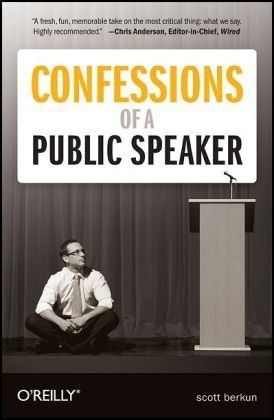
Confessions of a public speaker
Introduction: Ditching the TED Talk Façade
Introduction: Ditching the TED Talk Façade
Nova: Welcome to Aibrary, the show where we distill the world's best knowledge into actionable insights. Today, we are diving headfirst into a topic that makes most of our listeners sweat just thinking about it: public speaking. But we aren't reading a dry textbook. We're dissecting Scott Berkun's brilliant, brutally honest book, "Confessions of a Public Speaker."
Nova: Exactly. The hook, right out of the gate, is that this book isn't about becoming a flawless orator; it’s about surviving and thriving while being perfectly human. Berkun’s core premise is that the industry has sold us a myth of perfection. He says, "If you pretend to have no fears of public speaking, you deny yourself the natural energy your body is giving you."
Nova: And that's what we're exploring today. We're breaking down his most counterintuitive advice into four key areas: why perfection is your enemy, the power of primal storytelling, the non-negotiable physical rules, and how to actually learn from bombing. Ready to get real about the stage?
Nova: Then let's dive into Chapter One, where Berkun tackles the audience psychology head-on. This is where the title really earns its stripes.
Nova: This is going to be a great session. We're moving from fear to fluency, one honest anecdote at a time. Let's get into the core content.
Nova: Indeed. Welcome to the deep dive.
Key Insight 1: Anxiety is Energy, Not Failure
The Anti-Perfection Manifesto: Lowering the Stakes
Nova: Our first core theme is what I call the Anti-Perfection Manifesto. Berkun makes a stunningly simple point that radically reduces pressure. He states that most people listening to presentations right now are primarily hoping their speakers will end soon. That's it. They aren't judging your cadence or your slide design.
Nova: Precisely. And this connects directly to the anxiety point. He argues that nervousness is just energy. If you try to suppress it, you fight yourself. If you acknowledge it and redirect it—maybe by moving with purpose or speaking with slightly more force—you harness it. He learned this through his own experience, often presenting complex technical topics to huge crowds at Microsoft.
Nova: Not quite jumping jacks, though physical exhaustion beforehand is recommended! Berkun suggests things like standing up straight, using deliberate gestures, and making strong eye contact. These physical actions force the body to adopt a more confident posture, which in turn calms the mind. It’s a physical feedback loop. He emphasizes that the audience doesn't see the internal chaos; they only see the external presentation.
Nova: That’s the tension, and it leads to his point on taking a strong position. You can't be concise and impactful if you don't know exactly what you want them to walk away with. Berkun says you need a clear, strong thesis. If you have that anchor, you can cut the fluff, which satisfies the audience's desire for efficiency while still delivering value.
Nova: Oh, he absolutely does. One of the most surprising takeaways is that you don't need to be the world's foremost expert. He mentions that he could know half as much on a subject as his audience, yet still amaze, surprise, and entertain them simply by how well he weaves his stories together. The delivery and narrative structure can often outweigh sheer depth of knowledge.
Nova: Exactly. He’s saying the craft of communication is a skill separate from the subject matter expertise. If you’re an expert who can’t communicate, you fail. If you’re a decent communicator who can structure a narrative, you succeed, even if you’re only 50% knowledgeable. It’s a powerful distinction.
Nova: Perfect summary. It’s about shifting from self-judgment to audience service. Now, let’s move into how we actually structure that service—the narrative engine of the talk.
Nova: It is. Prepare for Chapter Two: The Art of the Storyteller.
Key Insight 2: Storytelling is Primal and Essential
The Art of the Storyteller: Narrative as Connection
Nova: In this chapter, we focus on the engine of connection. Berkun hammers home that humans are wired for narrative. He views storytelling not as an optional flourish but as the fundamental mechanism of persuasion and memory.
Nova: Because stories bypass the analytical brain and hit the emotional core. He points out that data points are forgotten, but the emotional context surrounding a story sticks. He advocates for weaving your advice into personal anecdotes, even if those anecdotes are about a time you messed up spectacularly. The vulnerability is magnetic.
Nova: Absolutely. And this ties into his advice on preparation. He doesn't say don't prepare; he says prepare the, not the script. He suggests knowing the three main points you want to make, and then having a story ready to illustrate each one. If you forget the exact wording of a transition, the story carries you through.
Nova: He leans toward simplicity. The key is relevance and conciseness. Don't tell a story just to tell a story; make sure it directly illustrates the point you are currently making. He also stresses the importance of the opening and closing of the talk being story-driven. The introduction needs to hook them emotionally, and the conclusion needs to land the final message within a memorable narrative frame.
Nova: They feed directly into it. If you are whispering or looking at your notes, you are signaling that you don't believe your own story. Berkun’s advice to "be loud" isn't about volume for volume's sake; it’s about projecting conviction in the narrative you are sharing. If you are telling a story about overcoming a massive technical hurdle, you need to sound like you actually overcame it.
Nova: He’s famously anti-slide-heavy presentations. He implies that if your slides are doing the heavy lifting, you aren't. He prefers minimal text, maybe just images or single words that act as prompts for the story you are telling. The slides should support the speaker, not replace them. If you have too much text, you’re just reading your notes off a giant screen, which is the ultimate way to lose the audience.
Nova: Exactly. And this focus on narrative is what allows you to recover when things go wrong. If you lose your place, you don't panic about missing a specific data point; you just jump to the next story that illustrates your next key point. It’s flexible, resilient communication.
Nova: Precisely. And that conviction is often built through the physical preparation we’ll cover next. Let’s transition from the content structure to the physical execution.
Key Insight 3: Exhaust Energy and Own the Space
Practical Survival Tactics: Mastering the Physical Stage
Nova: We’ve talked about mindset and story structure. Now we get into the nitty-gritty, the things you can control minutes before you walk on stage. Berkun offers very concrete, almost tactical advice here, much of it stemming from his corporate background where logistics often trumped inspiration.
Nova: He is adamant about tech rehearsal. Get there early. Test the microphone, test the clicker, test the connection between your laptop and the projector. He frames this not as a suggestion but as a necessity. Rushing leads to stress, and stress kills your ability to access your prepared stories. He says, "Exhaust as much physical energy before you talk," which means doing the tech check calmly, walking the stage, getting comfortable with the environment.
Nova: Standing straight and making eye contact are paramount. But the most surprising physical tip I found was about pacing and movement. He advises against pacing aimlessly. If you move, move with purpose. Walk to a different spot on the stage when transitioning to a new major point. This gives the audience a visual cue that a shift is happening, reinforcing your narrative structure.
Nova: Berkun suggests a technique that’s very effective: the three-second rule. Pick one friendly face in the left section of the room, speak a complete thought or sentence to them, hold eye contact for about three seconds, then smoothly transition to a friendly face in the center, and then one on the right. You create the illusion of connecting with everyone without locking eyes with any single person long enough to feel intimidated.
Nova: This is where the book truly shines. If you bomb—if you forget your lines, if the audience is unresponsive—Berkun says the absolute worst thing you can do is apologize profusely or try to cover it up by rambling. He advocates for acknowledging the hiccup briefly, perhaps with a touch of self-deprecating humor if it fits your style, and then immediately pivoting back to your strongest, most prepared story.
Nova: Exactly. He implies that the audience is far more forgiving of a mistake than the speaker is of themselves. If you act like it’s a catastrophe, they treat it like one. If you treat it like a minor detour, they follow your lead. He essentially tells you to have a pre-planned recovery line, something simple like, "Well, that didn't go as planned, but let's get back to the main point..."
Nova: It is. And this leads us perfectly into our final synthesis. We’ve covered the mindset, the narrative, and the mechanics. It all boils down to one thing: authenticity built on solid structure.
Nova: Agreed. Let's move to the conclusion.
Conclusion: The Resilient Speaker
Conclusion: The Resilient Speaker
Nova: We’ve spent this episode unpacking "Confessions of a Public Speaker," and the overarching message is one of radical acceptance and practical preparation. Alex, what is the single biggest shift in perspective you’re taking away from Berkun’s work today?
Nova: I agree. That permission slip is golden. My key takeaway is the integration of story and physicality. Don't just prepare data; prepare the narrative arc. And when you deliver it, use your body—stand tall, move with purpose, and use the three-second eye contact trick to connect without freezing up.
Nova: Excellent. Berkun’s book is a necessary antidote to the overly polished, often sterile presentation culture we see online. It reminds us that the best speakers are the ones who are brave enough to be real, even when they’re terrified.
Nova: Absolutely. The principles of clear communication, vulnerability, and audience respect are universal. Scott Berkun has given us the playbook for being human on stage.
Nova: This has been Aibrary. Congratulations on your growth!