

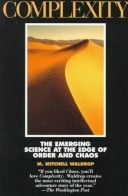
The Edge of Chaos: Engineering, Philosophy, and the New Science of Complexity
Golden Hook & Introduction
SECTION
Prof. Eleanor Hart: Have you ever watched a flock of starlings paint the sky, moving as one single, fluid organism? Or wondered how a colony of ants, with no leader, can build a complex nest? There's no director, no blueprint, no central command. So where does the intelligence come from?
Gene: It’s a fundamental question, isn't it? It challenges our basic assumptions about control and design.
Prof. Eleanor Hart: Exactly. For centuries, science tried to answer questions by breaking things down, assuming if you understood the parts, you'd understand the whole. But a group of renegade scientists in the 1980s, gathered at the newly formed Santa Fe Institute, realized the answer wasn't in the individual bird, or the ant, or the neuron. The magic was in the connections them. They gave this new science a name: Complexity.
Gene: A field that feels like it was tailor-made for the intersection of physics, computation, and philosophy.
Prof. Eleanor Hart: It absolutely is. And that’s why I’m so thrilled to have you here, Gene. As an engineer who has spent years building complex technological systems, you live in this world. Today, we're diving into M. Mitchell Waldrop's classic book, "Complexity," to explore these revolutionary ideas. We'll tackle this from two angles. First, we'll explore the magic of 'emergence'—how complex wholes arise from simple parts.
Gene: The "how."
Prof. Eleanor Hart: And then, we'll venture to the 'edge of chaos,' the mysterious realm where scientists believe life and computation truly begin.
Gene: The "where." This should be fun.
Deep Dive into Core Topic 1: The Power of Emergence
SECTION
Prof. Eleanor Hart: So Gene, as an engineer, you're used to designing things with a plan, a blueprint, a top-down approach. But what if the most powerful designs aren't designed at all? This brings us to our first big idea: emergence.
Gene: I'm intrigued. It sounds counterintuitive to how most engineering is taught. We're all about control, predictability, specifications.
Prof. Eleanor Hart: Well, get ready to have that challenged. In the book, Waldrop tells this fantastic story from 1986. There was a computer graphics researcher named Craig Reynolds. He wasn't a biologist; he was working on special effects for movies like. He wanted to create a realistic-looking flock of birds for a film, but he knew animating each bird by hand would be impossible and look stiff.
Gene: A classic rendering problem. Thousands of independent objects that need to look coordinated.
Prof. Eleanor Hart: Precisely. So he decided to try something radical. He created a simulation with digital objects he called "Boids." And instead of giving them a path to follow, he gave each individual boid just three, incredibly simple rules. That’s it.
Gene: Okay, what were the rules?
Prof. Eleanor Hart: Rule one was Separation: Don't crowd your immediate neighbors. Basically, maintain a little personal space. Rule two was Alignment: Try to steer in the same average direction as your neighbors. And rule three was Cohesion: Try to move toward the average position of your neighbors. So, don't get too close, point the same way, and stay near the group.
Gene: That's it? No leader? No "fly toward the big tree" instruction?
Prof. Eleanor Hart: Nothing. Just those three local rules. Each boid only knew about the few boids right next to it. And when he hit 'run' on the simulation, he was stunned. The boids on his screen formed a flock that was breathtakingly realistic. It would flow around obstacles, split into sub-flocks, and then merge back together. It looked intelligent. It looked alive. But the flocking behavior wasn't programmed in. It from the simple interactions.
Gene: That's fascinating. Because the 'intelligence' isn't in any single boid, or any single line of code. It's an emergent property of the system itself, not a property of any individual component.
Prof. Eleanor Hart: You've hit the nail on the head. That is the essence of emergence.
Gene: You know, in technology, we call this a decentralized or distributed system. We're seeing this paradigm everywhere now. Think about blockchain. There's no central bank or authority. Trust and consensus from a network of thousands of untrusted nodes, each just following a simple cryptographic protocol.
Prof. Eleanor Hart: What a perfect modern parallel. The Santa Fe Institute folks saw this pattern in everything—economies emerging from individual buying and selling decisions, immune systems from the interaction of different cells, consciousness from neurons.
Gene: And it points to a fundamentally different way of problem-solving. Instead of trying to build one giant, brilliant 'leader boid'—a monolithic, all-knowing piece of software—you focus on defining the right, simple rules of interaction for the smaller components. It's less about top-down control and more about creating the right environment for the solution to emerge on its own.
Prof. Eleanor Hart: Creating the right 'environment'... Gene, that is the perfect bridge to our second, and perhaps most mind-bending, idea. If emergence is the 'what,' this next concept is the 'where.' It's a place called the Edge of Chaos.
Deep Dive into Core Topic 2: Life at the Edge of Chaos
SECTION
Gene: The Edge of Chaos. It sounds dramatic. It sounds like a place you'd want to avoid.
Prof. Eleanor Hart: You'd think so, but the argument in "Complexity" is that it's the most creative and interesting place in the universe. Let me give you an analogy. Think about water. It can exist as ice—a rigid, ordered, crystalline structure. It's stable, but nothing much happens.
Gene: It's a frozen, dead state.
Prof. Eleanor Hart: Right. Or, it can exist as steam—a turbulent, disordered, chaotic gas. The molecules are flying everywhere. It's dynamic, but it's too random to hold any kind of complex structure.
Gene: Total chaos. No information can be stored or processed reliably.
Prof. Eleanor Hart: Exactly. But then there's the state in between: liquid water. It has enough structure for complex molecules like proteins to fold and hold their shape, but enough freedom of movement for them to interact, react, and do all the complex chemistry of life. Liquid water is, in a sense, on the edge of chaos.
Gene: The sweet spot between stability and dynamism. I see where you're going with this.
Prof. Eleanor Hart: This is precisely what another one of the book's main figures, a physicist named Chris Langton, discovered. He was playing with something called cellular automata. You can picture it as a giant grid of squares, like on a checkerboard. Each square can be on or off, black or white. And you define a simple rule, like "a square will turn on in the next step if exactly two of its eight neighbors are currently on."
Gene: Like Conway's Game of Life. Simple rules, complex patterns.
Prof. Eleanor Hart: The very same idea! What Langton did that was so brilliant is he realized he could create a "tuning knob" for these rules—a parameter he called lambda. At a low setting, the rules were too restrictive. He'd start with a random pattern, and it would quickly freeze into a static, boring crystal. The 'ice' phase.
Gene: Too much order.
Prof. Eleanor Hart: At a high setting, the rules were too permissive. The grid would just boil and fizz into a television-static-like mess that never settled. The 'steam' phase.
Gene: Total chaos.
Prof. Eleanor Hart: But right at the critical value in between—the phase transition—something magical happened. He saw complex, persistent structures that seemed to move across the grid, interact, collide, and even replicate themselves. They had memory. They could transmit information. They looked, for all the world, like they were computing something. They looked alive. This, he declared, was the Edge of Chaos.
Gene: Wow. So, it’s a trade-off between stability and adaptability. That resonates so deeply from an engineering perspective. A system that's too rigid, too 'ordered'—think of legacy code with a million dependencies—can't respond to new user demands or changing environments. It's brittle. One tiny change can break everything.
Prof. Eleanor Hart: It shatters like ice.
Gene: Exactly. But a system that's too 'chaotic'—full of bugs, with unpredictable behavior and no clear architecture—is just as useless. It's a mess. The entire goal of good, modern software architecture is to find that balance. To build systems that are stable enough to be reliable, but flexible enough to evolve.
Prof. Eleanor Hart: And Langton and his colleagues argued this wasn't just for software, but a universal principle for all complex adaptive systems. Economies, species, you name it. They have to live at the edge of chaos to survive. Too much order, they stagnate. Too much chaos, they disintegrate.
Gene: You can even see it in how we manage projects. A team with an overly rigid, by-the-book waterfall process can't innovate or respond to customer feedback. That's the 'ice' phase. A team with no process at all is just chaos, with everyone running in different directions. That's the 'steam'.
Prof. Eleanor Hart: So what's the liquid phase?
Gene: I'd argue that agile methodologies are, in a sense, a deliberate attempt to operate at the edge of chaos. You have just enough structure—like two-week sprints, daily stand-ups, a backlog—to create stability and predictability. But you have enough flexibility within that sprint to adapt to new information and let the path emerge. You're not planning the entire project from the start; you're surfing the edge of chaos.
Synthesis & Takeaways
SECTION
Prof. Eleanor Hart: That's such a powerful application of the idea. So, if we bring it all together, we have these two profound concepts from Waldrop's "Complexity." First, that intricate, intelligent behavior arises from the bottom-up through emergence.
Gene: From simple rules of interaction.
Prof. Eleanor Hart: And second, that this creative, adaptive process doesn't just happen anywhere. It happens in that special, dynamic zone: the edge of chaos.
Gene: Right. It's a completely new way of seeing the world. Instead of looking at a complex problem—whether it's a failing piece of software, a dysfunctional team, or a public health crisis—and asking 'Who's in charge?' or 'What's the single cause?'...
Prof. Eleanor Hart: You ask a different set of questions.
Gene: You ask, 'What are the simple, underlying rules of interaction that are generating this behavior?' And, 'Is this system frozen in order, or boiling in chaos?' And most importantly, 'How can we nudge it toward that creative, adaptive sweet spot in the middle?'
Prof. Eleanor Hart: I love that. It's a shift from being a commander to being a gardener. You don't build the flower; you tend the soil. So for everyone listening, here's the challenge from the book. Look at a complex system in your own life—your team at work, your community, maybe even your own health and habits. Stop looking for a single, grand lever to pull.
Gene: And instead, ask yourself: What are the simple, repeatable rules of interaction here? And can I make a small tweak to those rules, or to the environment, to push the system just a little bit closer to that creative, adaptive 'edge of chaos'? That's where the real magic happens.
Prof. Eleanor Hart: A profound thought to end on. Gene, thank you for connecting these dots with such clarity.
Gene: My pleasure. It's a fascinating lens through which to see everything.