The Strategic Playbook: Crafting Winning Moves in Sports Business
Golden Hook & Introduction
SECTION
Nova: Most people think of sports strategy as what happens on the field, the X's and O's, the coaches yelling plays. But what if the real game, the one that determines championships, builds dynasties, and secures multi-billion dollar valuations, is played entirely off the field? In boardrooms, in contract negotiations, and on balance sheets?
Atlas: Oh, I see. You're talking about the invisible hand of strategy, the stuff that doesn't make the highlight reel but absolutely shapes the entire league. That's a fascinating premise, because for most fans, it’s all about the athletic prowess.
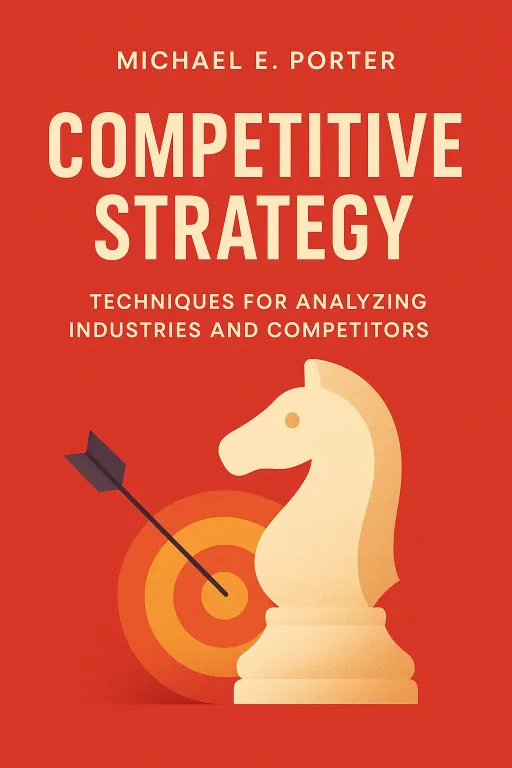
Nova: Exactly! Today, we're diving into the strategic playbook that underpins the entire sports business. We're looking at how franchises craft winning moves far beyond the game clock, drawing insights from two incredibly powerful, yet distinct, strategic texts. We're talking about Michael Porter's seminal work, "Competitive Strategy," which fundamentally redefined how we understand industry competition, and the timeless wisdom of Sun Tzu's "The Art of War," an ancient military treatise that continues to be a go-to for modern business leaders.
Atlas: The Art of War for sports? That's quite a leap! I mean, one is about ancient battlefields, the other about economic forces. How do these two seemingly disparate works actually connect to, say, a team trying to sign a star player or dominate their local market?
Nova: Well, that's precisely the magic, Atlas. They provide a dual lens. Porter gives us the analytical framework to dissect the structure of competition itself, while Sun Tzu offers profound insights into the psychology and dynamics of outmaneuvering rivals. Let's start with Porter, because his Five Forces are the bedrock for understanding any competitive landscape, including the high-stakes world of sports.
Porter's Five Forces: Deconstructing Sports Market Dynamics
SECTION
Nova: So, Michael Porter, a Harvard Business School professor, published "Competitive Strategy" in 1980. It's a foundational text that's shaped how generations of business leaders think about competition. Porter essentially argued that industry profitability isn't just about individual company performance, but about the structure of the industry itself. And he identified five forces that shape that structure.
Atlas: Okay, so these aren't just abstract economic theories, right? How do these forces actually play out in, say, the NBA or the Premier League?
Nova: Absolutely not abstract! Think of it like this: The Five Forces are the invisible currents that either propel you forward or drag you down. They are: the threat of new entrants, the bargaining power of buyers, the bargaining power of suppliers, the threat of substitute products or services, and the intensity of rivalry among existing competitors. Let's take the "bargaining power of suppliers" in sports. Who are the suppliers to a sports team?
Atlas: In the context of a team, I imagine the biggest suppliers are the players themselves, or more specifically, their agents. And the player unions, too. They hold a massive amount of power, especially for elite talent.
Nova: Exactly! A star player, represented by a powerful agent, holds immense bargaining power. They can demand huge salaries, specific contract clauses, and dictate terms. This is a critical force for any franchise. How does a team try to reduce that supplier power?
Atlas: That makes me wonder, a team might invest heavily in its scouting and player development system, right? Like, if you can consistently draft and develop your own talent, you become less reliant on external free agents who can command exorbitant prices. It’s like creating your own supply chain.
Nova: That’s a perfect example! Building a strong farm system or college program is a direct strategy to mitigate supplier power. Another angle is the "threat of new entrants." In major professional sports, the barrier to entry for a new league or franchise is incredibly high – billions of dollars, established fan bases, infrastructure. So, for existing leagues, this threat is generally low, which gives them significant pricing power and stability.
Atlas: I’m curious, does that mean established leagues have a kind of monopoly power because it's so hard for anyone new to break in?
Nova: In a way, yes. The existing leagues operate in what's called an oligopoly, where a few dominant players control the market. But that doesn't mean there are no threats. Think about "threat of substitutes." What are sports franchises competing with for people's attention and disposable income?
Atlas: Oh, I see. It's not just other sports leagues. It's Netflix, it's video games, concerts, even just going out to dinner. Any form of entertainment that competes for an evening out or someone's leisure budget. That's a much broader competitive landscape than just other teams.
Nova: Precisely. A team isn't just trying to beat the rival across town; they're trying to beat Fortnite for your Sunday afternoon. So, to enhance market share, a franchise needs to deliver an unparalleled fan experience, innovate with technology, and build a strong community connection to differentiate itself from these substitutes. It’s about creating an experience that can’t be replicated by staying home.
Atlas: So, basically, understanding these forces helps a franchise identify where the power lies, where the threats are, and then strategize to either exploit an opportunity or defend against a weakness. It’s a very analytical, almost scientific, way of looking at competition.
Sun Tzu's 'Art of War': Ancient Wisdom for Modern Sports Strategy
SECTION
Nova: And that naturally leads us to a fascinating complement to Porter's modern frameworks: ancient strategic wisdom from Sun Tzu's "The Art of War." It proves that the core principles of competition are surprisingly timeless. Sun Tzu's book, written over two millennia ago, is still studied by military leaders, politicians, and CEOs. His focus isn't on industry structure, but on the dynamics of conflict and how to achieve victory with minimal loss.
Atlas: I mean, that sounds kind of brutal for sports! Are we talking about psychological warfare, but on the court or field? Like, trying to get into an opponent's head?
Nova: Absolutely, but it's deeper than just trash talk. One of Sun Tzu's most famous maxims is "Know yourself and know your enemy, and in a hundred battles, you will never be in peril." How does that translate to a modern sports franchise trying to secure a competitive edge?
Atlas: That makes perfect sense. It's about scouting, right? It's about detailed analytics on opponent tendencies, understanding their strengths, their weaknesses, their coaching philosophy. And then, equally important, honestly assessing your own team's capabilities, your roster's depth, your strategic limitations. It's almost like a SWOT analysis, but for warfare.
Nova: Exactly! The most successful teams often have the most sophisticated analytics departments, meticulously breaking down every aspect of their own and their opponents' performance. They know which plays work best against certain defenses, which players crumble under pressure, and where their own team is most vulnerable. That's "knowing yourself and your enemy" in action.
Atlas: I can see how that's critical. What about "strategic positioning"? How does a team position itself to win before the game even starts?
Nova: Oh, this is fascinating. Sun Tzu talks about creating an "unassailable position." In sports, this could be about building an incredibly strong home-field advantage through fan engagement and stadium atmosphere, making your venue a fortress. It could also be about controlling the narrative around your team, building an unassailable brand that attracts top talent and loyal fans, regardless of a single season's performance. It’s about dictating the terms of engagement, forcing your rivals to play on your turf, metaphorically and literally.
Atlas: That’s a great way to put it, like a chess master thinking several moves ahead, not just reacting. So, if a team has a dominant home stadium and a passionate fanbase, that's their strategic position that makes them harder to beat. It's not just about the players; it's the entire ecosystem they've built.
Nova: Precisely. And then there's "the use of deception." Now, in sports, we're not talking about outright deceit, but clever misdirection. This could be a coach using a complex playbook to obscure their true intentions, or a general manager making a seemingly puzzling trade that actually weakens a rival or secures a future asset that no one saw coming. It’s about creating uncertainty for your opponent.
Atlas: That sounds a bit out there, but I can see how a GM might acquire a player not just for their skill, but specifically to deny them to a key rival, effectively weakening both. Or a team developing a unique offensive scheme that forces every opponent to completely re-learn how to defend them. That's dictating the terms.
Nova: It is. It's about being unpredictable, leveraging surprise to gain an advantage. The best strategists, whether in ancient warfare or modern sports business, understand that the game is often won before the first whistle blows, by shaping the environment and outthinking the opposition.
Synthesis & Takeaways
SECTION
Nova: So, when we bring Porter and Sun Tzu together, we get a truly holistic view of competitive strategy in sports. Porter gives us the map, the structural understanding of the industry's forces. He helps us see where the power lies, where the money flows, and what threats are inherent to the environment.
Atlas: And Sun Tzu gives us the compass, the dynamic principles for navigating that map. He tells you how to think about your opponent, how to position yourself, and how to act to gain an advantage within that structure. It’s not just about what the industry looks like, but how you play within it.
Nova: Exactly. So, for any sports franchise looking to secure talent or market share, it's about continuously analyzing those Five Forces. Where are the talent pools coming from? What's the bargaining power of the agents? How are we differentiating ourselves from other entertainment options? And then, layering on Sun Tzu: How well do we truly know our internal capabilities and our rivals' weaknesses? How can we position ourselves to make it harder for them to compete?
Atlas: That really brings it all together. It's about not just reacting to the game, but proactively shaping the entire competitive environment. It's about being an architect of competitive advantage, not just a participant. You can't just have great players; you need to understand the strategic landscape they're playing in, both on and off the field.
Nova: Ultimately, whether you're an analyst, a strategist, or a visionary in the sports world, applying these frameworks means looking beyond the obvious. It means asking the deeper questions about why certain teams consistently win, why some markets thrive, and how sustainable success is truly built. It's about understanding that the biggest wins often come from the smartest moves made long before game day.
Atlas: That’s actually really inspiring. It frames the entire sports business as a grand strategic challenge, not just a series of events. It makes you want to dig deeper into the 'how' and 'why' behind every win and loss.
Nova: And that's what we hope our listeners take away. Don't just watch the game; understand the strategy behind it. Apply these lenses to your own career, your own competitive landscape. Think like the architects, not just the players.
Nova: This is Aibrary. Congratulations on your growth!