

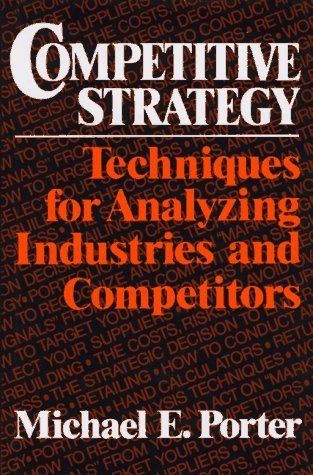
Competitive Strategy
The Godfather of Strategy
The Godfather of Strategy
Nova: Imagine it is 1980. The business world is messy, chaotic, and largely driven by gut feelings. Then, a young Harvard professor named Michael Porter drops a book that essentially becomes the Old Testament of modern business. It is called Competitive Strategy, and it is still in its 60th printing today.
Atlas: Sixty printings? That is wild for a business textbook. Usually, those things have the shelf life of a carton of milk. What was it about this specific book that made it such a permanent fixture on every CEO's desk?
Nova: It was the first time someone actually gave us a rigorous, analytical framework to understand why some industries are gold mines while others are just money pits. Before Porter, strategy was often just seen as a fancy word for marketing or long-term planning. He turned it into a science of industry structure.
Atlas: So he basically took the mystery out of why some companies win and others lose? I love that. But I have to wonder, does a book written before the internet, before AI, and before global supply chains still hold up, or is it just a historical relic we keep around for the vibes?
Nova: That is exactly what we are going to unpack today. We are diving deep into the Five Forces, the Three Generic Strategies, and why Porter believes that being stuck in the middle is the most dangerous place a business can be. By the end of this, you will see the world through a completely different lens.
Atlas: I am ready. Let's see if the Godfather of Strategy can still teach us a thing or two about the modern jungle.
Key Insight 1
The Five Forces Framework
Nova: Let's start with the big one. The Five Forces. If you have ever been to business school, you have seen this diagram. But most people misunderstand it. They think it is just a list of competitors. Porter says it is actually about one thing: profit potential.
Atlas: Profit potential? Not just how to beat the guy across the street?
Nova: Exactly. Porter argues that the state of competition in an industry depends on five basic forces. The first is the Threat of New Entrants. Think about how hard it is to start a new airline versus a new lemonade stand. If anyone can jump in, your profits will eventually be squeezed to zero.
Atlas: Right, because as soon as you start making money, ten other people show up to do the same thing for five cents less. That makes sense. What is the second force?
Nova: The Bargaining Power of Buyers. If you are a small manufacturer and your only customer is Walmart, who do you think dictates the price? Walmart has all the power. They can force you to lower your margins because you have nowhere else to go.
Atlas: So, the more options the customer has, the less power the business has. It is like being a ghostwriter in a sea of thousands; the client holds all the cards.
Nova: Precisely. Then you have the flip side: The Bargaining Power of Suppliers. If you make smartphones and there is only one company in the world that can make the specific screen you need, they can charge you whatever they want. They are eating your profit before you even sell the phone.
Atlas: It is like a pincer movement. You are getting squeezed by your customers on one side and your suppliers on the other. This is sounding less like a business strategy and more like a survival horror game.
Nova: It really is! The fourth force is the Threat of Substitute Products. This is a sneaky one. It is not just your direct competitors. For a movie theater, the substitute isn't just another theater; it is Netflix, or even a video game. It is anything that fulfills the same basic need.
Atlas: That is a crucial distinction. It is not about who makes the same product, but who solves the same problem. If I am thirsty, a soda company isn't just competing with other sodas; they are competing with tap water.
Nova: Spot on. And finally, the fifth force is the Intensity of Rivalry among existing competitors. This is the price wars, the massive ad campaigns, the stuff we usually think of as competition. Porter’s point is that if all five of these forces are high, the industry is structurally unattractive. You could be the best-managed company in the world, but if you are in a high-force industry, you are going to struggle to make a dime.
Atlas: So the goal isn't just to be better at the game, but to pick a better game to play in the first place?
Key Insight 2
The Three Generic Strategies
Nova: Once you understand the forces, you have to decide how you are going to compete. Porter says there are only three ways to do it successfully. He calls them the Generic Strategies: Cost Leadership, Differentiation, and Focus.
Atlas: Only three? That seems almost too simple. Surely there are a million ways to run a business?
Nova: You would think so, but Porter argues that if you don't pick one of these three, you end up in what he calls the graveyard of the stuck in the middle. Let's look at Cost Leadership first. This is Walmart. This is Southwest Airlines. The goal is to be the absolute lowest-cost producer in the industry.
Atlas: But being the cheapest doesn't mean you are the best, right? I mean, Southwest doesn't give you a meal or a reserved seat.
Nova: That is the point! To be a cost leader, you have to strip away everything that doesn't add core value so you can offer the lowest price while still making a profit. If you try to be the cheapest but also have fancy offices and gourmet snacks, you will go bankrupt.
Atlas: Okay, so that is the volume play. What about the companies that want to be fancy? Like Apple?
Nova: That is Differentiation. This is the second strategy. Here, you are creating something that is perceived industry-wide as being unique. It could be brand image, technology, customer service, or a dealer network. Because people perceive your product as special, they are willing to pay a premium. You aren't competing on price; you are competing on value.
Atlas: And I am guessing you can't do both? You can't be the most premium brand and the cheapest at the same time?
Nova: Porter is very firm on this. If you try to do both, you lose your focus. You become mediocre at everything. That leads us to the third strategy: Focus. This is where you target a very specific buyer group, a specific segment of the product line, or a specific geographic market.
Atlas: Like a company that only makes high-end rock climbing gear? They don't care about the general public; they just want to be the absolute best for that one tiny group.
Nova: Exactly. Or look at IKEA. They focus on a specific segment: young, price-conscious buyers who are willing to assemble their own furniture. By focusing, they can serve that specific group better or more efficiently than competitors who are trying to serve everyone.
Atlas: So the big takeaway here is: choose a lane and stay in it. If you try to be everything to everyone, you end up being nothing to anyone.
Key Insight 3
Market Signals and Strategic Moves
Nova: One of the most fascinating parts of the book that people often skip is the section on Market Signals. Porter describes business as a game of poker. Every move a competitor makes is a signal, but you have to figure out if it is a bluff or a real commitment.
Atlas: Like when a company announces they are building a massive new factory? Is that a signal?
Nova: Absolutely. Porter calls that a Preemptive Move. By announcing the factory early, they are trying to scare off competitors from building their own. It is a way of saying, this market is mine, don't even try it.
Atlas: But what if they are lying? What if they don't actually have the money to build it?
Nova: That is where the analysis comes in. You have to look at their history, their resources, and their incentives. Porter also talks about the bluff. A company might announce a price cut just to see how you react. If you panic and drop your prices too, you have both just destroyed your profits for no reason.
Atlas: It sounds like a psychological war. You are constantly trying to read the intent behind the action.
Nova: It really is. He even talks about the concept of a Fighting Brand. This is when a big company launches a cheap, low-quality version of their product specifically to attack a new competitor without damaging their main brand's reputation.
Atlas: Wow, that is cold. It is like sending in a decoy to take the hits while the flagship stays safe. Does this happen often?
Nova: All the time. Think about how big tech companies launch experimental features that look exactly like a startup's entire business model. It is a signal to the startup and its investors that the big player is watching and can crush them if they want to.
Atlas: So, Porter isn't just giving us a map of the industry; he is giving us a playbook for the actual combat. It is about anticipating moves before they happen.
Nova: Exactly. He emphasizes that strategy is dynamic. You aren't just picking a position and sitting there; you are constantly adjusting to the moves of your rivals, suppliers, and customers. It is a never-ending game of chess.
Key Insight 4
Is Porter Still Relevant?
Nova: Now, we have to address the elephant in the room. This book was written in 1980. We live in the age of the platform economy, network effects, and rapid-fire digital disruption. Some critics say Porter's Five Forces are too static for today's world.
Atlas: I was thinking the same thing. How does the Bargaining Power of Suppliers work when your supplier is an algorithm? Or how do you define an industry when Amazon does everything from cloud computing to selling organic kale?
Nova: It is a fair critique. In the digital world, boundaries are blurred. Porter’s model assumes that industries are relatively stable and well-defined. Today, we see ecosystems. Apple isn't just in the phone industry; they are in the music, health, finance, and entertainment industries all at once.
Atlas: And what about network effects? The idea that a product becomes more valuable as more people use it. That doesn't seem to fit neatly into the Five Forces.
Nova: Actually, Porter would argue that network effects are just a massive Barrier to Entry. If everyone is on Facebook, the cost for a new entrant to lure you away isn't just about building a better site; it is about the fact that your friends aren't there. That is a huge barrier.
Atlas: Okay, so the forces still exist, they just look different. But what about the speed? Things move so much faster now. Can you really spend months doing a structural analysis when a startup can disrupt you in weeks?
Nova: That is the biggest challenge. Modern strategy often focuses more on agility and experimentation. However, even the most agile startup eventually has to face the Five Forces. Look at Uber. They disrupted the taxi industry, but now they are facing intense rivalry, high supplier power from drivers, and massive regulatory pressure. They are living through a Porter analysis in real-time.
Atlas: So the tools might need an upgrade, but the underlying physics of competition hasn't changed. Gravity is still gravity, even if we are flying faster planes.
Nova: That is a perfect way to put it. Porter gave us the laws of economic gravity. You can try to ignore them, but you do so at your own peril. Even in 2024, if you don't have a clear generic strategy and you haven't accounted for your buyers' power, you are going to fail.
Conclusion
Nova: We have covered a lot of ground today. From the structural analysis of the Five Forces to the discipline of the Three Generic Strategies, Michael Porter's Competitive Strategy remains a foundational text for a reason.
Atlas: It is clear that while the world has changed, the fundamental questions haven't. Who has the power? What makes us unique? And are we playing a game we can actually win?
Nova: Exactly. The biggest takeaway for any listener should be this: Strategy is about making choices. It is about deciding what you are not going to do just as much as what you are going to do. If you try to be everything to everyone, you are essentially choosing to have no strategy at all.
Atlas: That is a sobering thought. It takes courage to pick a lane and stick to it, especially when the world is telling you to pivot every five minutes.
Nova: But that courage is what separates the market leaders from the companies that just fade away. Porter’s work is a reminder that behind every successful business is a deep, cold-eyed understanding of the competitive landscape.
Atlas: I definitely have a lot to think about next time I look at a business. It is not just about the product; it is about the forces behind it.
Nova: Well said. If you want to dive deeper, I highly recommend picking up a copy of the book. It is a dense read, but it is the closest thing we have to a master key for the business world.
Atlas: Thanks for walking me through this, Nova. It has been eye-opening.
Nova: My pleasure. This is Aibrary. Congratulations on your growth!