

Stop Chasing Noise, Start Creating Value: The Power of Distinctive Competence.
Golden Hook & Introduction
SECTION
Nova: Most people think the secret to success, especially in a crowded market, is doing what everyone else is doing, just a little bit better. They look at the top players, try to reverse-engineer their strategies, and then just… mimic.
Atlas: Oh, I totally know that feeling. It's like, you see a successful app, you think, "Okay, I'll just make one with a slightly different color scheme and maybe a few extra features." It feels like the logical path to follow.
Nova: Exactly! It logical. But what if that's precisely why you're getting completely lost in the noise? What if chasing what's already working for someone else is the fastest way to dilute your own impact and become utterly forgettable?
Atlas: Wait, hold on. Are you saying that trying to learn from successful examples, trying to emulate best practices, is actually a strategy? That's a pretty bold claim, Nova.
Nova: It's not that learning is bad, Atlas. It's that leads to market sameness, and market sameness leads to diluted value. The real leverage, the true power, comes from something far more profound: identifying and amplifying your. We're talking about stopping the noise chase and starting to create value that only can.
Atlas: Oh, I like that. "Distinctive competence." It sounds like a superhero power for businesses. Where does this game-changing idea come from? This feels like it challenges a lot of conventional wisdom.
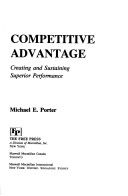
Nova: It does, and it’s an idea deeply rooted in some of the most influential strategic thinking of the last few decades. We're drawing heavily from giants like Richard Rumelt, with his seminal work "Good Strategy/Bad Strategy," and Michael Porter, whose book "Competitive Advantage" reshaped how we understand market dynamics. These aren't just academic texts; they're blueprints for how to truly stand out, not just fit in. They shifted the conversation from vague business goals to concrete, actionable differentiation.
Atlas: So these aren't just for the C-suite in massive corporations, then? This is about fundamental principles.
Nova: Absolutely. It's about fundamental principles that apply whether you're building a startup, leading a team, or even navigating your own career. And that brings us right to our first deep dive: why being truly different is your ultimate power.
Unlocking Your Distinctive Competence: Why Being Different Matters More Than Ever
SECTION
Nova: So, the "cold fact" that kicks us off is this: in a crowded market, it's incredibly easy to get lost trying to mimic what others do. We see someone else's success, we think, "Aha! That's the formula!" But what often happens is we end up with generic offerings, a diluted impact, and ultimately, we become just another voice in a cacophony.
Atlas: That makes sense. I can definitely relate. It's like when everyone starts selling the same kind of artisanal coffee, and suddenly, none of them feel special anymore. You just pick the one closest to you, not the one that's truly unique.
Nova: Exactly! The real leverage, the way to truly cut through that noise, comes from understanding your. It’s that unique combination of strengths, capabilities, and resources that allows you to create value in a way no one else can. It's your secret sauce, your unfair advantage.
Atlas: Can you give us a real-world scenario where, say, a company they were being strategic by mimicking, but actually just diluted their impact? Because I think a lot of our listeners, the "Strategic Builders" out there, might be unknowingly falling into this trap.
Nova: I’ve got a perfect example. Think about the early days of online course platforms. Many initially mimicked traditional university structures, offering broad catalogs, trying to be all things to all learners. They saw success in established education and thought, "We'll just put it online." The result? A sea of generic courses, high dropout rates, and a lot of noise. They were chasing the "noise" of what traditional education looked like, instead of identifying their distinctive competence in a digital space.
Atlas: So, the cause was a lack of clear diagnosis of what makes online learning different, or what their unique value proposition could be?
Nova: Precisely. They focused on replicating the rather than understanding the and their unique digital capabilities. The process involved diluting their original vision, trying to cover too many subjects, and losing focus on who they were best equipped to serve. The outcome? Generic content, low engagement, and a failure to stand out in a rapidly burgeoning market. They became just another online learning option, not online learning option for a distinct need.
Atlas: But wait, isn't there value in learning from others' success? I mean, shouldn't you at least look at what's working? Where's the line between smart learning and blind mimicry that dilutes everything? That sounds like a fine line to walk.
Nova: That’s a great question, and it’s absolutely a fine line. Learning from others is crucial for understanding the market landscape and identifying potential gaps. The distinction lies in your and. Learning your strategy; mimicry your strategy. Smart learning involves diagnosing a competitor is successful, then turning inward to ask, "Given our unique strengths and resources, how can we solve that problem, or a related one, in a way that is distinctly?" It’s about deeply understanding your own unique resources and capabilities, not just copying someone else's output.
Strategic Frameworks for Differentiation: From Diagnosis to Sustainable Advantage
SECTION
Nova: And that idea of understanding your own capabilities and then applying them strategically is exactly where Rumelt and Porter come in. They give us the tactical insights to not just distinctive competence, but to and it.
Atlas: Okay, so how do these giants help us, the "Culture Weavers" and "Resilient Learners" in our audience? What's Rumelt's big idea here?
Nova: Rumelt argues that good strategy isn't just about setting ambitious goals. That's "bad strategy." Good strategy is about coherent action guided by a of the challenge. He emphasizes identifying "proximate objectives"—achievable steps that leverage existing strengths to overcome obstacles. It’s like a military general not just saying, "We will win the war!" but first meticulously diagnosing the enemy's weaknesses, assessing their own troop's unique capabilities, and then setting a series of concrete, winnable battles.
Atlas: So it's like a doctor diagnosing a specific illness instead of just saying "get well." You have to know what you're up against, and what tools you uniquely possess. Can you give an example of this "good strategy" in action?
Nova: Absolutely. Consider a small, independent bookstore facing competition from giant online retailers. A "bad strategy" would be to try and compete on price or selection, which they can't win. A "good strategy," following Rumelt, would involve a clear diagnosis: their unique strength is community connection and curated experience, not endless inventory. Their proximate objective becomes creating an unparalleled local hub for book lovers, leveraging their knowledgeable staff and cozy atmosphere. They host unique author events, specialized book clubs, and offer personalized recommendations. They're not trying to be Amazon; they're being the best they can be.
Atlas: That's a perfect example. They identified their distinct strength and then built a strategy around, not around what others were doing. And Porter, what's his angle on creating unique value?
Nova: Porter takes it further by detailing how firms achieve superior performance by establishing a. He outlines two primary strategies: cost leadership, where you aim to be the lowest-cost producer, or differentiation, where you create unique value that customers are willing to pay a premium for. The key is choosing one and committing to it, rather than getting stuck in the "stuck in the middle" trap.
Atlas: So, it's about making a choice: either you're the absolute cheapest, or you're so unique and valuable that price isn't the main factor. You can't be both effectively.
Nova: Precisely. Think of a luxury car brand. They don't try to compete on price with economy cars. Their distinctive competence is in engineering, design, and brand prestige. They differentiate by creating a unique value proposition that targets a specific customer willing to pay for that quality and experience. They've identified what makes them truly special and amplified it.
Atlas: So Rumelt helps us see the path by diagnosing our strengths, and Porter helps us walk it uniquely by choosing how we're going to create unmatched value. It sounds like these aren't just for big corporations, as you said. The Nova's Take insight from our content really nails it: these frameworks fundamentally solve the problem of market sameness.
Nova: They do. They provide a clear roadmap for anyone, from an individual trying to define their personal brand to a small team launching a new project, to move beyond generic aspirations and into truly differentiated, impactful action. It’s about leveraging what you uniquely bring to the table.
Synthesis & Takeaways
SECTION
Nova: Ultimately, distinctive competence isn't about being perfectly unique in every single aspect. It's about identifying those core strengths, those unique combinations of skills, resources, or perspectives that you possess, and then applying them strategically and coherently. It’s about focused energy, not scattered effort, creating unmatched value that resonates deeply with your audience.
Atlas: So for our listeners, the "Strategic Builders" and "Culture Weavers" out there, who are constantly looking to build foundations for sustainable growth and create something meaningful, what's one tiny step they can take this week to start this journey? To identify their own distinctive competence?
Nova: I love that you asked, because we have a perfect "Tiny Step" for exactly that. This week, list three unique strengths of your current project or role. Don't censor yourself; what are you genuinely good at? What makes you, or your work, stand out? Then, for each of those strengths, brainstorm just one way you could leverage it this week. Even a small tweak can make a huge difference.
Atlas: That's actually incredibly empowering. It's about trusting your intuition, right? Not just chasing the next shiny thing or mimicking what's trending, but looking inward and building on what's already there, what's authentic to you. It's about creating something enduring, which really speaks to our growth recommendations to trust your intuition and celebrate those small wins.
Nova: Exactly. It's the ultimate act of self-trust and strategic focus. When you stop chasing noise and start creating value from your distinctive competence, you're not just building a better project or role; you're building a more resilient, impactful, and fundamentally future.
Atlas: This is Aibrary. Congratulations on your growth!