

Stop Guessing, Start Measuring: The Guide to Data-Driven Decisions.
Golden Hook & Introduction
SECTION
Nova: Alright, Atlas, we’re diving into a powerful concept today: "Stop Guessing, Start Measuring: The Guide to Data-Driven Decisions." What's your gut reaction to that title?
Atlas: My gut reaction? It's usually, "Oh, another meeting about data we won't actually use." Which, ironically, is precisely the problem I imagine this guide aims to solve. It’s like the universe is saying, “Your instincts are cute, but they’re costing you.”
Nova: Exactly! That's the tension we're exploring. We all want to make impactful decisions, right? But so often, those decisions feel like a gamble. This isn't just about collecting numbers; it's about transforming pure intuition into verifiable, actionable insights. It’s about making your strategic thinking truly count and proving its worth.
Atlas: That makes sense. For anyone trying to drive meaningful impact, whether in business or beyond, the 'proving its worth' part is everything. But how do we actually do that? How do we move from that gut feeling to something solid, something that builds trust and delivers real ROI, not just a good story?
The Power of Analytical Rigor: Competing on Data
SECTION
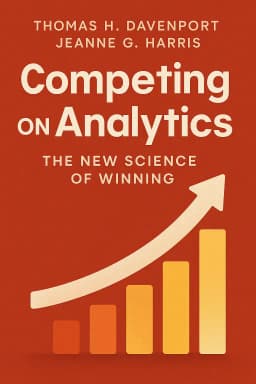
Nova: That's the perfect question to kick us off, because it leads us directly to our first foundational insight, drawn from the work of Thomas H. Davenport and Jeanne G. Harris in their influential book, "Competing on Analytics."
Atlas: Okay, 'Competing on Analytics.' Sounds like it’s about winning the data game.
Nova: It is, but it’s so much more profound than just having a good analytics department. Davenport and Harris highlight how leading companies don't just use data to what happened. They embed data into. From product development to customer service, supply chain optimization to marketing strategy. They build an entire.
Atlas: A culture of evidence. That’s a powerful distinction. So, it’s not just about having the numbers, it’s about how an organization breathes and lives by them?
Nova: Precisely. Imagine a retail company, let's call them "Trendsetter Apparel," that used to launch new clothing lines based purely on the founder's fashion intuition. He had a great eye, but his success was inconsistent. Sometimes a hit, sometimes a massive flop, leaving warehouses full of unsold inventory.
Atlas: Sounds like a high-stakes gamble every season. And I'm guessing the founder had a few 'I know best' moments.
Nova: Absolutely. But then, they decided to transform. They started meticulously tracking everything: foot traffic patterns in stores, online browsing behavior, conversion rates per garment style, even social media sentiment analysis launch. They began A/B testing different marketing campaign visuals and product placements.
Atlas: So, they were measuring everything, but how did that change the decisions?
Nova: Instead of just launching the founder's favorite design, they used predictive models to identify emerging trends based on actual customer data, not just a hunch. They optimized store layouts by seeing exactly which displays led to higher engagement and sales, rather than what "looked good." They could predict inventory needs with far greater accuracy, slashing waste.
Atlas: That’s fascinating. So, the data wasn't just confirming what they was happening; it was revealing entirely new pathways. They went from hoping for success to designing for it.
Nova: Exactly. The result was a dramatic improvement in profitability, reduced waste, and a significant competitive advantage. They transformed from an intuition-led gamble to a data-driven powerhouse. That’s building data into a strategic asset, where every decision is informed and verifiable.
Atlas: That's going to resonate with anyone who’s ever had to present a strategic plan and been asked, "Where's the data to back that up?" It’s not just about having the data; it’s about having a system that it, and a culture that trusts it.
Navigating the Mind's Minefield: Biases in Decision-Making
SECTION
Nova: That organizational muscle memory is absolutely vital, Atlas. But what happens when the biggest hurdle isn't the data itself, but the person at the data? That brings us to another critical piece of the puzzle: our own brains.
Atlas: Whoa. You’re saying even with perfect data, we can still mess it up? That sounds like a whole new level of complexity for a strategic analyst trying to make ethical, sound decisions.
Nova: It's true! This comes from Daniel Kahneman's groundbreaking work in "Thinking, Fast and Slow." Kahneman reveals how our brains operate with two systems. System 1 is fast, intuitive, emotional, and often leads to quick judgments. System 2 is slow, deliberate, analytical, and logical.
Atlas: So, System 1 is our gut, and System 2 is our brain trying to catch up.
Nova: Precisely. And the problem is, System 1 can lead to all sorts of cognitive biases. It loves shortcuts, even if those shortcuts lead us astray. Think about it: how many times have you assumed a more expensive product is better, or let a recent success make you overly confident about a new venture?
Atlas: Oh, I've been there. That feeling of "Everything's going great, what could possibly go wrong?" right before something inevitably goes wrong.
Nova: That's a classic example of optimism bias, or perhaps anchoring bias if you're stuck on an initial estimate despite new information. Let's imagine a project manager, we'll call him Alex, who just delivered three hugely successful projects back-to-back. He's feeling invincible.
Atlas: So, System 1 is fully engaged, high-fiving itself.
Nova: Exactly. Now, he's faced with a new, complex initiative. The data — the risk assessments, the resource allocation forecasts, the historical timelines for similar projects — all clearly indicate this new project is high-risk, will require significant contingencies, and a longer timeline.
Atlas: But Alex, riding high on his recent wins, probably isn’t seeing it that way.
Nova: He isn't. His System 1, fueled by recent success, dismisses the red flags. He anchors to an overly optimistic timeline, under-allocates resources, and downplays potential roadblocks, convinced he can "make it happen" just like before. He's not consciously lying; his brain is just taking a convenient shortcut.
Atlas: So, the data was there, screaming a warning, but his internal biases essentially filtered it out or reinterpreted it to fit his narrative. That's actually really unsettling. For someone trying to build lasting trust and ensure ethical outcomes, how do you even begin to combat your own internal biases, let alone spot them in others?
Nova: That's the million-dollar question. It's about consciously engaging System 2. It means pausing, asking critical questions of yourself, seeking out dissenting opinions, and actively looking for evidence that your initial intuition. It's a continuous process of self-correction.
Atlas: It sounds like a constant mental negotiation. But the payoff, I imagine, is decisions that are not just data-backed, but truly robust and trustworthy.
Synthesis & Takeaways
SECTION
Nova: Absolutely, Atlas. And that's where the magic truly happens. Combining the analytical rigor that Davenport and Harris champion with Kahneman's profound insights into our cognitive biases—that's the sweet spot. It's not enough to just collect data; you have to interpret it without letting your own brain play tricks on you.
Atlas: So, it’s about a two-pronged approach: first, build an organization that systematically uses data, and second, continuously check your own internal biases before you draw conclusions. It sounds like a continuous process of learning and self-correction, which is vital for any ethical innovator.
Nova: Exactly. This dual awareness allows you to make decisions that are not only data-backed but also strategically sound, defensible, and ultimately, more impactful. This is how you prove impact. This is how you build lasting trust – by showing your decisions are grounded in reality, not just wishful thinking.
Atlas: That’s a powerful synthesis. And it’s not just theoretical. The book gives us a 'tiny step' to start.
Nova: It does. A genuinely powerful challenge for our listeners: Identify one recent decision where you relied heavily on instinct. Now, list three specific data points you could have used to inform it better.
Atlas: That's a brilliant and practical challenge. It forces us to retroactively engage System 2 and see where the data could have guided us better. It's a tiny step, but with huge potential for growth in how we approach every decision.
Nova: Absolutely. It's about building that habit, that muscle, to transform intuition into verifiable insight, and truly stop guessing.
Atlas: That’s a path to real strategic advantage.
Nova: This is Aibrary. Congratulations on your growth!