

Cultivating Youthful Resilience and Understanding the Mind
Golden Hook & Introduction
SECTION
Nova: Let’s play a quick game. I’ll name a common piece of advice, and you tell me why it’s actually dangerous.
Atlas: Oh, I like that. I’m ready.
Nova: "Just look on the bright side."
Atlas: That’s the classic one. It’s the fastest way to make someone feel unheard and invalidate their reality. It’s like putting a band-aid on a broken leg and telling the person to walk it off. It ignores the actual problem and forces a mask of happiness that usually just makes people feel isolated.
Nova: Exactly. But what if I told you there’s a version of optimism that isn't about ignoring the bad, but actually analyzing it better?
Atlas: Okay, I’m listening. Because usually, when people say "optimist," I hear "delusional."
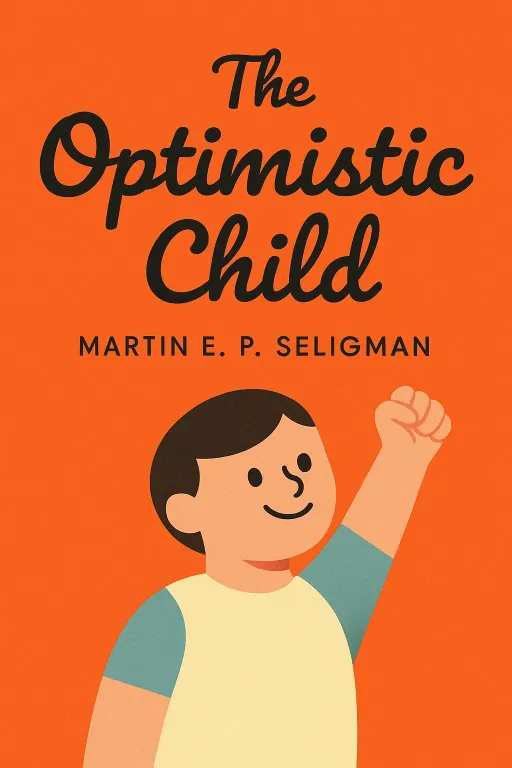
Nova: That is the exact trap we’re going to dismantle today. We are looking at two essential books that change how we view resilience. First, we have The Optimistic Child by Martin E. P. Seligman. Now, Seligman is a titan in the field. He’s the psychologist who basically pioneered the study of positive psychology, and he started his career studying the exact opposite: learned helplessness. He’s spent decades figuring out how to teach people to argue with their own negative thoughts.
Atlas: And that pairs with the second book, right?
Nova: Right. We’re pairing that with Coming of Age by Lucy Foulkes. She does something brilliant. She maps out the modern landscape of adolescent mental health, specifically helping us distinguish between the normal, messy, often painful parts of growing up and actual clinical disorders.
Atlas: That is such a vital distinction. Because I see so many adults today who treat every single bad mood like a catastrophe, and then on the flip side, we have people ignoring real warning signs because they think it’s just "typical teenager stuff."
Nova: That tension is exactly what we’re going to explore. We’re moving from the idea of "toxic positivity" to something much more robust: cognitive restructuring.
The Science of Cognitive Restructuring
SECTION
Atlas: Okay, so let’s get into the weeds of this. You mentioned cognitive restructuring. If I’m a listener who’s tired of hearing "just be positive," how is Seligman’s approach different?
Nova: The core difference is that Seligman’s approach is based on accuracy, not cheerfulness. It’s about being a detective of your own thoughts. When a setback happens, our brains have a default setting—they tend to catastrophize. We jump to three conclusions: that the problem is permanent, that it’s pervasive, and that it’s personal.
Atlas: Those are the big three, right? I’ve heard them described as the "3 Ps." Break those down for me.
Nova: Think about a student failing a math test. If they have a pessimistic explanatory style, they think, "I am bad at math." That’s permanent. They think, "I’m going to fail every subject because I’m stupid." That’s pervasive. And they think, "It’s my fault, I’m just not smart enough." That’s personal.
Atlas: That sounds like a recipe for a downward spiral. I’ve been there. You get one rejection email, and suddenly you’re convinced your entire career is over and you should move to a cabin in the woods.
Nova: Exactly. And the cognitive restructuring Seligman teaches is about challenging that. You force yourself to look at the evidence. Is it permanent? No, it’s one test. Is it pervasive? No, you’re good at history and art. Is it personal? Maybe you didn't study the right way, or maybe the test was poorly designed. That’s not about being "positive." That’s about being accurate.
Atlas: I love that framing. It turns the internal monologue into a debate. But here’s my question. How do you do that in the moment? When your heart is racing and you’re feeling that sting of failure, your brain isn't exactly in a "logical detective" mode.
Nova: That is the million-dollar question. You have to practice it when the stakes are low. If you wait until you’re in the middle of a massive crisis to start learning how to argue with your negative thoughts, you’re going to lose every time. You have to build the muscle of "ABC" thinking.
Atlas: What’s the ABC framework?
Nova: It stands for Adversity, Belief, and Consequence. The Adversity is the event—the test you failed. The Belief is what you tell yourself about it—the "I'm stupid" thought. The Consequence is how you feel—sad, hopeless, unmotivated. Most people only focus on the Consequence. They try to fix the sadness without realizing it came from the Belief.
Atlas: So you’re saying we have to go back and change the Belief to change the Consequence.
Nova: Precisely. You interrupt the chain. You look at the Belief and say, "Is this actually true?" You provide evidence against it. You reframe the cause from "I am a failure" to "I didn't prepare for this specific task." That shift is huge. It takes the power away from the event and gives it back to you.
Atlas: That makes perfect sense. It’s essentially teaching yourself to be your own therapist. But does this work for everyone? Are there people who are just naturally wired to be pessimistic?
Nova: Seligman’s research suggests that while genetics play a part, explanatory style is largely learned. It’s a habit. And that’s the good news. If it’s a habit, it can be unlearned. It’s not a personality trait set in stone; it’s a skill set.
Navigating Adolescent Distress
SECTION
Atlas: That brings me to the other side of this. We’ve talked about how to handle our own setbacks or how to teach kids to reframe them. But what about when the distress isn't just a "bad day" or a "pessimistic thought"? That’s where Lucy Foulkes’ work in Coming of Age feels really urgent.
Nova: Absolutely. And this is where we have to be incredibly careful. Foulkes makes a critical point: we are living in an era where we are hyper-aware of mental health, which is a massive net positive. But there is a flip side. We are increasingly pathologizing normal human experiences.
Atlas: What do you mean by "pathologizing"?
Nova: It means we start treating common, difficult, but ultimately normal parts of growing up as if they are clinical disorders. If a teenager is feeling anxious about an exam, or sad after a breakup, or socially awkward at a party—those are painful, but they are normal. They are part of the process of becoming an adult.
Atlas: I see this all the time. People jump straight to "I have social anxiety" when they’re just nervous about talking to new people. Or "I’m depressed" when they’re just having a rough week.
Nova: Right. And Foulkes argues that by labeling these normal feelings as disorders, we might actually be doing more harm than good. We might be teaching young people that they are "broken" or "disordered" when they are actually just experiencing the messy, uncomfortable reality of human development.
Atlas: It sounds like we’re taking away their resilience by telling them they’re incapable of handling the stress.
Nova: That’s a fair way to put it. Foulkes isn't saying we should ignore suffering. That’s the crucial part. She’s saying we need to distinguish between "distress" and "disorder." If a young person is functioning—if they’re going to school, eating, sleeping, maintaining friendships—even if they’re unhappy, that’s different from a clinical disorder where the internal pain is preventing them from living their life.
Atlas: So, how do we distinguish? That feels like a really fine line to walk, especially for parents or mentors.
Nova: It comes down to intensity, duration, and impairment. Is the distress overwhelming? Has it lasted for a long time? And most importantly, is it stopping them from doing the things they need to do? If the answer is yes, that’s a signal to get professional help. But if the answer is no, then the approach should be to support them, validate them, and help them build the coping skills to get through it.
Atlas: I imagine the digital world makes this way harder. With social media, every "normal" low point is amplified. You’re not just having a bad day; you’re seeing everyone else’s highlight reel, which makes your bad day feel like a total failure.
Nova: You hit the nail on the head. That’s the modern context Foulkes highlights. We have a generation that is constantly comparing their "behind-the-scenes" footage with everyone else’s "best-of" movie. It creates a constant state of social evaluation.
Atlas: And that fuels the pessimistic explanatory style we were talking about earlier, doesn't it? If you feel like your life is a series of failures, and you have a feed of evidence that everyone else is winning, it’s really easy to fall into the trap of "I am fundamentally flawed."
Nova: Exactly. And that’s why these two books together are such a powerful toolkit. Seligman gives us the cognitive tools to challenge those thoughts, and Foulkes gives us the perspective to understand that the distress itself might not mean we’re broken; it might just mean we’re in a tough developmental period that requires support, not just a label.
Synthesis & Practical Application
SECTION
Atlas: This has been a massive shift in perspective for me. I started this conversation thinking we were going to talk about "thinking happy thoughts." But we’ve actually talked about building a mental defense system.
Nova: I love that. A mental defense system. It’s not about being happy all the time. It’s about being capable.
Atlas: So, for the listener who’s listening to this and thinking, "Okay, I get the theory, but what do I do tomorrow morning when I hit a wall?" What’s the tiny step?
Nova: The tiny step is to catch your "P"s. The next time you face a setback—whether it’s a missed deadline, a fight with a friend, or just a really bad Monday—stop and notice your internal monologue. Are you telling yourself this is permanent? Are you telling yourself it’s pervasive? Are you making it personal?
Atlas: And then, you pivot.
Nova: Exactly. You reframe it. You say, "This isn't permanent, it’s a temporary setback. This isn't pervasive, it’s just this one project. And this isn't personal, it’s a result of a specific process that I can change."
Atlas: I like that. It’s like a mental audit. It takes the emotion out of the driver’s seat and puts logic back in.
Nova: And remember what Foulkes would add: if you find yourself unable to do that, if you find yourself constantly overwhelmed, it doesn't mean you’re a failure. It means you might need support, and there is no shame in seeking that out. Resilience isn't about doing it all alone.
Atlas: That’s a beautiful balance. Take responsibility for your thoughts, but don't take the weight of the world on your shoulders.
Nova: Precisely. We grow by being honest with ourselves, not by being harsh with ourselves.
Atlas: I’m going to try that. Next time I get a tough email, I’m going to run the "3 Ps" audit before I spiral.
Nova: Let me know how it goes. It’s a game-changer. And for all of you listening, start small. You don't have to fix your entire mindset in one day. Just catch the next negative thought and ask: Is this actually true, or is this just a story I’m telling myself?
Atlas: That’s a perfect place to leave it. A simple question that can change everything. Thanks for walking me through this, Nova.
Nova: My pleasure. And thank you all for tuning in. This is Aibrary. Congratulations on your growth!