

The Architecture of Persuasion: Crafting the Perfect Statement of Purpose
Golden Hook & Introduction
SECTION
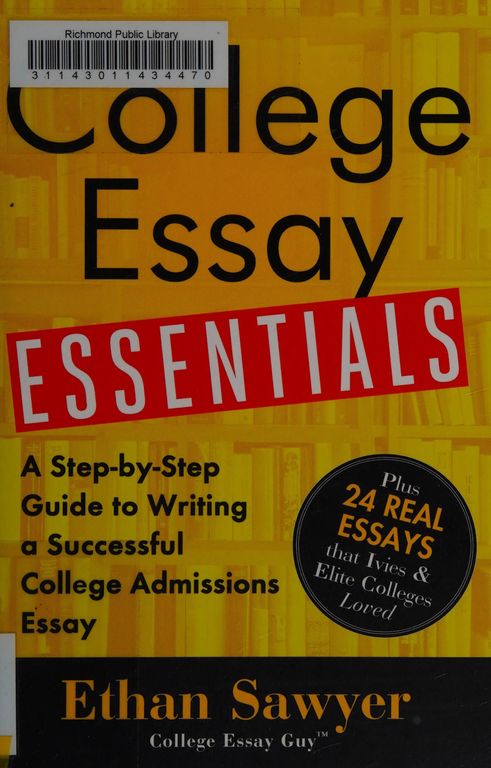
Nova: Picture this. An admissions officer is sitting at their desk at two in the morning, staring at a stack of five hundred Statements of Purpose. They all have great grades, stellar recommendations, and almost all of them start with some variation of, "Since I was a child, I have been fascinated by science." How do you make sure your essay is the one they actually remember when they finally close their laptop? Today, we are cracking the code on university essays and Statements of Purpose using Ethan Sawyer's masterwork,. We are going to tackle this from two game-changing angles. First, we will break down the structural architecture of your essay, specifically how to use the Montage framework to connect diverse experiences. Then, we will dive into the Values Exercise to inject authentic, undeniable personality into your academic goals. I am Nova, and joining me today is analytical thinker Wano Abubakar. Wano, welcome to the show!
Wano Abubakar: Thanks, Nova. It is great to be here. You know, that opening scenario you painted is exactly why so many brilliant applicants get rejected. They treat the Statement of Purpose, or the SOP, like a prose version of their resume. They list their achievements chronologically, hoping the sheer volume of accomplishments will do the heavy lifting. But admissions committees do not just want to know what you did. They want to know how you think, what drives you, and how you connect the dots between your past experiences and your future research. That is where Sawyer's frameworks become incredibly powerful, even for advanced university applications.
Nova: Oh, absolutely! We often think of college essays as being just for high schoolers, but the core psychology of storytelling does not change when you apply for a Master's or a PhD. It actually gets even more critical because the competition is so fierce. Sawyer talks about this beautiful concept of finding your "core thread." So, Wano, when you look at the challenge of writing a great SOP, where do you see applicants struggling the most with that thread?
Wano Abubakar: I think the biggest struggle is cognitive overload. Applicants feel they have to tell their entire life story. They try to fit in their undergraduate thesis, their internship at a tech firm, their volunteer work, and their love for playing the violin. Without a clear structural framework, it just reads like a chaotic list. What I love about Sawyer's book is that he simplifies this chaos into a very elegant two-by-two matrix based on two simple questions: Have you faced significant challenges, and do you know what you want to study?
Nova: Yes! That matrix is a total game-changer. Let us break that down for our listeners because it makes structuring so much easier.
Deep Dive into Core Topic 1
SECTION
Nova: So, Sawyer's matrix gives us four types of essays. Type One is when you have faced significant challenges and you know what you want to study. Type Two is when you have not faced significant challenges, but you still know what you want to study. Type Three is challenges but no clear career path, and Type Four is no challenges and no clear path. Now, for a university SOP, most applicants are going to fall into Type One or Type Two, because by the time you are applying to a specific university program, you generally have a good idea of what you want to study. Wano, how do these two types change the way we structure our writing?
Wano Abubakar: This is where the distinction between Narrative structure and Montage structure becomes vital. If you are a Type One applicant—meaning you have faced a significant, defining challenge, like navigating a major life transition, overcoming a systemic barrier, or dealing with a major project failure—you will likely use a Narrative structure. This is the classic three-act story. You describe the challenge, the impact it had on you, what you did to overcome it, and what you learned. It is a linear, cause-and-effect journey.
Nova: Right, it is the classic hero's journey. We love those stories because they are so emotionally compelling. But what if you are a Type Two applicant? What if you have had a relatively stable academic path, but you have a ton of different interests and achievements? You do not want to invent a tragedy just to have a story to tell!
Wano Abubakar: Exactly, and that is a huge trap. Applicants often try to dramatize minor inconveniences to fit that narrative mold, and it ends up sounding insincere. If you do not have a central, life-altering challenge, you should use the Montage structure. In cinema, a montage is a series of short shots edited together to condense space, time, and information. In an SOP, a montage essay uses a single, unifying theme—a "core thread"—to connect several seemingly unrelated experiences.
Nova: I love that visual of a cinematic montage. It is like showing different sides of a Rubik's cube. But how does an applicant actually find that unifying theme? How do they make sure it does not just feel like a random collection of paragraphs?
Wano Abubakar: Let us look at a concrete example. Imagine an applicant applying for a Master's in Data Science. They have a background in sociology, they did an internship at a marketing firm, and they love mapping historical migration patterns. On paper, those look like three completely different directions. But if they use a Montage structure, they can find a unifying thread. Let us say that thread is "the hidden patterns of human behavior."
Nova: Oh, that is a gorgeous thread! I can already see how that ties everything together.
Wano Abubakar: Right? In the first paragraph, they talk about how sociology taught them to ask qualitative questions about human behavior. In the next, they show how their marketing internship taught them to analyze quantitative consumer data to find those patterns. Then, they connect it to their passion for historical migration, showing how data can bring the past to life. Finally, they explain that the Data Science program at this specific university is the ultimate tool they need to synthesize these different analytical approaches. Each paragraph is a different "essence object" or experience, but they are all held together by that single, elastic thread of finding hidden patterns.
Nova: That is so brilliant, Wano. It turns what could have been a disjointed resume into a highly sophisticated, intellectual puzzle where every piece fits perfectly. It shows the admissions committee that you are not just a collector of achievements; you are a synthesizer of ideas. You have a cohesive intellectual identity.
Wano Abubakar: Precisely. And from an analytical perspective, the Montage structure is incredibly efficient. It allows you to showcase breadth of experience while maintaining depth of focus. You are not wasting words on chronological transitions like "And then I did this, and after that, I did that." Instead, you transition logically through ideas. You are telling the reader, "Here is how my mind works across different domains."
Nova: That is such an important point. Those clunky chronological transitions are absolute momentum killers in an essay. "In my sophomore year, I took a class..." No, let us skip the calendar and get straight to the curiosity! But to make this montage work, the individual pieces have to be incredibly vivid, right? You cannot just talk in abstract terms. Which brings us perfectly to Sawyer's tools for finding those vivid details: the Values Exercise and Essence Objects.
Deep Dive into Core Topic 2
SECTION
Nova: Wano, in, Sawyer introduces this incredibly fun exercise called "Essence Objects." He asks students to make a list of physical objects that represent different parts of their personality or life experience. For instance, a worn-out passport, a specific recipe book, or a broken guitar string. How can we adapt this highly creative, almost poetic exercise for a formal university Statement of Purpose?
Wano Abubakar: It might sound counterintuitive to bring physical objects into a formal academic document, but it is actually the secret to passing the "Show, Don't Tell" rule. Let us say you want to show that you are resilient and detail-oriented. Instead of writing, "I am a highly resilient researcher who pays great attention to detail," which is what everyone writes, you find your academic "essence object." Maybe it is a heavily annotated, coffee-stained lab notebook from a failed three-month experiment.
Nova: Oh, I can see that notebook in my mind right now! It has personality.
Wano Abubakar: Exactly. You start your paragraph by describing that specific notebook. You mention the red ink crossing out failed hypotheses, the dog-eared pages where you finally found the anomaly, and the coffee stain from the night you stayed up until 3:00 AM to recalibrate the equipment. That physical object instantly grounds your abstract claim of "resilience" in a vivid, undeniable reality. It is sensory, it is memorable, and most importantly, it is authentic. It proves you have actually been in the trenches of research.
Nova: That is beautiful. It is the difference between handing someone a business card that says "Creative" and actually showing them a painting you made. It invites the reader into the room with you. But Sawyer also emphasizes that these objects and stories have to connect to our core values. He has this wonderful "Values Exercise" where you select your top ten values from a list of dozens—things like autonomy, community, security, or intellectual play. Why is identifying these values so critical for an SOP?
Wano Abubakar: Because your values are the ultimate "why" behind your academic pursuits. Admissions committees are not just looking for smart people; they are looking for people who will contribute to their academic community and use their degree to make an impact. If you do not know what your core values are, your SOP will lack a sense of purpose. You might explain you want to study, but you won't explain it matters to you on a deeper level.
Nova: Yes, the "why" is everything! And Sawyer has this brilliant diagnostic tool called the "So What?" test. I think this is probably the most valuable editing tool in the entire book. Can you explain how an applicant can run their draft through the "So What?" test?
Wano Abubakar: It is a wonderfully brutal test, Nova. For every single paragraph you write, you have to ask yourself, "So what?" You state a fact: "I learned how to use Python during my internship." So what? "Well, it allowed me to automate data collection." So what? "It made the research process ten times faster." So what? "It taught me that efficiency in data collection is crucial for real-time epidemiological tracking, which is what I want to do in your program to help prevent disease outbreaks."
Nova: Ah! That is the gold standard right there! You took a basic technical skill and connected it directly to a massive, value-driven career goal.
Wano Abubakar: Exactly. If you stop at "I learned Python," you have only answered the "what." By pushing through the "So What?" test three or four times, you force yourself to uncover the deeper significance of your experience. You connect the skill to a value—in this case, public health and efficiency—and you show the admissions committee how that skill will be applied in their program. It transforms a dry skill list into a compelling argument for your admission.
Nova: It really does. It is like peeling back the layers of an onion until you reach the core motivation. And what I love about this approach is that it naturally eliminates academic jargon. When you are forced to answer "So what?" in simple terms, you stop hiding behind big, empty words and start speaking with real clarity and passion.
Wano Abubakar: That is a huge benefit. A lot of applicants think that using complex jargon makes them sound smart. But true intellectual sophistication is the ability to explain complex ideas simply. When you use Sawyer's Values Exercise, you align your academic goals with universal human values. That makes your writing accessible and engaging to any professor reading it, even if they are not in your exact sub-field.
Synthesis & Takeaways
SECTION
Nova: This has been such an incredibly rich conversation, Wano. We have covered so much ground, from the structural architecture of the Montage to the emotional grounding of Essence Objects and the rigor of the "So What?" test. If you had to synthesize all of this into a single, actionable piece of advice for someone sitting down to write their university SOP tonight, what would it be?
Wano Abubakar: I would say: do not start by writing the essay. Start by doing the prep work. Spend an hour doing Sawyer's Values Exercise and listing your Essence Objects. Identify the five core values you want the admissions committee to remember about you. Once you have those values, look at your academic and professional experiences and see which ones best illustrate those values. Then, choose your structure. If you have a powerful story of overcoming an obstacle, go with the Narrative. If you have a diverse set of experiences that showcase different facets of your mind, build a Montage around a single, beautiful thread.
Nova: That is a perfect roadmap. It takes the anxiety out of the process because you are building your essay on a solid foundation of self-knowledge before you even write your first sentence.
Wano Abubakar: Absolutely. Writing a Statement of Purpose is not about guessing what the admissions committee wants to hear. It is about deeply understanding who you are, what you value, and where you are going—and then having the structural courage to tell that story honestly.
Nova: "Structural courage." I love that phrase so much! Well, that is all the time we have for today's episode. A huge thank you to our guest, Wano Abubakar, for sharing these brilliant, analytical insights, and to all of our listeners out there embarking on their university application journeys. Remember, your story is unique, your values matter, and with the right structure, your essay can be absolutely unforgettable. Until next time, keep writing, keep reflecting, and keep shining!