

Unearthing the Past: How Archaeology Illuminates Our Present Challenges
Golden Hook & Introduction
SECTION
Nova: What if the greatest innovations for our future aren't born in a lab, but unearthed from the dust of forgotten empires? Today, we're digging into history as the ultimate R&D department.
Atlas: Whoa, Nova. That's a bold claim, but it instantly resonates with anyone trying to build something lasting. You're saying history isn't just about dates and dusty artifacts, it's about blueprints and cautionary tales?
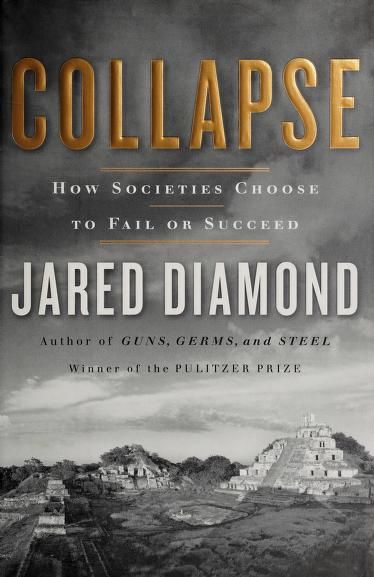
Nova: Absolutely, Atlas. And to truly understand that, we’re pulling back the curtain on two monumental works today. First, Jared Diamond's "Collapse," which famously examines why societies fail. And then, Charles C. Mann's "1491," a groundbreaking look at the Americas before Columbus. Diamond, a true polymath known for his work across geography, history, and ornithology, brings an incredibly broad perspective to human-environment relationships that’s just breathtaking.
Atlas: And Mann's "1491" essentially rewrote our understanding of pre-Columbian America, showing us just how sophisticated and sustainable those societies truly were. It's not just history; it's a treasure map for modern problem-solvers, isn't it? For architects and disruptors, this is like finding hidden code for system resilience.
The Echoes of Collapse: Learning from Past Failures
SECTION
Nova: Exactly. Let's start with the sobering lessons. Why do societies, even seemingly thriving ones, collapse? Diamond's work is a masterclass in dissecting these historical 'failed experiments.' Take the Norse settlements in Greenland, for instance.
Atlas: The Vikings in Greenland? I always pictured them as these incredibly tough, adaptable explorers. What happened there?
Nova: They were, for a time. Around 985 AD, Erik the Red led settlers to Greenland, establishing two main settlements. They brought their European farming methods – cattle, sheep, pigs – and a staunch cultural identity. For centuries, they thrived, thanks to a relatively mild climate period. But their environment was incredibly fragile.
Atlas: So, they were building on a house of cards, ecologically speaking?
Nova: Precisely. The land was marginal for European-style agriculture. They cleared forests, which were already scarce, for pasture and timber. They refused to adopt the hunting and fishing techniques of the local Inuit, whom they viewed as inferior. They relied heavily on trade with Norway for essential supplies, like iron.
Atlas: I imagine a lot of our listeners can relate to relying on external supply chains that suddenly become unstable.
Nova: Indeed. Then, the Little Ice Age hit. Temperatures dropped, making farming even harder. The sea ice expanded, cutting off their vital trade routes. Their European-style diet, heavy on dairy and red meat, became unsustainable. Despite the Inuit thriving in the same harsh conditions, the Norse clung to their cultural identity and their unsustainable practices. They literally starved with fish and seals abundant just offshore.
Atlas: That’s a powerful, almost heartbreaking detail. So, the collapse wasn't just environmental, it was a failure of cultural adaptation and strategic foresight. It sounds like a cautionary tale for any disruptor who thinks their current model is infallible. What were the core factors Diamond identified in their downfall?
Nova: Diamond outlines five key factors: environmental damage, climate change, hostile neighbors, friendly trade partners, and society's response to its problems. For the Greenland Norse, environmental damage through deforestation and overgrazing, coupled with a colder climate, were huge. Their hostile relationship with the Inuit prevented learning, and the loss of friendly trade partners isolated them. But the most critical factor was their rigid cultural response – their inability to adapt. They prioritized identity over survival.
Atlas: It makes me wonder about modern companies, even nations, that cling to outdated models or refuse to learn from different cultures, even when facing existential threats. Is it always about the environment, or are there deeper human factors at play—like ego or tradition?
Nova: It’s always a complex interplay, but the human factor, particularly the capacity for self-delusion and the inability to change deeply ingrained beliefs, is often the final nail. The environment presents the challenge, but human choices dictate the outcome.
Ancient Wisdom for Modern Sustainability: Pre-Columbian Innovations
SECTION
Nova: But history isn't just a graveyard of failures, Atlas. It's also a gallery of ingenious solutions. This is where Charles C. Mann's "1491" truly shines, challenging our preconceived notions of what "progress" looks like.
Atlas: So, after the stark warnings of "Collapse," we get to uncover some hidden gems? I like that. What kind of solutions are we talking about?
Nova: Mann reveals that pre-Columbian American civilizations were far more sophisticated and impactful on their environment than previously understood, often in incredibly sustainable ways. Think about the Amazon, for example. We often picture it as pristine, untouched wilderness.
Atlas: Right, the "lungs of the earth."
Nova: Well, Mann argues that large parts of it were, in fact, a carefully managed garden. Indigenous peoples there created "terra preta," or Amazonian dark earth. This isn't naturally occurring soil; it's human-made, incredibly fertile, and self-renewing, capable of sustaining intensive agriculture for centuries.
Atlas: Wait, human-made soil? Like, they engineered super-soil? That sounds like the ultimate 'disruptive innovation' for sustainable growth. How did they do that, and why don't we have it everywhere now?
Nova: They achieved it by mixing charcoal, pottery shards, and organic matter into the poor Amazonian soil. The charcoal acts like a sponge, retaining nutrients and moisture, and fostering beneficial microbial life. It literally improves with age. This allowed them to feed vast populations without exhausting the land, unlike the destructive slash-and-burn agriculture that followed.
Atlas: So, we're talking about ancient permaculture on an industrial scale, designed for longevity. That's mind-blowing. Could we replicate this today? What's stopping us from creating our own terra preta to revitalize degraded farmlands globally?
Nova: The knowledge is there, but the scale and the mindset are different. It requires long-term thinking, a deep understanding of local ecology, and a communal approach that often clashes with industrial, short-term agricultural practices. It's not just a technology; it's a philosophy of living with the land, not just extracting from it.
Atlas: It makes me think about "founder resilience" and sustaining energy over generations. How did these societies maintain such complex systems over centuries? What can we learn about long-term vision and collective effort when our modern world often prioritizes quarterly reports?
Nova: That’s the core of it, isn't it? Their resilience came from a deep, inherited ecological knowledge and a cultural framework that valued intergenerational stewardship. They understood that their actions had multi-century consequences. The Chinampas, the floating gardens of the Aztecs, are another incredible example. They literally built fertile islands on lakes, producing multiple harvests a year, a hyper-efficient system that fed millions. It was a fusion of engineering and ecological understanding.
Synthesis & Takeaways
SECTION
Nova: So, by looking at both the failures from Diamond's "Collapse" and the ingenious successes from Mann's "1491," we gain a powerful lens for strategic foresight. The past isn't just history; it's our most comprehensive data set for understanding human-environment interactions.
Atlas: It highlights that the real challenge isn't just to innovate, but to innovate, with a multi-century perspective built into our designs. It’s about asking: how will this project, this product, this system, impact resources and the environment not just next quarter, but in 50 years, 500 years?
Nova: Exactly. Resilient systems are not accidental; they are designed, often by learning from deep historical patterns. The Norse showed us the danger of rigid thinking and cultural isolation, while the pre-Columbian societies demonstrated the power of adaptive ecological intelligence and long-term stewardship.
Atlas: And for anyone leading a project, building a company, or even just making choices in their daily life, the "tiny step" here is crucial: identify one current project and truly consider its long-term environmental or resource implications. How has something similar been done in the past, successfully or unsuccessfully? That kind of historical perspective is invaluable.
Nova: It's about developing that strategic foresight, that ability to anticipate shifts, not just react to them. It's about designing for resilience, not just growth.
Atlas: It truly is. This conversation underscores the importance of intellectual curiosity and embracing lessons from the most unexpected places.
Nova: This is Aibrary. Congratulations on your growth!