

Decoding the Mind: The Analytical Guide to Cognitive Behavior Therapy
Golden Hook & Introduction
SECTION
Dr. Warren Reed: Why do two people experience the exact same event, say, a sudden project delay, and react in completely opposite ways? One sees a catastrophic failure. The other sees an optimization puzzle. The difference is not the event. It is the split-second, automatic thoughts running like background code in their minds. Welcome to the show. I am Dr. Warren Reed, strategist.
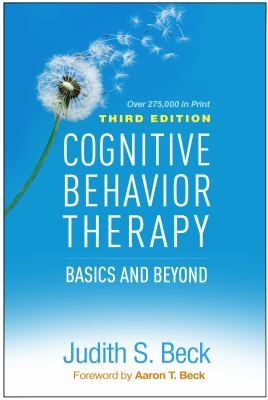
laiba: And I am laiba. I am incredibly excited to be here today, Warren. To me, this is like looking at the source code of human behavior. We are diving into Judith Beck's definitive guide, Cognitive Behavior Therapy: Basics and Beyond. It is a masterpiece on how we construct our internal realities.
Dr. Warren Reed: Today, we tackle CBT from two distinct angles. First, the cognitive model and automatic thoughts. We will use the clinical case of Sally to show how these thoughts trigger emotional spirals. Second, the architecture of beliefs. We will look at core beliefs and intermediate rules, using the case of Richard to show how to systematically restructure them. Let us get straight to it.
laiba: I love that roadmap, Warren. It is essentially a debugging process for the human mind. Let us start with the basics. What is the cognitive model at its core?
Deep Dive into Core Topic 1
SECTION
Dr. Warren Reed: The cognitive model is simple. Situation occurs. It triggers automatic thoughts. Those thoughts influence your emotion, your behavior, and your physiological response. Most people think the situation directly causes the emotion. False. It is the cognitive appraisal of the situation that dictates the reaction.
laiba: That is a profound distinction. It is not the external stimulus, but our cognitive processing of that stimulus. It is like a lens that filters data before it reaches our conscious awareness. Can you walk us through how this looks in a real clinical setting?
Dr. Warren Reed: Let us look at Sally. Sally was an eighteen-year-old college freshman struggling with severe depression. She sat in her dorm room, looking at a textbook assignment. That is the situation. Simple reading. But her automatic thought was, "This is too hard. I will never understand this. I do not belong in college."
laiba: Wow. That is a massive leap from reading a chapter to questioning her entire academic existence. What happened next in her cognitive loop?
Dr. Warren Reed: The automatic thought triggered immediate emotional and physiological reactions. She felt a heavy sadness. Anxiety tightened her chest. Her behavior? She closed the book, avoided the work, and went to sleep. This behavior then reinforced her thought that she could not handle college. A perfect, self-defeating feedback loop.
laiba: It is a classic negative feedback loop. The behavior of avoiding the work actually validates the initial distorted thought. If she does not read, she will not understand, which proves her thought correct in her mind. How did Judith Beck help Sally break this loop?
Dr. Warren Reed: First step. Identification. Beck helped Sally identify that specific automatic thought. She did not just accept Sally's despair. She asked, "What was going through your mind just before you started feeling sad?"
laiba: That is a brilliant diagnostic question. It targets the exact moment of cognitive appraisal. But once you identify the thought, how do you evaluate it? You cannot just tell someone to think positive thoughts. That does not work for analytical minds.
Dr. Warren Reed: Correct. Positive thinking is useless. Realistic thinking is the goal. Beck used Socratic questioning. She asked Sally for the evidence. "What is the evidence that you will never understand this? What is the evidence on the other side?" Sally realized she had passed difficult exams before. The thought was not a fact. It was an hypothesis.
laiba: Ah, treating thoughts as hypotheses rather than absolute truths. That is a powerful shift. It appeals to the analytical mind because it requires data. But what about cognitive distortions? I know Beck talks about these systematic errors in thinking. How did they manifest in Sally's case?
Dr. Warren Reed: Sally was engaging in all-or-nothing thinking and catastrophizing. If she did not understand one page immediately, she assumed she would fail the entire course. She was also mind-reading, assuming her professors thought she was incompetent.
laiba: It is fascinating how the brain uses these shortcuts, these heuristics, which are actually bugs in our cognitive software. All-or-nothing thinking removes nuance. Catastrophizing projects the worst-case scenario into the future. How do we systematically correct these distortions?
Dr. Warren Reed: We use the Thought Record. It is a structured tool. Six columns. Situation. Automatic thoughts. Emotions. Alternative realistic thoughts. Outcome. Actionable strategy: write it down. You cannot solve complex cognitive distortions entirely in your head. You need to externalize them on paper.
laiba: Writing it down forces you to slow down the processing speed of your brain. It takes it out of the emotional amygdala and puts it into the analytical prefrontal cortex. In Sally's case, once she evaluated the thought, what was the alternative realistic thought she formulated?
Dr. Warren Reed: Her alternative thought was, "This chapter is difficult, but I have understood hard chapters before. If I take it one section at a time, and ask for help if I get stuck, I can get through it."
laiba: And the result?
Dr. Warren Reed: Her sadness decreased. Her anxiety became manageable. She opened the book and read for thirty minutes. Action followed cognitive restructuring. That is the key.
Deep Dive into Core Topic 2
SECTION
laiba: That is a beautiful transition to our second topic. Automatic thoughts do not just appear out of nowhere. They are generated by deeper structures in our minds. Beck calls these intermediate beliefs and core beliefs. It is like the architecture of a database. Can you explain this hierarchy?
Dr. Warren Reed: Think of it as an iceberg. Automatic thoughts are at the surface. Just below are intermediate beliefs, which consist of rules, attitudes, and assumptions. At the very bottom, underwater, are core beliefs. These are absolute, rigid, global ideas about ourselves, others, and the world.
laiba: So, if an automatic thought is "I cannot do this assignment," the intermediate belief might be a rule like, "If I do not do everything perfectly, I am a failure." And the core belief at the very bottom is simply, "I am incompetent." Is that correct?
Dr. Warren Reed: Exactly. Spot on. Let us look at Richard to illustrate this. Richard was a thirty-five-year-old marketing director. Highly successful on paper. But he lived in constant, paralyzing anxiety. His core belief? "I am helpless."
laiba: Helpless. That is a heavy core belief for someone in a leadership position. How did that core belief shape his daily life and intermediate rules?
Dr. Warren Reed: His intermediate rule was, "If I do not control every single variable in my department, I will fail, and everyone will see how helpless I am." Therefore, his behavior was extreme micromanagement and working eighty hours a week. He was exhausted.
laiba: It is a coping strategy. He created a rule to protect himself from confronting his core belief of being helpless. But the rule itself was unsustainable. It was causing the very burnout and anxiety he was trying to avoid. How did Beck uncover this deep core belief? It is not like Richard walked into the office and said, "Hi, I feel helpless."
Dr. Warren Reed: No. He did not. Beck used the Downward Arrow Technique. You start with an automatic thought and ask, "If that thought were true, what would that mean about you?" You keep drilling down.
laiba: Let us simulate that. What was Richard's initial automatic thought?
Dr. Warren Reed: His thought was, "My assistant made a typo in the report." Beck asked, "If that is true, what does that mean?" Richard said, "It means the report looks unprofessional." Beck asked, "And if the report is unprofessional, what does that mean?" Richard said, "It means my boss will think I do not have control over my team."
laiba: And if your boss thinks you do not have control?
Dr. Warren Reed: Richard said, "It means I am failing at my job." Beck asked, "And if you are failing at your job, what does that mean about you as a person?" Richard paused, and said, "It means I am completely helpless." Boom. Core belief exposed.
laiba: That is an incredibly powerful diagnostic tool. It is like tracing a software bug back to the root vulnerability in the system architecture. Once you find that core belief, "I am helpless," how do you begin to restructure something that has been reinforced for decades?
Dr. Warren Reed: You use the Core Belief Worksheet. You systematically collect evidence that contradicts the old core belief and supports a new, adaptive core belief. For Richard, the new belief was, "I am capable and have significant control, though I cannot control everything."
laiba: But a person with a strong negative core belief will naturally filter out any positive evidence. They will say, "Oh, that successful project was just luck," or "My boss was just being nice." How do you bypass that cognitive filter?
Dr. Warren Reed: You run behavioral experiments. This is where CBT becomes highly strategic. You do not just talk. You test. Richard believed that if he did not review his assistant's minor emails, disaster would strike. So, we set up an experiment.
laiba: An experiment. I love this. What were the parameters?
Dr. Warren Reed: Richard agreed to let his assistant send five routine emails without his review. He predicted that the assistant would make critical errors, the clients would complain, and his boss would reprimand him. He wrote down these predictions.
laiba: And what actually happened?
Dr. Warren Reed: The assistant sent the emails. No errors were made. Clients responded normally. His boss said nothing. The predicted catastrophe did not occur. The data contradicted his core belief.
laiba: That is empirical evidence. It is very hard for the analytical mind to dismiss direct, empirical data. It forces the brain to update its internal model of the world. It is like updating a predictive processing algorithm with new, accurate feedback.
Dr. Warren Reed: Exactly. You repeat this. Over and over. You build a mountain of evidence for the new belief until the old belief loses its emotional grip.
Synthesis & Takeaways
SECTION
laiba: This is incredibly systematic. It is not about hand-waving or vague self-help. It is a rigorous, structured approach to mental optimization. Warren, how would you summarize the actionable takeaways for our listeners today?
Dr. Warren Reed: Three direct actions. First, audit your thoughts. When you feel a sudden drop in your mood, ask yourself immediately, "What was just going through my mind?" Write it down. Second, identify your distortions. Are you catastrophizing? Are you thinking in all-or-nothing terms? Label the distortion. Third, run behavioral experiments. Treat your fears as hypotheses. Design a safe test to gather real-world data.
laiba: I would add that we should view our minds as dynamic systems. Our core beliefs are the foundational assumptions of those systems. If we do not actively audit them, we remain prisoners of rules we wrote years ago to cope with fears we have outgrown. CBT gives us the tools to be the active programmers of our own minds.
Dr. Warren Reed: Well said. Do not just listen to this. Apply it. Audit one thought today. Run one experiment this week.
laiba: Thank you, Warren. This has been an incredibly enlightening conversation. And thank you to our listeners. Keep questioning, keep analyzing, and keep updating your mental models.
Dr. Warren Reed: See you next time.