Personalized Podcast
Golden Hook & Introduction
SECTION
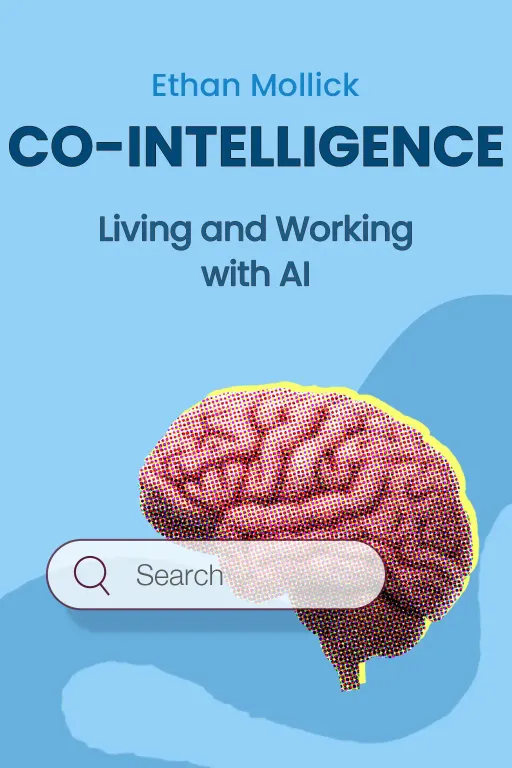
Nova: Imagine waking up to find that a brilliant, slightly erratic, and incredibly fast consultant has joined your team, completely for free. But there is a catch. They occasionally lie with absolute confidence, and they do not think like any human you have ever met. This is the reality of living and working with Large Language Models, what Wharton professor Ethan Mollick calls "co-intelligence." Today, we are going to tackle this mind-bending shift from two distinct angles. First, we will explore the strange, uneven landscape of AI's capabilities and how we can work alongside it as Centaurs and Cyborgs. And second, we will dive into the looming training crisis in the corporate world, looking at how upskilling professionals can build genuine, high-level expertise when the baseline work is automated. I am Nova, and joining me today is Kehinde Olayiwola, a technology business analyst who is passionate about strategy, leadership, and helping businesses scale. Kehinde, it is so wonderful to have you here with us.
Kehinde Olayiwola: Thanks, Nova. It is great to be here. You know, when I first read Mollick's introduction, where he talks about needing at least three sleepless nights to truly grasp what AI is doing to our world, it really resonated with me. As a business analyst, I am constantly looking at processes, efficiency, and how organizations scale. And generative AI is not just another software update. It is a fundamental shift in how we think about cognitive labor. It is like we have invited an alien mind into our strategy meetings, and we are still trying to figure out the ground rules of the conversation.
Nova: Oh, absolutely. It is that transition from traditional computers, which are rigid and logical, to something that feels, well, weirdly human. Mollick points out that AI is a General Purpose Technology, like steam power or electricity. It is going to transform every single industry. But unlike steam engines, which replaced muscle, AI is augmenting, and sometimes replacing, our thinking.
Kehinde Olayiwola: Exactly. And that is what makes it both incredibly exciting and a little unsettling for those of us focused on business growth and strategy. If the core engine of your business is human decision-making and analysis, what happens when that engine gets a massive, unpredictable turbocharger? That is the big question we need to solve.
Deep Dive into Core Topic 1
SECTION
Nova: Yes, and that brings us right to our first core topic: navigating what Mollick calls the "Jagged Frontier" of AI. Think of AI's capabilities as a wall. With traditional technology, the wall is flat. A computer can either do a task, like calculating a million spreadsheet cells in a second, or it cannot, like writing a moving poem. But with generative AI, the frontier of what it can do is jagged. It can write a beautiful, highly complex marketing strategy in seconds, but then it might completely fail at a basic logic puzzle or a simple math problem.
Kehinde Olayiwola: That jaggedness is such a crucial concept for business leaders and analysts to understand. We are used to trusting technology to be consistent. If a calculator works once, it works every time. But AI is different. Mollick highlights that famous study conducted with the Boston Consulting Group, where nearly eight hundred consultants were tested on typical, high-value tasks. The consultants using GPT-4 were dramatically faster and wrote better, more creative analysis. But here is the twist: when the researchers gave them a task designed with misleading data, a task that fell just outside the AI's current capability, the consultants who relied blindly on the AI actually performed worse than those who did not use it at all. They fell into a trap because the AI generated a highly plausible but incorrect analysis, and they just accepted it.
Nova: It is like falling asleep at the wheel because the self-driving car is doing so well, right? You lose that critical, active engagement.
Kehinde Olayiwola: Precisely. In consulting and business analysis, we cannot afford to fall asleep at the wheel. That is why Mollick's rules for co-intelligence are so valuable. He talks about two primary ways humans can integrate with AI to stay sharp: working as a Centaur or working as a Cyborg. A Centaur approach is all about a clear division of labor. You wear the human hat for strategic thinking and emotional intelligence, and you hand over the heavy lifting of data formatting or initial drafting to the AI. You keep the roles distinct.
Nova: Right, like the mythical creature, half human, half horse, running in tandem. And then there is the Cyborg approach, which is much more fluid.
Kehinde Olayiwola: Yes, the Cyborg approach is a complete integration. You are working hand-in-hand with the AI in a continuous, back-and-forth dialogue. You write a sentence, the AI suggests the next three, you edit them, ask the AI to challenge your assumptions, and you co-create the final product. For a business analyst, this might look like brainstorming market entry strategies with the AI, constantly pushing back on its ideas, and refining the model together. It is not just delegating; it is a collaborative dance.
Nova: I love that image of a collaborative dance. But to dance well, you have to know your partner's quirks. Mollick's third rule is to treat AI like a person, but tell it what kind of person it is. If you just give it a generic prompt, you get a generic, boring response. But if you give it a persona, say, "You are a skeptical venture capitalist reviewing a pitch deck," the quality of the output skyrockets.
Kehinde Olayiwola: It really does. I use this all the time when thinking about business scaling. If I tell the AI to act as a seasoned operations executive with thirty years of experience in logistics, the frameworks and solutions it suggests are incredibly specific and useful. It breaks those generic patterns. But we always have to remember his second rule: be the human in the loop. We have to verify, validate, and bring our own ethical judgment to the table. Because at the end of the day, the AI does not actually care about the truth; it is just predicting the next most likely word.
Deep Dive into Core Topic 2
SECTION
Nova: It is a master of plausibility, not necessarily accuracy. And that leads us beautifully into our second core topic, which I know you are deeply passionate about: the future of expertise and what Mollick calls the "Apprenticeship Crisis." Think about how we traditionally train junior analysts, lawyers, or doctors. They start by doing the basic, repetitive work, like drafting simple reports, reviewing contracts, or summarizing research. Through doing that baseline work, they slowly build the foundational knowledge and intuition they need to become senior experts. But now, AI can do all of that junior-level work in seconds.
Kehinde Olayiwola: This is a massive challenge for leadership and organizational development. If we automate all the entry-level tasks, how do we train the next generation of leaders and strategists? Mollick uses a powerful historical example from the medical field: the introduction of robotic surgery in the 2010s. These advanced robots allowed senior surgeons to perform incredibly precise operations. But because only one person could control the robot at a time, the senior surgeons stayed in the control seat, and the residents were relegated to just watching. The traditional apprenticeship model broke down, and hospitals ended up with a generation of undertrained residents who had to turn to unofficial channels like YouTube to learn.
Nova: Wow, that is a stark warning. If we do not actively design new training pathways, we are going to face a massive skills gap.
Kehinde Olayiwola: Absolutely. In business, if a junior analyst is just using AI to generate all their market research and financial models without understanding the underlying mechanics, they will never develop the deep business acumen required to make high-level strategic decisions. They won't have that "gut feeling" that comes from years of working closely with the data. We cannot let AI bypass the hard work of learning.
Nova: So, how do we solve this? How do we build expertise when the baseline is automated?
Kehinde Olayiwola: It comes down to what psychologists call deliberate practice. It is not just about repeating a task; it is about pushing yourself just beyond your comfort zone, getting immediate feedback, and reflecting on your mistakes. Mollick suggests that instead of using AI to bypass learning, we should use AI as a personalized coach to facilitate deliberate practice. Imagine a junior analyst drafting a business case, and instead of having the AI write it for them, they ask the AI to critique their draft, point out logical flaws, and suggest three alternative strategic perspectives.
Nova: Ah, so the AI becomes the mentor, guiding the human through the struggle of learning, rather than just giving them the answers.
Kehinde Olayiwola: Exactly. It accelerates the feedback loop. In the past, you might have had to wait a week for a senior manager to review your work. Now, you can get instant, high-quality feedback from an AI coach, allowing you to iterate and learn at a much faster pace. This is how we level up. And the data shows that AI actually has an equalizing effect. It boosts the performance of lower-skilled or junior workers the most, shrinking the gap between the top and bottom performers. For someone focused on upskilling and personal development, this is an incredible opportunity to democratize expertise.
Synthesis & Takeaways
SECTION
Nova: It really is a double-edged sword. On one hand, we have this incredible tool that can democratize learning and supercharge productivity. On the other hand, we risk becoming complacent and losing the very expertise that makes us valuable. As we wrap up this insightful conversation, Kehinde, what is the main takeaway you want our listeners, especially those looking to grow their careers and businesses, to carry with them?
Kehinde Olayiwola: I think the most important thing is to embrace the mindset of co-intelligence. Do not run away from AI, and do not let it do all your thinking for you. Instead, invite it to the table as a collaborative partner. If you are a business leader, start restructuring your workflows to encourage Centaur and Cyborg models of work. And if you are a professional looking to upskill, use AI as your personal coach. Challenge it, let it challenge you, and never stop asking the deep, analytical questions. The future belongs to those who know how to blend human creativity and ethical judgment with the speed and scale of machine intelligence.
Nova: That is a perfect place to leave it. A huge thank you to Kehinde Olayiwola for sharing his strategic insights with us today, and a big thank you to all of you for listening. Remember, the AI you are using today is the worst AI you will ever use. The frontier is moving fast, so keep experimenting, keep learning, and we will see you in the next episode!