

The 'How-To' Twist: How to Build Scalable Software Without Burning Out Your Team.
Golden Hook & Introduction
SECTION
Nova: What if I told you that the secret to building software that lasts, software that scales effortlessly, isn't about writing more code, but about writing of the code? And that this approach actually saves your team from the relentless grind?
Atlas: Oh, I know that feeling. For anyone who's ever watched their brilliant solution slowly turn into a tangled mess of spaghetti code, that promise sounds almost too good to be true. The relentless grind you mentioned, it's real. It's the silent killer of innovation.
Nova: Absolutely, Atlas. It's the cold hard fact that building robust, scalable software can feel like a constant battle against complexity. And without clear architectural principles, those elegant solutions quickly become tangled, making future innovation a headache, and frankly, burning out the very teams who created them.
Atlas: Right. So, we're talking about dodging that bullet? Finding a path through the complexity that doesn't lead to exhaustion?
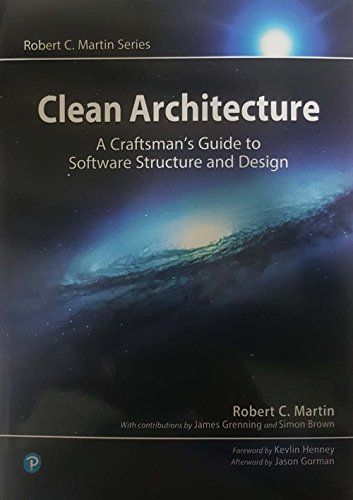
Nova: Precisely. And today, we're diving into two foundational texts that offer a roadmap for just that. We're talking about the wisdom found in "Clean Architecture" by the legendary Robert C. Martin, often affectionately known as Uncle Bob, and "Domain-Driven Design Distilled" by Vaughn Vernon. Martin, a true pioneer in software engineering, was one of the original signatories of the Agile Manifesto, shaping how we think about flexible development. Vernon, on the other hand, brings a pragmatic, hands-on approach to modeling complex business domains. Together, their insights fundamentally guide you to build systems that are not just functional, but also adaptable and enduring.
Atlas: That makes me wonder, how do these seemingly high-level, academic-sounding concepts actually translate into preventing that team burnout? Because for builders, the rubber hits the road in the daily grind.
Nova: That's a perfect question, Atlas, and it leads us directly to our first powerful idea: the art of Clean Architecture.
The Power of Clean Architecture: Protecting Your Core
SECTION
Nova: Imagine your software like a bustling city. At its heart, you have the essential services: the power grid, the water supply, the core infrastructure that absolutely work, no matter what. Around that, you have the roads, the buildings, the aesthetics, and the people. Robert C. Martin's Clean Architecture is essentially the urban planning guide for that city. It advocates for a clear separation of concerns, protecting your core business logic from external changes.
Atlas: Hold on. So you're saying the UI doesn't know about the database, and the database doesn't know about the UI? But in the real world, isn't everything connected? I mean, when deadlines are tight, it's so tempting to just connect everything directly to get it working. How do you actually something where the UI doesn't know about the database, especially when you're under pressure to ship?
Nova: That's the core challenge, and it's where the discipline comes in. Clean Architecture introduces the "Dependency Rule": dependencies can only point inward. Your core business rules, the very heart of your application, should be completely independent of frameworks, databases, UIs, and even external services. Think of it like this: your city's power plant doesn't care if a new skyscraper is built or if a road is rerouted. It just generates power.
Atlas: Right, like the core logic of processing an order in an e-commerce system shouldn't care if that order came from a web browser, a mobile app, or an API call.
Nova: Exactly. Let me paint a picture for you. We once worked with a team building a complex e-commerce platform. Every time they wanted to update the website's look or switch to a new payment gateway, it felt like demolishing and rebuilding half the city. Their core business logic—how they calculated prices, managed inventory, processed returns—was deeply intertwined with the user interface and the specific database they were using.
Atlas: Oh, I've seen that movie. It's usually a horror film for developers. One small change in the UI cascade into a bug in the inventory system, and suddenly, everyone's scrambling, working late nights. That's the burnout you mentioned.
Nova: Precisely. The cause was tight coupling. The process of untangling it involved carefully refactoring their system into distinct layers: an 'Entities' layer for pure business rules, a 'Use Cases' layer for application-specific business rules, an 'Interface Adapters' layer to convert data for external systems, and finally, a 'Frameworks & Drivers' layer for the UI and database. The outcome was transformative. They could literally swap out their database from SQL to NoSQL, or completely redesign their front end, without touching the core business rules. The entire team felt a huge weight lift. Development became faster, bugs decreased dramatically, and the fear of breaking something vital vanished.
Atlas: Wow. So, it's not just about neat code; it's about architectural integrity that genuinely protects the team's sanity and the project's future. For an innovator, that flexibility is gold. That allows you to experiment, to adapt to new technologies, and to truly build something that lasts, without constantly having to rebuild the foundations.
Nova: It's about designing for change, not just for the present. And speaking of core business rules, that leads us perfectly to our second powerful idea, one that ensures your software isn't just robust, but genuinely the business it serves.
Domain-Driven Design: Speaking the Business Language
SECTION
Nova: This is where Vaughn Vernon's "Domain-Driven Design" shines. While Clean Architecture gives us the to protect the core, DDD gives us the to define what that core actually. It emphasizes understanding the core business domain, deeply. By modeling your software around this domain, you create systems that are more aligned with user needs and easier to evolve.
Atlas: Okay, but business requirements are often messy and change constantly. For a builder, the "ubiquitous language" can sometimes feel more like a Tower of Babel, and the domain itself is a moving target. How does DDD help when the business stakeholders can't even agree on what a 'customer' is?
Nova: That's a brilliant point, Atlas, and it highlights the challenge DDD aims to solve. The core idea is to create a "ubiquitous language"—a shared, precise language used by both technical and business experts within a specific part of the system. And here's the crucial part: you don't try to define ubiquitous language for the business. Instead, you define "bounded contexts."
Atlas: Bounded contexts? That makes me wonder, so it's like creating miniature, self-contained worlds within your software, each with its own precise dictionary?
Nova: Exactly! Imagine a large financial institution. What "Account" means in the "Trading" department is very different from what "Account" means in the "Customer Service" department, or the "Compliance" department. If you try to build a single "Account" object that serves all these contexts, it becomes a monstrous, unmanageable entity. DDD says: define distinct "bounded contexts" for Trading, Customer Service, and Compliance. Each has its own precise "Account" definition and its own ubiquitous language.
Atlas: That's a great way to put it. So, instead of trying to force one definition everywhere, you acknowledge the differences and build specific models for specific areas. This must be a huge win for communication, right?
Nova: Absolutely. Let's take a contrasting case study: a team building a new financial trading platform. Early on, developers and traders used different terms for the same concepts, or worse, the same term for different concepts. The 'trade' in the UI meant one thing, but the 'trade' in the backend risk calculation meant something slightly different. This led to critical errors, missed opportunities, and endless, frustrating meetings where everyone felt misunderstood. The cause was a lack of a shared, precise domain model.
Atlas: Oh, I've heard stories like that. It's like trying to build a bridge when one team speaks English and the other speaks German, and they haven't agreed on a common blueprint. The eventual collapse is almost inevitable, and the team just gets beaten down by the constant rework and blame game.
Nova: Right. The process of applying DDD here involved dedicated "domain workshops" where developers and traders collaboratively built a ubiquitous language. They identified "bounded contexts" like "Order Management," "Risk Assessment," and "Settlement." Within each context, they meticulously defined their entities, value objects, and aggregates. The outcome was phenomenal. Communication became crystal clear. Developers could implement features with confidence, knowing their code accurately reflected the business's intent. The system became easier to evolve because changes in the "Order Management" context didn't inadvertently break "Risk Assessment." The constant rework and firefighting, which had been a major source of burnout, drastically reduced.
Atlas: That’s actually really inspiring. It sounds like DDD empowers teams to build more targeted, effective solutions that truly align with what the business needs, rather than just what the code do. For a pioneer driven by impact, that's everything. It means you're building the thing, and building it well.
Synthesis & Takeaways
SECTION
Nova: So, bringing these two powerful ideas together: Clean Architecture provides the robust to protect your core business logic, making it flexible and testable. Domain-Driven Design provides the precise to define what that core actually, ensuring your software genuinely reflects business needs and is easier to evolve. They are two sides of the same coin, working in concert to build enduring, scalable software.
Atlas: That makes sense. Clean Architecture is the strong, well-organized skeleton, and DDD is the precise, living language that gives meaning to each bone and muscle. For someone who's building and innovating, what's one immediate, tangible action they can take to start applying these powerful ideas without getting overwhelmed?
Nova: My recommendation, and a tiny step often overlooked, is this: identify one core business rule in your current project and sketch how it would look isolated from UI and database concerns. Don't code it yet. Just map its inputs, its logic, and its outputs, completely detached from how it's presented or stored.
Atlas: That simple? That makes me wonder, why is that tiny step so powerful?
Nova: Because it forces clarity. It makes you confront the true essence of that rule without the noise of technical implementation details. It reveals hidden dependencies and implicitly starts you down the path of thinking architecturally. It’s the first step towards building systems that aren't just functional, but genuinely resilient and adaptable. This proactive approach is what truly prevents burnout by building systems that can bend without breaking, allowing for sustainable innovation.
Atlas: Wow, that’s such a hopeful way to look at it. The profound truth here is that building scalable software isn't just about managing code; it's about managing complexity, human energy, and the future. These architectural principles aren't just technical blueprints; they're blueprints for sustainable innovation and healthier, more productive teams. Ignoring them is like building a skyscraper on quicksand – it will eventually crumble, and unfortunately, it often takes the builders with it. So, the question isn't just 'how do we build great software?' but 'how do we build great software?'
Nova: Absolutely. This is Aibrary. Congratulations on your growth!