

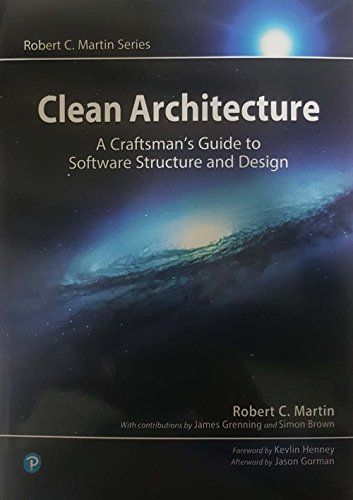
Stop Guessing, Start Building: The Guide to Resilient Software Architecture.
Golden Hook & Introduction
SECTION
Nova: We build, we ship, we celebrate… and then we spend months, sometimes years, just fixing what we thought was finished. It’s the silent killer of innovation, the quiet drain on a developer’s spirit.
Atlas: Oh man, Nova, you are hitting me right where it hurts. I feel like I've lived that cycle more times than I care to admit. The constant refactoring, the patches, the late-night fixes… it feels like we’re always playing catch-up. Is there truly a way out of that cycle? A way to actually build something that?
Nova: There absolutely is, Atlas. And that's exactly what we're diving into today with a book that confronts this head-on: "Stop Guessing, Start Building: The Guide to Resilient Software Architecture." It's quickly becoming a foundational text for anyone tired of the endless cycle of refactoring, offering a blueprint for systems that genuinely endure.
Atlas: "Stop Guessing, Start Building"—I love that title. It’s bold, it’s direct, and frankly, it sounds like a lifeline. But it also makes me wonder, why we keep guessing? Why do we keep building things that ultimately crumble under their own weight or the slightest change in requirements?
Nova: That’s the core question, isn't it? And it brings us directly to the cold, hard fact that kicks off this book. Building software often feels like a race to the finish line, pushing us towards quick fixes. The problem is, those quick fixes often lay the groundwork for systems that, over time, just crumble.
The Silent Collapse: Why Software Crumbles and the Case for Resilient Foundations
SECTION
Nova: Imagine you’re building a magnificent skyscraper. You’re under immense pressure to get it up fast, so you decide to cut corners on the foundation. You pour it quickly, maybe on unstable ground, thinking you can reinforce it later. What happens? Initially, it might stand. But as you add more floors, more weight, more people, cracks start to appear. The entire structure becomes brittle, resistant to any further changes or additions.
Atlas: That’s a powerful analogy. And it resonates. For anyone who’s ever had to integrate a new feature or scale an existing system, you feel those cracks. You feel the whole thing groan under the pressure. But isn't speed essential in today's market? Are we saying speed is inherently bad, or that there's no room for agility?
Nova: Not at all, Atlas. It’s not speed itself that's the enemy; it’s speed. It’s the kind of speed that accrues technical debt at an unsustainable rate, turning your codebase into a tangled mess of dependencies. Think of a hypothetical startup that goes from zero to millions of users in months. They’re celebrated for their rapid growth, but behind the scenes, their architecture is a house of cards. When they need to add a brand-new, game-changing feature, they hit a wall. Every change breaks something else. Their engineers burn out trying to untangle the spaghetti code.
Atlas: So, the very thing that made them successful—speed—ends up stifling their future innovation. It's like they built a rocket, but didn't bother with a launchpad that could handle repeated take-offs. That's a crucial distinction: building speed, not just speed. What does that foundation look like then? How do we build that bedrock you mentioned, instead of just guessing our way into another fragile system?
Nova: Exactly! And that’s where some truly foundational architectural principles come into play, shifting our focus from merely writing code to engineering sustainable, adaptable systems that truly serve our innovative spirit.
Architecting for Adaptability: Unpacking Clean Architecture and Domain-Driven Design for Sustainable Innovation
SECTION
Nova: One of the most influential blueprints for this resilient foundation comes from Robert C. Martin, often known as Uncle Bob, with his concept of "Clean Architecture." At its heart, Clean Architecture argues for independent, testable, and maintainable systems. The core idea is to separate your business rules—the very essence of what your software —from all the technical details, like your database, your UI, or even the frameworks you choose.
Atlas: Okay, 'Clean Architecture' sounds good in theory, but how does keeping business rules separate make my system more adaptable? Isn't it just adding more layers of abstraction, making things more complex than they need to be for a pragmatic builder?
Nova: That’s a fair question, and it's a common misconception that more layers mean more complexity. What it actually provides is immense flexibility. Imagine your business rules are the engine of a high-performance car. Clean Architecture says that engine should be able to run independently, regardless of whether it's in a sleek sports car body, a rugged off-roader, or even a boat. If you decide to swap out the car's body—say, change from a desktop UI to a mobile app, or switch your database from SQL to NoSQL—you're only changing the outer layers. Your core business logic remains untouched, robust, and functional.
Atlas: Wow, that’s a powerful distinction. So, it's not about adding complexity, it's about isolating the of change. If I want to innovate with a new UI, I don't have to rewrite my entire application. I just build a new shell around that stable core. That makes a lot more sense. What else goes into building such a resilient, adaptable system?
Nova: That leads us beautifully to our second key concept: "Domain-Driven Design," or DDD, by Eric Evans. If Clean Architecture provides the structural integrity, DDD provides the conceptual clarity. Evans introduces a way to mold software around the core business domain, ensuring your code literally, and I mean, speaks the same language as your users.
Atlas: Speaking the same language… that sounds crucial for an innovator. Miscommunication is a nightmare. But how does DDD contribute to resilience beyond just clarity? How does making sure my code uses the business terminology prevent my software from crumbling under pressure?
Nova: It’s profound, Atlas. When your software’s structure and terminology directly reflect the real-world business domain—say, ‘Customer Account’ in your code means precisely what a banker means by ‘Customer Account’—you build a system that is inherently more stable and evolvable. There’s less translation, less ambiguity, and therefore, fewer opportunities for misinterpretation that lead to bugs or architectural inconsistencies. When business rules inevitably change, your software can adapt gracefully because its very design mirrors the real-world domain. You're not guessing how to translate a new business requirement into your code; the language is already aligned. This makes the system inherently more robust and easier to evolve, ensuring innovation isn't hampered by architectural debt.
Atlas: That’s brilliant. So, Clean Architecture gives us the independent, swappable parts, and Domain-Driven Design ensures those parts are perfectly aligned with the business’s true needs, making the whole system less prone to entropy. It really does sound like a fundamental shift from just coding to truly engineering.
Synthesis & Takeaways
SECTION
Nova: Precisely. These insights fundamentally shift your focus from merely writing code to engineering sustainable, adaptable systems that truly serve your innovative spirit. It’s about building with intention, understanding that the upfront investment in architectural clarity and separation pays dividends in long-term resilience and the freedom to innovate without fear of collapse.
Atlas: So, for our listeners, the architects and innovators out there, what’s a “tiny step” they can take right now to start building this resilience, rather than just guessing and hoping? Something concrete and actionable.
Nova: The book offers a fantastic starting point. Identify one core business rule in your current project. Then, sketch out how that rule would look if it were completely independent of any specific database or UI framework. It’s a thought experiment, a mental exercise in decoupling that begins to cultivate that resilient mindset.
Atlas: That’s a fantastic way to start, a tangible step to visualize independence before even writing a line of code. It really brings home the idea that building resilient software isn't about avoiding quick fixes; it's about building with a clear, enduring vision.
Nova: Absolutely. It’s about creating software that doesn't just work today, but thrives for years to come, enabling continuous innovation and truly shaping the future.
Atlas: Powerful stuff, Nova. Thank you for guiding us through this.
Nova: My pleasure, Atlas. Always a joy to explore these foundational ideas with you.
Nova: This is Aibrary. Congratulations on your growth!