

Scaling Your Agent Systems: The Guide to Building Robust Architectures.
Golden Hook & Introduction
SECTION
Nova: Most intelligent Agent systems today are built on a house of cards. They're brilliant, yes, but one strong gust of user traffic or a single data hiccup, and they crumble. We’re talking about building Agents that don't just work, but.
Atlas: Endure? That’s a powerful word for software, especially with how fast Agent tech moves. Is it really that bad, or are we just optimizing for the wrong things when we build these systems? I feel like a lot of engineers are just trying to get something working first.
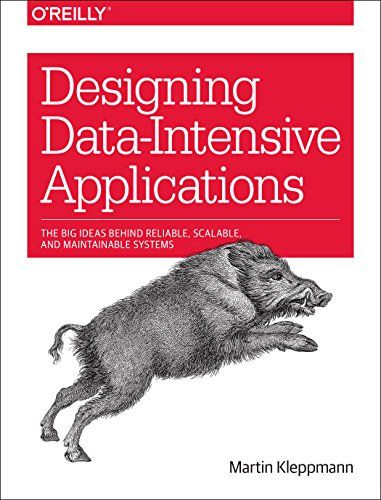
Nova: That's the trap, Atlas. The 'cold fact' is that building intelligent Agent systems is one thing; building them to scale, withstand failures, and evolve gracefully is another challenge entirely. Robust architecture is the bedrock of lasting value. And thankfully, we have some incredible guides. Today, we're diving into the wisdom of two giants: Martin Kleppmann's and Robert C. Martin's. These aren't just books; they're practically blueprints for engineering resilient, adaptable Agent systems.
Atlas: Ah, Kleppmann and Uncle Bob. Legendary names in software architecture. I imagine a lot of our listeners, especially those full-stack engineers and architects who are really trying to integrate Agent tech into existing businesses, are constantly battling these exact issues. They want to create value, but instability kills value.
Nova: Exactly. And that naturally leads us to our first deep dive: how do we ensure the very foundation of our Agent systems—their data—is as rock-solid as possible?
Data Reliability and Scalability for Agent Systems
SECTION
Nova: Think of an intelligent Agent system like a complex biological organism. Its brain, its decision-making, is only as good as the information it receives and processes. That information, that data, is its lifeblood. If the circulatory system—the data infrastructure—is weak, even the smartest brain will fail. Kleppmann's book gives us an unparalleled tour of the fundamental concepts behind reliable, scalable, and maintainable data systems.
Atlas: But in the rush to get Agents out the door, isn't data architecture often an afterthought? Like, just pick a database and go, and deal with scaling later? I imagine many of our listeners have faced that pressure.
Nova: Absolutely. And that's where the house of cards comes in. I remember a case study about an Agent system designed to optimize logistics for a major e-commerce platform. It was brilliant at route optimization, cutting delivery times dramatically during testing. But when they hit peak holiday season traffic, its data layer simply buckled. The system was designed with a single, centralized database that became a massive bottleneck. Queries piled up, response times plummeted, and the Agent, instead of being intelligent, just froze, unable to access or process the real-time data it needed. The delivery routes became chaotic, packages were delayed, and the company lost millions in revenue and customer trust. The cause was a poor architectural choice in the data flow, the process was a cascading failure under load, and the outcome was catastrophic.
Atlas: Wow, that’s actually really inspiring in a scary way. It’s a perfect illustration of how "brilliant" functionality is useless without a robust foundation. So, when Kleppmann talks about "choosing the right tools," what does that practically mean for an engineer building an Agent? Are we talking about specific databases, or more about patterns?
Nova: It's much more about patterns, Atlas. It's understanding concepts like immutability, where data, once written, is never changed but new versions are created, ensuring auditability and easier recovery. Or distributed transactions, which allow an Agent to interact with multiple data sources reliably. Or event sourcing, where every action an Agent takes or that affects it is stored as a sequence of events, creating a complete, verifiable history. It's like building a meticulous historical archive for your Agent's memory, rather than just erasing and rewriting. This isn't just about picking PostgreSQL over MongoDB; it's about how you the flow and storage to handle immense pressure and still provide consistent, reliable information to your Agent's decision-making core.
Atlas: That makes me wonder, how do these principles directly contribute to a "lasting value" Agent system? For an architect, stability and scalability are non-negotiable for long-term business integration.
Nova: They are the very definition of lasting value for an Agent. If your Agent can't reliably access its memory or learn from new data because its infrastructure is crumbling, its intelligence is fleeting. By applying Kleppmann's insights, you're building an Agent that can grow, adapt, and continue to provide value without constant, frantic firefighting. You're engineering resilience into its very DNA.
Decoupling Agent Logic: The Power of Clean Architecture
SECTION
Nova: Speaking of lasting value, what about the Agent's brain itself? Once you have reliable data, how do you ensure the intelligence built on top of it doesn't become a tangled mess when technologies inevitably change? This is where Robert C. Martin's comes in. His core idea is about creating software architectures that are independent of frameworks, databases, and UI.
Atlas: Okay, "independent of frameworks" sounds like a dream for any architect, especially with how fast Agent frameworks and AI models are evolving. But realistically, isn't some coupling inevitable? How do you actually achieve that independence without building everything from scratch every time?
Nova: It's not about building everything from scratch; it's about drawing clear boundaries. Imagine your Agent's core decision-making logic—its 'intelligence'—as the precious gem at the center of an onion. Each layer of the onion protects that gem from external forces: the application layer, the interface adapters, and finally, the external frameworks like databases, UIs, or specific AI model APIs. Uncle Bob teaches us to keep the core logic pure, independent of any specific database or front-end technology. I recall a project where an Agent was built on an older, proprietary machine learning framework. When the company decided to switch to a more modern, open-source framework, the Agent's entire core reasoning engine had to be painstakingly rewritten because its logic was deeply intertwined with the old framework's APIs. It was a complete, costly overhaul.
Atlas: Oh man, I’ve been there. That’s a nightmare scenario for any architect trying to deliver consistent value.
Nova: Exactly. Now, contrast that with an Agent built using clean architecture. Its core reasoning, the algorithms that drive its decisions, would be completely separate. When the company decided to switch frameworks, they could simply write a new 'adapter' layer to connect the core logic to the new framework, leaving the fundamental intelligence untouched. The Agent seamlessly transitioned to the new technology without its brain being ripped apart. This is the power of flexibility and testability Martin advocates.
Atlas: So, it's about protecting the "secret sauce" of the Agent, its core intelligence, from external churn. For a value creator, this means faster iteration and lower maintenance costs, right? It sounds like it directly enables the graceful evolution you mentioned earlier.
Nova: Absolutely. It means you can innovate faster, test more thoroughly, and adapt to technological shifts without fear. Your Agent's core capabilities become a stable, long-term asset, allowing you to focus on enhancing its intelligence rather than constantly patching its infrastructure. And for an architect, that's a game-changer for delivering consistent business value.
Atlas: That makes me wonder, if I'm looking at my Agent's data flow—the "Tiny Step" from the book—how does "clean architecture" help me mitigate a single point of failure there, beyond just picking a good database?
Nova: That's a brilliant connection, Atlas. Clean architecture helps you to a data bottleneck. If your Agent's core logic is cleanly decoupled, you can more easily swap out a struggling database for a distributed system, or introduce a caching layer, or even completely re-architect your data access patterns having to rewrite the Agent's fundamental intelligence. The data layer becomes an interchangeable "plugin" to your core logic, not an inseparable part of it. It separates the Agent thinks from it gets its information.
Synthesis & Takeaways
SECTION
Nova: That's the profound synergy here. Kleppmann gives you the robust foundation for the Agent's memory and sensory input—its reliable, scalable data infrastructure. And Martin gives you the resilient, adaptable brain—its flexible, testable core logic. Together, they create an Agent system that can not only scale but also gracefully evolve, truly breaking the boundary between mere functionality and strategic engineering.
Atlas: So, it's not just about building Agent, but building an. It's about seeing the Agent as a long-term asset, not just a quick hack, which is exactly what value-creating architects are striving for. The "Tiny Step" makes so much sense now.
Nova: Precisely. Nova's Take on these insights fundamentally shifts your focus from merely building functionality to strategically engineering resilient and adaptable Agent systems. So, your tiny step this week: review your current Agent system's data flow. Identify one potential bottleneck or single point of failure and research architectural patterns from Kleppmann's work to mitigate it. Then, consider how Martin's principles can help insulate your core Agent logic from that change, making your system more robust.
Atlas: And perhaps, as a growth suggestion, think about how this deeper architectural thinking can help you research a cross-domain Agent application, applying these robust design principles from the ground up. It’s about building something that lasts and truly creates new business value.
Nova: A powerful challenge for any architect or full-stack engineer ready to lead. This is Aibrary. Congratulations on your growth!