

The Art of Self-Transformation
Golden Hook & Introduction
SECTION
Nova: What if the biggest obstacle to your next breakthrough isn't a lack of effort, but a thought you haven't even questioned? And what if the solution is simpler, and older, than any new app or gadget?
Atlas: Whoa. Simpler and older? My brain, as a curious innovator, usually defaults to "newer and more complex" when I'm chasing a breakthrough. You're saying the answer might be… us, or even…?
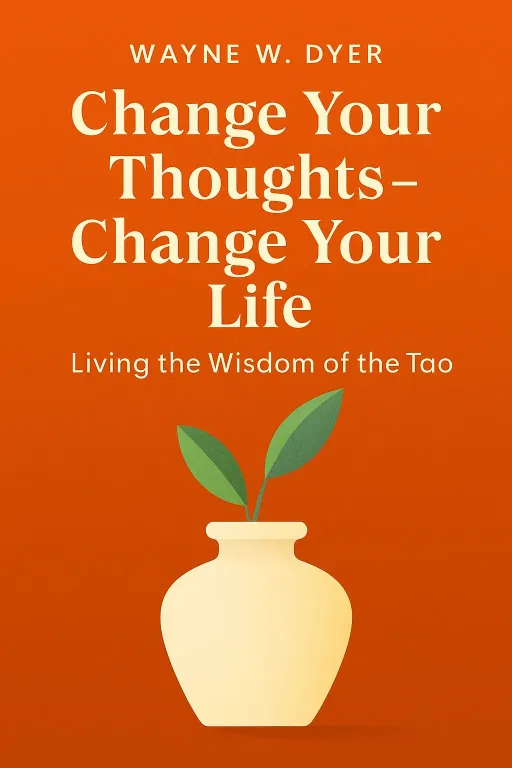
Nova: Precisely. Today, we're diving into the profound art of self-transformation, powered by two seemingly disparate, yet deeply complementary, sources. First up, we have Wayne W. Dyer's seminal work, "Change Your Thoughts, Change Your Life." Dyer, a true self-help icon, wasn't just rehashing pop psychology; he was a master at distilling ancient wisdom, especially from the Tao Te Ching, and making it accessible for modern living.
Atlas: Oh, Dyer. I remember his books being everywhere. So he's taking us to ancient China to figure out our Monday morning emails? That’s quite the leap.
Nova: It is, but a powerful one. And then, to ground that philosophical flight, we'll turn to Jeremy Dean's "Making Habits, Breaking Habits." Dean, a psychologist and researcher, brings the hard science of behavioral change to the table. He breaks down exactly how our routines are wired and, more importantly, how we can consciously rewire them for better outcomes.
Atlas: So, we're talking about the internal landscape of our minds, and then the external architecture of our daily lives. That sounds like a powerful one-two punch for anyone trying to navigate the fast-paced tech and business world. I’m thinking about all the driven learners and empathetic leaders out there, constantly trying to evolve.
The Art of Changing Your Thoughts
SECTION
Nova: Absolutely. Let's start with Dyer and the profound idea that your thoughts literally create your reality. He wasn't suggesting some kind of magical thinking, but rather a deep understanding that our perception, our interpretation of events, shapes our emotional and behavioral responses. It's about shifting from an ego-driven perspective to one rooted in the principles of the Tao.
Atlas: That makes me wonder, though. For someone constantly innovating, constantly pushing boundaries, doesn’t the ego play a necessary role? It drives ambition, right? How does a Taoist perspective fit into that? It sounds a bit… passive.
Nova: Not passive at all, Atlas. It's about conscious awareness and alignment. Dyer emphasizes that many of our habitual thought patterns are rooted in fear, judgment, and attachment to outcomes. The Tao, on the other hand, encourages a state of flow, non-resistance, and acceptance of what is, allowing us to act from a place of clarity rather than anxiety.
Atlas: So, it's not about having ambition, but about the of that ambition. Is it coming from a place of genuine purpose, or from a fear of not being enough?
Nova: Exactly. Imagine a tech leader facing a massive project failure. An ego-driven thought pattern might lead to self-blame, anger, or a desperate need to control every variable moving forward. A Tao-inspired mindset, however, would encourage acceptance of the current reality, learning from the situation without judgment, and finding the natural path forward. It’s about not fighting the river, but understanding its current.
Atlas: That’s a great analogy. So, instead of thrashing against the current, you observe it, learn from it, and then find the most efficient way to navigate. But how does one actually that? How do you switch that thought pattern, especially when the stakes are high, and your company's future might be on the line?
Nova: It starts with conscious awareness. Dyer would say the first step is simply noticing your thoughts, observing them without judgment, much like a scientist observes an experiment. Are they serving you? Are they rooted in fear or love, scarcity or abundance? Once you identify a thought pattern that isn't serving your highest self – perhaps a belief that you're not capable, or that a challenge is insurmountable – you then consciously choose to reframe it.
Atlas: So you're saying, if I catch myself thinking, "This project is impossible, I'm going to fail," the Taoist approach isn't to just myself to think "I will succeed!" but rather to acknowledge the fear, and then choose a different, more aligned thought? Like, "This is a significant challenge, and I will approach it with all my resources and learn along the way"?
Nova: Precisely. It's about disidentifying with the thought. You are not your thoughts; you are the observer of your thoughts. This simple shift in perspective can be incredibly liberating. Dyer's book is filled with practical ways to apply these principles, moving from a mindset of struggle to one of ease, even amidst intense challenges. It's about understanding that the external world is often a reflection of our internal state.
The Science of Habits
SECTION
Nova: Now, once you've done that internal work, once you've started to consciously shift your thought patterns, how do you make those new ways of thinking, and the actions that stem from them, stick? This is where Jeremy Dean's "Making Habits, Breaking Habits" becomes indispensable. He gives us the scientific blueprint for embedding these desired changes into our daily lives.
Atlas: Okay, so Dyer gives us the philosophical "why," and Dean gives us the scientific "how." I can see how that synergy is critical. Because, honestly, it's one thing to differently, but it's another thing entirely to differently, especially when old patterns are so ingrained.
Nova: Exactly. Dean, drawing from cognitive psychology, explains that habits are essentially shortcuts our brain creates to conserve energy. They're not necessarily good or bad; they're just automatic responses to cues in our environment. The key is to consciously design those shortcuts.
Atlas: So, it's not about willpower, then? Because I've definitely tried to willpower my way into new habits, and that usually lasts about three days before I crash and burn.
Nova: You've hit on a crucial point, Atlas. Dean would argue that willpower is a finite resource. Relying solely on it is like trying to run a marathon on a single glass of water. Instead, he focuses on reducing friction for desired habits and increasing friction for undesired ones. It's about designing your environment and your actions so the desired behavior is the path of least resistance.
Atlas: That's fascinating. So, for a driven learner, if I want to schedule 15 minutes daily for focused learning, as recommended for growth, it's not just about setting an alarm. It's about making that learning material immediately accessible, perhaps having my book open on my desk, or my learning app ready on my phone?
Nova: Exactly. That's a perfect example of reducing friction. Another powerful concept Dean explores is the idea of "tiny steps." Instead of aiming for a massive change, start incredibly small. If you want to cultivate a new exercise habit, don't commit to an hour at the gym. Commit to one push-up. Or putting on your running shoes.
Atlas: One push-up? That sounds almost too simple. But I guess the idea is to build momentum and create a psychological win, rather than setting yourself up for failure with an overwhelming goal.
Nova: Precisely. The goal isn't the one push-up; it's proving to yourself that you start, and then building consistency. Once you've consistently done one push-up for a week, two doesn't seem so daunting. And then three, and so on. It's about making the start so easy that you can't say no. Dean also talks about "habit stacking," where you link a new habit to an existing one. For example, "After I pour my morning coffee, I will open my learning app for five minutes."
Atlas: That’s brilliant for someone trying to build skills in a dynamic landscape. Imagine, instead of dreading the "big new skill" you need to learn, you just tack on a tiny, almost effortless step to an existing routine. It makes adapting and thriving feel much more achievable. It's about engineering your environment for success, rather than just gritting your teeth and trying harder.
Synthesis & Takeaways
SECTION
Nova: So, we've talked about the internal shift of mindset with Dyer and the external architecture of habits with Dean. How do these two powerful forces dance together to accelerate professional growth and impact, especially for our listeners who are innovating tech solutions and mastering communication?
Atlas: It seems like they're two sides of the same coin. If you're trying to build a new habit, but your underlying thought pattern is "I'm not disciplined enough," or "This is too hard," you're setting yourself up for failure before you even start the first tiny step.
Nova: Absolutely. The mindset provides the "why" and the "direction." If you've cultivated a thought pattern of resilience, learning, and possibility, then those tiny habits Dean talks about become much easier to initiate and sustain. You're not just performing an action; you're embodying a new belief about yourself and your capabilities.
Atlas: That’s it! It’s like Dyer gives you the compass, and Dean gives you the steps. Without the compass, you might be taking tiny steps in the wrong direction. But without the steps, the compass just points. To truly shape the future you envision, you need both. You need to believe it's possible, and then build the consistent, conscious actions that make it real.
Nova: It’s a profound synergy. The Taoist perspective helps you identify and release the limiting thoughts that create internal friction, while the science of habits helps you remove the external friction to make your desired actions automatic. This isn't just about productivity; it's about a holistic transformation that allows you to show up as a more authentic, impactful, and resilient leader.
Atlas: That’s actually really inspiring. Because it tells me that even when the world feels chaotic and unpredictable, I have agency. I can control my internal world, and I can design my external actions. It’s not about waiting for external circumstances to change; it’s about becoming the change.
Nova: Exactly. So, for our listeners this week, we have a tiny step and a deep question. First, identify one thought pattern you’d like to change – perhaps one that limits your potential. And then, identify one small habit you’d like to cultivate or eliminate, starting with that conscious awareness.
Atlas: That’s an actionable challenge. And the deep question: How can a deliberate focus on your internal thought processes and external habits synergize to accelerate your professional growth and impact in the tech and business world? Share your insights with us on social media. We love hearing how these ideas resonate in your daily lives.
Nova: This is Aibrary. Congratulations on your growth!









