Beyond Brainstorming: Unlocking Creative Problem-Solving with Design Thinking
Golden Hook & Introduction
SECTION
Nova: Atlas, quick fire. Five words. What's your immediate gut reaction to the idea of 'creative problem-solving' in a business context?
Atlas: Messy, inefficient, exhausting, subjective, and often… pointless.
Nova: Ouch! Pointless? That's quite the indictment, coming from an innovator like you. But I actually get it. That feeling of endless whiteboard sessions, ideas that go nowhere, discussions that just circle…
Atlas: Exactly. For those of us who value structure, proven methods, and actual impact, 'creativity' can sometimes feel like a nebulous, unpredictable beast. You want to design for sustainability, not just throw spaghetti at the wall.
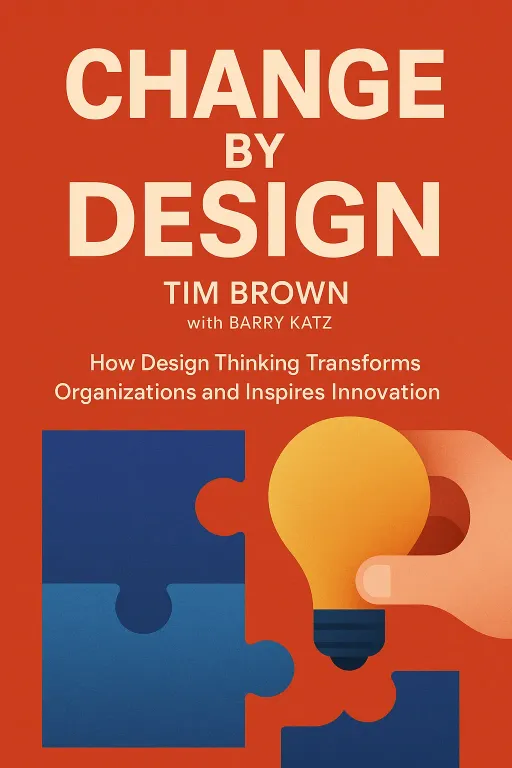
Nova: Well, what if I told you that pure creativity actually thrives within structured frameworks? That the most significant breakthroughs aren't always born from chaotic genius, but from a disciplined, human-centered approach? Today, we're diving into the world. We'll explore the foundational principles from minds like Tim Brown, whose book really popularized Design Thinking, and the rapid-fire validation techniques from by Jake Knapp, John Zeratsky, and Brad Kowitz. These aren't just academic theories, Atlas. Tim Brown, for instance, helped build IDEO into a global design powerhouse, tackling everything from banking to healthcare. These are blueprints forged in the trenches of real-world innovation, designed to make creativity anything but pointless.
Design Thinking - Human-Centered Innovation
SECTION
Atlas: Okay, you've piqued my interest. 'Disciplined creativity' sounds like a beautiful oxymoron. But how do you take something as abstract as 'creativity' and give it a framework? And what exactly Design Thinking beyond just a buzzword?
Nova: It’s a fantastic question, and it gets right to the core of why it's so powerful. Design Thinking, at its heart, is a human-centered approach to innovation. It’s about solving complex problems by putting the people you're designing for—your users, your customers, your stakeholders—at the absolute center of the process. It’s fundamentally iterative, meaning you learn by doing, and you continuously refine your solutions.
Atlas: Human-centered. So we're talking about empathy, then? Is it just glorified market research, or something deeper? Because for a strategist, understanding the market is crucial, but I need to know how it translates into something actionable.
Nova: It's far deeper than market research, Atlas. Empathy, in Design Thinking, means immersing yourself in the user's world. It's not just asking what they want; it's observing their behaviors, understanding their unspoken needs, and feeling their pain points. Think about how IDEO, one of the pioneers of Design Thinking, might approach redesigning something as mundane as a shopping cart. They didn't just ask people what they wanted in a cart.
Atlas: Oh, I'm imagining them watching people struggle with wobbly wheels and overflowing baskets.
Nova: Exactly! They watched parents trying to navigate crowded aisles with kids, observed elderly shoppers struggling to push heavy loads, and saw how people loaded and unloaded groceries into their cars. They empathized with the entire journey. This deep, observational empathy led to insights that no survey could capture—like the need for child-friendly features, easier maneuverability, or even integrated cup holders. It’s about truly understanding the problem before you even about solutions.
Atlas: So, you're saying the first step isn't brainstorming solutions, but actually, just… watching people? For an architect, that feels almost counter-intuitive when you're driven to build and create. It seems like a slow, almost passive start. How does that lead to innovation instead of just incremental improvements?
Nova: That's where the structure comes in, Atlas. After empathy, you define the problem based on those human insights. Then comes ideation, where you generate a huge quantity of diverse ideas—even the wild ones. But it doesn't stop there. The next stages are crucial: prototyping those ideas quickly and cheaply, and then them with real users. This rapid cycle of learning and refining is what prevents it from being slow. It's about failing fast, learning faster, and building solutions that truly resonate because they're grounded in human needs. It’s an iterative loop: Empathize, Define, Ideate, Prototype, Test. Each loop brings you closer to a truly innovative solution.
Atlas: I like the "fail fast, learn faster" part. That resonates with anyone trying to build something sustainable. But how do you ensure that this process, which sounds like it could be quite involved, doesn't get bogged down? For a team that needs to move quickly and show progress, a multi-stage, iterative process could easily feel like endless discussions without tangible outcomes.
The 'Sprint' Methodology - Accelerating Validation
SECTION
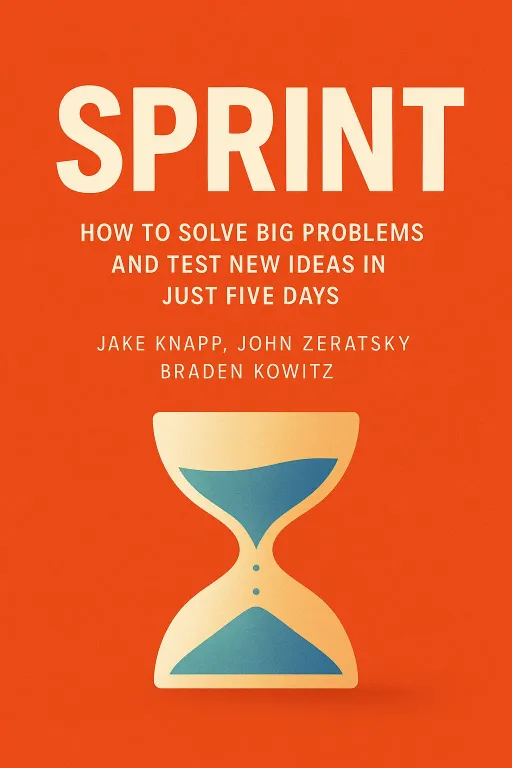
Nova: That's a brilliant segue, because that’s precisely where the "Sprint" methodology comes in. If Design Thinking provides the philosophical foundation and the iterative mindset, Sprint is the tactical, high-octane application for rapid validation. It’s like putting Design Thinking on fast-forward, compressing months of work into a single, focused five-day week.
Atlas: Five days? To solve a big problem and test a new idea? That sounds ambitious, almost too good to be true. As a strategist, I'm looking for methods that actually deliver, not just create a flurry of activity. How does it work?
Nova: It’s intense, but incredibly effective because it's so structured. The Sprint, as detailed by Jake Knapp and his Google Ventures colleagues, is a five-day process: Monday, you Map out the problem. Tuesday, you Sketch competing solutions individually. Wednesday, you Decide on the best solution. Thursday, you Prototype it. And Friday, you Test it with real users. The magic is in the constraints and the clear decision-making points. No endless meetings, no analysis paralysis.
Atlas: So, it forces a decision? That’s appealing. But how do you ensure you're prototyping the thing? And how do you get meaningful feedback from users on a prototype built in a day? It feels like you could very easily build the wrong thing faster.
Nova: That’s where the Design Thinking principles embedded within the Sprint become vital, Atlas. The "Map" day isn't just about listing problems; it's about deeply understanding the user's journey and identifying a critical target. The "Sketch" day emphasizes individual work to avoid groupthink, and the "Decide" day uses structured methods to pick a solution based on the collective intelligence, not just the loudest voice. And the "Test" day on Friday is about getting qualitative feedback from just a handful of target users. You're not looking for perfect data; you're looking for patterns, reactions, and insights that tell you if you're on the right track or if you need to pivot entirely.
Atlas: I see. So it's not about building a polished product in five days, but about validating a critical assumption or idea. That makes sense for reducing risk and ensuring lasting value. But what are the common pitfalls? I can imagine a team getting excited and trying to bite off more than they can chew, or the 'Prototype' day turning into a scramble.
Nova: That's a great point. The biggest pitfall is trying to solve at once. A Sprint works best when you pick one critical problem to tackle. Another common mistake is not having a dedicated 'Decider'—someone who has the authority to make tough calls on Wednesday. And yes, the prototype doesn't have to be perfect; it just has to look real enough to evoke honest reactions from users. It could be a clickable wireframe, a mocked-up landing page, or even just a set of storyboards. The goal is to learn, not to launch. It’s about moving from ambiguous challenges to concrete, validated solutions through a disciplined creative process.
Synthesis & Takeaways
SECTION
Atlas: This really reframes my initial 'pointless' assessment of creative problem-solving. It sounds like Design Thinking provides the deep understanding and iterative philosophy, while the Sprint methodology offers the rapid, tactical execution to test those human-centered ideas. It's about designing for sustainability by actually understanding what people need and then testing it quickly.
Nova: Absolutely. The deep insight here is that innovation isn't about waiting for a flash of genius; it's about building a robust system for discovery and validation. It’s about embracing imperfection as part of the process and trusting that by deeply understanding your users and testing rapidly, your vision will endure and create lasting value. These frameworks give you the tools to transform abstract ideas into tangible, impactful results.
Atlas: That’s actually really inspiring. So, for our listeners who are architects, strategists, and innovators themselves, and who like structure and proven methods, what's a tiny step they can take right now?
Nova: A fantastic question, Atlas. Our tiny step for today is this: choose a single, persistent problem your team faces. And then, apply the first stage of Design Thinking—Empathy. Interview just three to five users or stakeholders. Don’t try to solve anything yet; just deeply understand their needs and pain points. You'll be amazed at the insights that emerge when you simply listen.
Atlas: Empathy first. I like that. It provides a structured starting point for anyone looking to unlock new growth avenues without getting lost in the creative chaos.
Nova: Exactly. It's about making impact, one human-centered insight at a time.
Nova: This is Aibrary. Congratulations on your growth!