

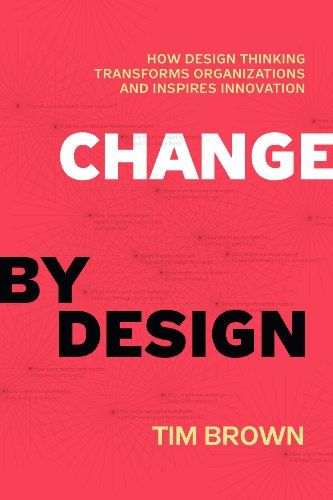
Change by design
Introduction
Nova: Think about the last time you tried to ride a bike. If you are like most adults, it might have been years, maybe even decades. And if you did try to buy one recently, you probably walked into a shop and felt completely overwhelmed by carbon fiber frames, twenty-one speeds, and technical jargon that makes you feel like you need an engineering degree just to go for a cruise in the park.
Atlas: Exactly. It is intimidating. You just want to feel the wind in your hair, but instead, you are staring at a three-thousand-dollar machine that looks like it belongs in the Tour de France. It is a classic example of a product designed for the enthusiast, not the human.
Nova: And that is exactly where Tim Brown starts in his landmark book, Change by Design. He tells this incredible story about how Shimano, the giant bike component manufacturer, realized their market was shrinking. Instead of just designing a better gear shifter, they used something called design thinking. They looked at why people stopped riding bikes in the first place. It turns out, it was not about the gears. It was about the fear of the bike shop and the complexity of the machine.
Atlas: So they did not just build a better mousetrap. They looked at the whole experience of the mouse.
Nova: Precisely. They created the Coasting bike, which had automatic shifting and a simple design that felt like the bikes we loved as kids. That shift in perspective—from designing a product to designing an experience—is the core of Change by Design. Today, we are diving deep into how Tim Brown and the folks at IDEO transformed the way we solve problems, moving design from the drawing board to the boardroom.
Atlas: I am ready. But I have to ask, is design thinking just a fancy word for common sense, or is there actually a method to the madness?
Key Insight 1
The Heart of Design Thinking
Nova: That is a fair question, Atlas. A lot of people do dismiss it as common sense, but if it were that common, we would not have so many terrible products and services. Tim Brown defines design thinking as a human-centered approach to innovation. It is about using the designer's sensibility and methods to match people's needs with what is technologically feasible and what a viable business strategy can convert into customer value.
Atlas: Human-centered. That sounds like a buzzword. Does it just mean asking people what they want? Because Steve Jobs famously said people do not know what they want until you show it to them.
Nova: Brown actually addresses that. Design thinking is not about asking people what they want; it is about observing what they do. It is about empathy. He talks about the difference between a design researcher and a traditional market researcher. A market researcher might give you a survey. A design thinker will go into your home, sit on your floor, and watch how you struggle to open a box of cereal.
Atlas: So it is more like being an anthropologist than a designer. You are looking for the workarounds, right? The things people do to fix a problem themselves because the product failed them.
Nova: Exactly. Brown calls these latent needs. These are needs that people have but cannot articulate. One of my favorite examples in the book is about a project for a healthcare provider. They were looking at how to improve the patient experience. Instead of just looking at medical outcomes, the designers actually checked into the hospital as patients. They lay in the beds. They realized that for a patient, the ceiling is the most important part of the room because that is all you see for hours. Traditional designers would focus on the equipment; design thinkers focus on the view from the gurney.
Atlas: That is a huge shift. It moves design from being about aesthetics—making things look pretty—to being about utility and emotion. But how do you turn that empathy into an actual business plan? You cannot just build a business on nice ceilings.
Nova: You are right, and that is where the structure comes in. Brown argues that design is too important to be left to designers. It has to be a collaborative process that involves everyone from the CEO to the frontline workers. It is about moving from the myth of the lone genius in a black turtleneck to the reality of the interdisciplinary team.
Atlas: I like that. The lone genius is a great story, but it is usually a lie. Most big breakthroughs happen in the messy middle of a group of people arguing over Post-it notes.
Nova: And that messy middle is where the magic happens. Brown introduces this idea of the T-shaped person. These are people who have a deep expertise in one area—the vertical bar of the T—but also have the empathy and breadth to collaborate across many disciplines—the horizontal bar. When you get a room full of T-shaped people, you stop seeing problems through a single lens.
Key Insight 2
The Three Lenses of Innovation
Nova: To make sure those T-shaped people stay on track, Brown gives them a framework. He calls it the three lenses of innovation. Every successful project needs to balance three things: desirability, feasibility, and viability.
Atlas: Okay, let me guess. Desirability is the human part—do people actually want this? Feasibility is the tech part—can we actually build it? And viability is the money part—will it make a profit?
Nova: You nailed it. But the trick is that most companies start with feasibility or viability. They ask, what can we build with our current machines? Or, how can we squeeze more profit out of this quarter? Design thinking flips it. It starts with desirability. You find the human need first, and then you figure out how to make it work technically and financially.
Atlas: But if you start with desirability, don't you end up with a lot of impossible ideas? I might desire a teleportation device, but that doesn't mean it is feasible.
Nova: That is why it is a balance, not a linear path. You are constantly moving between these three lenses. Brown uses the example of the Bank of America Keep the Change program. Have you heard of that?
Atlas: Is that the one where they round up your purchases to the nearest dollar and put the change in a savings account?
Nova: Yes. That came out of IDEO. They observed that many people, especially mothers on a budget, would round up their checkbook entries to the nearest dollar to create a little safety net. It was a human behavior—a workaround. That was the desirability lens. Then they had to look at feasibility—could the bank's software handle millions of tiny transactions? And viability—would this actually attract new customers and keep them loyal? By balancing all three, they created one of the most successful banking products in history.
Atlas: It is interesting because that is not a physical product. It is a service. It is a piece of code and a marketing idea. It feels like Brown is trying to expand the definition of design to include almost everything.
Nova: He really is. He argues that we have moved from a world of objects to a world of experiences and systems. In the industrial age, design was about the object. In the post-industrial age, it is about the interaction. If you are designing a heart rate monitor, you are not just designing a plastic box; you are designing the way a patient feels when they see their heart rate spiking. You are designing the way the data flows to the doctor. It is all connected.
Atlas: That sounds exhausting. If everything is design, then nothing is design. How do you keep from getting paralyzed by the complexity of it all?
Key Insight 3
The Rhythm of Innovation
Nova: You avoid paralysis through rhythm. Brown describes the design process as a dance between two types of thinking: divergent and convergent. This is one of the most important concepts in the book.
Atlas: I have heard those terms in psychology. Divergent is about creating options, and convergent is about making choices, right?
Nova: Exactly. Most corporate cultures are obsessed with convergent thinking. They want the right answer, and they want it fast. They want to narrow things down immediately. But Brown argues that if you converge too early, you end up with incremental improvements rather than true innovation. You have to give yourself permission to diverge—to create a huge, messy pile of ideas, even the crazy ones.
Atlas: That sounds like the classic brainstorming session where everyone says there are no bad ideas, but then everyone secretly judges the person who suggests something wild.
Nova: Brown is very specific about how to do this right. He says you need to have a culture that encourages failure. One of his most famous quotes is: fail fast to succeed sooner. If you are not failing, you are not pushing the boundaries of the divergent phase.
Atlas: Fail fast to succeed sooner. It sounds great on a poster, but in a real company, failing usually gets you fired. How does a design thinker actually make failure safe?
Nova: Through prototyping. This is the secret sauce. In Change by Design, Brown explains that a prototype is not a finished model. It is just a way to ask a question. It could be made of cardboard, duct tape, or even just a storyboard. The goal is to spend as little time and money as possible to learn if an idea works.
Atlas: So instead of spending six months and a million dollars on a pilot program, you spend an afternoon with some foam core and a hot glue gun?
Nova: Precisely. He tells a story about a medical device company that was designing a new tool for sinus surgery. The surgeons were struggling to describe what they needed. One of the designers literally grabbed a whiteboard marker, a film canister, and a clothespin, taped them together, and said, do you want it to feel like this? The surgeon held it and said, yes, exactly like that. That five-cent prototype saved months of engineering work.
Atlas: That is incredible. It turns an abstract conversation into a physical one. It is like thinking with your hands.
Nova: I love that phrase—thinking with your hands. Brown says that prototypes slow us down to speed us up. By taking the time to build something crude, we identify flaws early when they are cheap to fix. It takes the ego out of the process. You are not defending a polished masterpiece; you are testing a rough sketch.
Key Insight 4
Systems and Social Change
Nova: Now, let's take this even further. Design thinking isn't just for bikes and bank accounts. Brown spends a lot of time in the book talking about what he calls wicked problems. These are complex, systemic issues like poverty, healthcare, or climate change.
Atlas: Can design thinking really solve something as massive as healthcare? That feels like a stretch. A cardboard prototype isn't going to fix the American medical system.
Nova: You are right, it won't fix the whole thing overnight, but it can fix the pieces that make up the whole. Look at the work IDEO did with Kaiser Permanente. They were looking at the nursing shift change. It was a mess. Nurses were spending forty-five minutes at the end of every shift just passing information to the next team, often in a back room away from the patients. It was a huge source of errors and patient anxiety.
Atlas: So what did the design thinkers do? Did they build an app?
Nova: Eventually, yes, but they started by observing. They realized that the information exchange was happening in a vacuum. They prototyped a new process where the shift change happened at the patient's bedside. They used simple tools like a standardized form and a digital system to track the data. It reduced the shift change time from forty-five minutes to twelve minutes. That gave nurses more time with patients and significantly reduced medical errors.
Atlas: That is a systemic change. It is not a product; it is a protocol. It is designing the way people work together.
Nova: And that is the future Brown envisions. He talks about how design thinking can be applied to social enterprises. He mentions projects in the developing world, like designing better ways to transport clean water or more efficient irrigation systems for small farmers. In these cases, the viability lens is different—it is not about profit, it is about sustainability and impact.
Atlas: It feels like he is trying to give us a toolkit for the 21st century. We have all these massive, interconnected problems, and the old way of solving them—top-down, expert-driven, siloed—just isn't working anymore.
Nova: Exactly. Brown argues that we need to move from design to design thinking. Design is a profession; design thinking is a mindset. It is a way of looking at the world with curiosity and optimism. He believes that if we can teach more people to think like designers, we can tackle these wicked problems with more creativity and less fear.
Atlas: I like the optimism. But I have to play devil's advocate for a second. Some critics say that design thinking has become too commercialized. That it is just a way for consultants to charge a lot of money for workshops where people play with Legos and feel good but don't actually change anything.
Nova: That is a valid criticism, and Brown actually addresses the risk of design thinking becoming a rigid methodology. He says the most flagrant misuse of the concept is turning it into a series of steps you just follow blindly. If you just go through the motions—do some interviews, do a brainstorm, make a prototype—without the actual spirit of empathy and experimentation, you won't get anywhere. It is not a recipe; it is a philosophy.
Conclusion
Nova: As we wrap up our look at Change by Design, I think the biggest takeaway is that design is not just about the end product. It is about the process of discovery. Tim Brown showed us that by putting humans at the center, embracing the messiness of divergent thinking, and building prototypes to learn from failure, we can solve problems we never thought possible.
Atlas: It really is a call to action. It is telling us that we all have the capacity to be designers, whether we are working in a hospital, a school, or a tech startup. We just have to be willing to look at the world with fresh eyes and ask, why does it have to be this way?
Nova: And that is the heart of it. Design thinking is about moving from being a passive consumer of the world to an active creator of it. It is about having the courage to try something new, the humility to learn from what doesn't work, and the empathy to care about the people you are designing for.
Atlas: I am definitely going to look at my bike—and my bank account—a little differently now. And maybe I will keep some cardboard and tape handy for my next big idea.
Nova: That is the spirit. If you want to dive deeper, I highly recommend picking up the book. It is filled with even more case studies and practical advice on how to build a design-led culture. But for now, remember that the next great innovation is probably hiding in plain sight, waiting for someone to look at it with a designer's eye.
Atlas: This has been a great journey through the mind of Tim Brown. Thanks for walking me through it, Nova.
Nova: Any time, Atlas. This is Aibrary. Congratulations on your growth!