

Designing the Future: A Founder's Guide to Building What Matters
Golden Hook & Introduction
SECTION
Socrates: Kai, every founder I know shares a common nightmare. You spend months, maybe years, pouring your life and all your capital into an idea. You launch... and it's met with silence. The brutal truth is that most startups fail not because they fail to build, but because they build the wrong thing. But what if there was a systematic way to avoid that fate? A way to design for success from day one?
Kai: That nightmare is all too real, Socrates. It's the thought that keeps you up at night. You're so convinced your solution is brilliant, but you're haunted by the question: "What if I'm the only one who thinks so?" The idea of a system to de-risk that is… well, it’s everything.
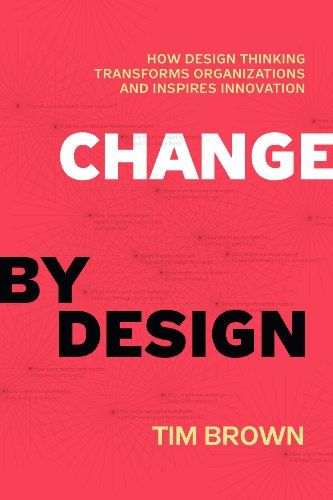
Socrates: It is everything. And that's the promise of Tim Brown's classic, 'Change by Design,' and it's what we're exploring today. It’s not about fonts and colors; it’s a strategic mindset for innovation. Today we'll dive deep into this from two perspectives. First, we'll explore how to find groundbreaking insights by moving from simple questions to deep, observational empathy.
Kai: Okay, I'm listening.
Socrates: Then, we'll discuss how to use rapid, low-cost prototyping as a tool for thinking, helping you test your biggest assumptions before you bet the company on them.
Kai: Perfect. That speaks directly to the two biggest challenges: understanding the customer and not running out of money while you do it. Let's dive in.
Deep Dive into Core Topic 1: From Insight to Empathy
SECTION
Socrates: So, where does this process start? Brown argues it begins with empathy. But not the kind we usually talk about. Kai, as a founder, how do you currently try to understand your users? What's the standard playbook?
Kai: The standard playbook is pretty straightforward. We run surveys with tools like SurveyMonkey. We conduct user interviews where we ask people about their pain points. We look at analytics to see what features they're clicking on. It's all very data-driven, or at least, it feels that way. We collect what they us.
Socrates: What they tell you. That's the key phrase. Design thinking challenges that directly. It argues that people are often unreliable narrators of their own behavior. They can't always articulate their needs, and they often can't imagine a solution that doesn't exist yet. The real gold isn't in what they say, but in what you can observe.
Kai: You mean, like watching them work?
Socrates: Exactly. It's the difference between market research and ethnography. Let me paint a picture for you from the book. The design firm IDEO was tasked with creating a new line of oral care products. One of the target markets was children. Now, the typical approach would be to run a focus group with kids and ask, "What would make a toothbrush more fun?" You'd get answers like, "Make it look like a rocket ship!" or "Put my favorite cartoon character on it!"
Kai: Right. And you'd go and build a rocket ship toothbrush.
Socrates: And it might sell, but you wouldn't have solved a fundamental problem. Instead, the IDEO team went into homes. They stood in steamy bathrooms and just watched kids brush their teeth. And they noticed something fascinating. A small child doesn't hold a toothbrush with the fine motor control of an adult, like a pencil. They grip it in a clumsy, whole-handed fist.
Kai: Ah, I can picture that perfectly. My nephew does the exact same thing.
Socrates: Exactly! So the team realized the problem with existing kids' toothbrushes wasn't the color or the character on it. The problem was the handle. It was just a miniaturized version of an adult's toothbrush—thin and hard to grip. The insight wasn't something a child could ever tell them. It had to be observed. The solution they developed was a thick, squishy, easy-to-grip handle that fit perfectly in a child's fist. It became a massive commercial success, not because it was a better rocket ship, but because it solved an unarticulated, observed need.
Kai: That's a huge "aha" moment for me. We've been asking our early users what new features they want on our software dashboard. We're getting a list of incremental improvements. But this story suggests we're asking the wrong question entirely.
Socrates: What's the right question, then? Or is it even a question?
Kai: It's not a question. It's a mission. We should be asking to watch them do their work our tool. We need to see the messy spreadsheet they've cobbled together, the 15 browser tabs they have open, the moment they sigh and rub their eyes in frustration. The real opportunity isn't in adding another button to our dashboard; it's in solving the problem that causes the sigh.
Socrates: That's it. You're not just looking for pain points; you're looking for the behaviors and workarounds people have invented to cope with a world where your solution doesn't exist yet. That's where true innovation, and product-market fit, is born.
Kai: It changes the entire frame from "what should we build?" to "what problem can we truly understand?" It feels so much more foundational.
Deep Dive into Core Topic 2: Thinking with Your Hands
SECTION
Socrates: Exactly. And once you have that observational insight—that 'aha' moment about the clumsy fist or the frustrated sigh—what's next? The temptation is to jump straight to engineering and build the perfect, polished solution.
Kai: Which, for a startup, is the most expensive and riskiest possible move. You're placing a massive bet on a single interpretation of your observation. If you're wrong, you've wasted months of runway.
Socrates: And this is where the second big idea from 'Change by Design' becomes a founder's best friend: prototyping as a form of thinking. Brown argues that a prototype isn't a pre-production model. It's a question. It's a tool for making an idea tangible so you can see what's right and wrong about it, cheaply and quickly.
Kai: When you say prototype, I'm thinking of a 3D-printed model or a clickable software demo. That can still be time-consuming.
Socrates: We need to think even lower fidelity than that. Think paper, cardboard, and role-playing. Let me give you another IDEO example. They were working with a healthcare system to redesign the Emergency Room experience. They could have written a 100-page report with recommendations. Instead, they took over an empty warehouse.
Kai: Okay, a warehouse. What did they do?
Socrates: They used rolling chairs to represent gurneys, cardboard boxes for equipment, and post-it notes for signs. Then, they had actual nurses, doctors, and administrators 'act out' the patient journey. They'd have someone play the patient, saying, "Okay, I've just walked in, my child is sick, I'm terrified. Where do I go? What do I do?"
Kai: They were literally role-playing the service.
Socrates: Precisely. And through this live-action prototype, they discovered something profound. The biggest source of patient anxiety wasn't the medical treatment itself; it was the confusing, impersonal check-in process and the long, silent, uncertain wait. So they started prototyping solutions right there in the moment. "What if we had a greeter here to explain the process?" They designated a person. "What if the signage was clearer?" They drew new signs on paper and stuck them to the wall. They found the core of a better ER experience in a single afternoon, for the cost of office supplies.
Kai: That is a complete game-changer. We've been stuck for weeks debating two different designs for our new user onboarding flow. We've had endless meetings, looking at static mockups on a screen.
Socrates: So what could you do tomorrow, inspired by that story?
Kai: We could literally sketch the screens on index cards. We could sit a new team member down, someone who has never seen it, and say, "Okay, here's the first screen. Where do you tap next?" And just hand them the next card based on their answer. We'd learn more in 30 minutes than in the last two weeks of debate. It's about making the conversation physical.
Socrates: You're building to think. You're not testing the code; you're testing the logic, the flow, the human reaction.
Kai: You know, this extends beyond just the product, doesn't it? As a founder, I'm not just designing a product; I'm designing a company. We're trying to figure out our team's performance review process. It feels so heavy and high-stakes.
Socrates: How could you prototype it?
Kai: We could write a one-page draft of the process. Then, I could sit down with a team member and just role-play it. I'd be the manager, they'd be the employee, and we'd just walk through the conversation. We'd find out instantly what feels awkward, what's inspiring, what's unclear... before we ever roll out a policy that impacts the whole team. We can design our culture with the same iterative, human-centered approach.
Socrates: Now you're really thinking like a design thinker. It's a methodology for solving any problem that involves human beings, whether they're customers or colleagues.
Synthesis & Takeaways
SECTION
Socrates: So when you zoom out, it's a beautifully simple and powerful loop. First, you observe the world with deep empathy to find hidden, unarticulated needs. Then, you use low-cost, rapid prototypes to build your ideas just enough to make them real, so you can think with your hands and test your assumptions.
Kai: It's a fundamental shift in mindset. It moves you away from the founder's ego-driven "I have a brilliant vision" stance, which is so fragile, to a position of "I have a powerful curiosity," which is incredibly resilient. It's not about being right from the start; it's about creating a system to get to the right answer efficiently. It feels like a much more sustainable way to build a company.
Socrates: It replaces fear of failure with an engine for learning. And in a startup, learning is the only currency that truly matters.
Kai: Absolutely. This has been incredibly clarifying.
Socrates: So, to leave you and our listeners with a concrete action. For everyone listening, and for you, Kai, as you head back to building your company: What is the single biggest, most expensive assumption you are making in your business right now? It could be about your customer, your market, or your team.
Kai: Hmm. That's a powerful question.
Socrates: And once you have it, what is the twenty-dollar, two-hour prototype you could build this week to get a real, tangible answer instead of just another opinion?
Kai: I already have a few ideas. That’s the perfect takeaway. It’s not just an intellectual exercise; it’s a call to action. Thank you, Socrates.
Socrates: The pleasure was all mine, Kai.