

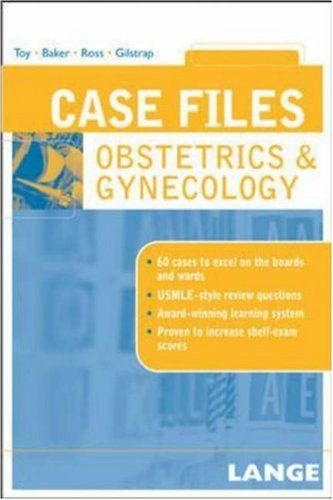
Case Files
Internal Medicine
Introduction
Nova: Imagine you are a third-year medical student. You have spent two years in a dark library, memorizing the Krebs cycle and every possible enzyme deficiency known to man. But then, Monday morning hits. You walk into a hospital, put on a white coat that feels three sizes too big, and suddenly, a real human being is looking at you, describing a pain in their chest. The textbooks did not prepare you for the messy, non-linear way patients actually talk. This is the exact moment where the Case Files series by Eugene C. Toy becomes a lifesaver.
Atlas: It is that classic transition from the classroom to the clinic, right? The terrifying leap from theory to practice. I have heard medical students talk about these books like they are some kind of secret survival guide. But honestly, in a world of high-tech apps and massive question banks, why is a series of books still the gold standard for getting through clinical rotations?
Nova: That is exactly what we are diving into today. We are looking at the Case Files series, specifically the brainchild of Dr. Eugene C. Toy. It is not just a book; it is a pedagogical shift. It moved medical education away from just memorizing lists and toward what we call case-based learning. It is about teaching you how to think like a doctor before you even feel like one.
Atlas: So, we are going to break down why these books have stayed relevant for over twenty years, how they actually work, and why Dr. Toy's approach might be the most effective way to bridge that gap between being a student and being a clinician. Let us get into it.
Key Insight 1
The Philosophy of the Case
Nova: To understand why Case Files is so iconic, you have to understand the man behind it. Dr. Eugene C. Toy is a professor and an OB/GYN at McGovern Medical School in Houston. He realized early on that students were excellent at passing multiple-choice exams but were often paralyzed when they stood at a patient's bedside. They had the facts, but they did not have the narrative.
Atlas: That makes sense. A list of symptoms for pneumonia is easy to memorize, but a seventy-year-old man with a cough who also happens to have heart failure and a history of smoking is a much harder puzzle to solve. Is that the core of the Case Files philosophy? The puzzle?
Nova: Exactly. Dr. Toy pioneered what he calls the Toy Method. Instead of starting with the diagnosis and then listing the symptoms, he starts with the patient. Every chapter in a Case Files book—and there are over forty titles now, from Internal Medicine to Psychiatry—starts with a vignette. It is a short, realistic story about a patient walking into a clinic or an ER.
Atlas: So, it forces you to do the diagnostic work yourself rather than just reading a summary. But wait, if I am a busy student, why wouldn't I just use a question bank like UWorld? Those are interactive and they track your progress. Why go back to a book format?
Nova: That is a great question, and it is one students ask all the time. The difference is the depth of the narrative. A question bank is designed to test you. It is high-stakes and fast-paced. Case Files is designed to teach you. It provides the connective tissue between the symptoms. When you read a case in Dr. Toy's books, you are not just looking for the right answer among four options. You are following a logical path of clinical reasoning.
Atlas: I see. So, it is less about the 'what' and more about the 'how.' It is teaching the process of elimination and the hierarchy of what to do first. But is it really that different from just reading a standard textbook like Harrison's Principles of Internal Medicine?
Nova: Oh, it is worlds apart. A standard textbook is an encyclopedia. It is great for reference, but it is incredibly dense and often lacks the clinical context of what is high-yield. Dr. Toy's genius was in curation. He identified the sixty most common or most important cases a student will see on their rotation and focused entirely on those. It is the 80-20 rule applied to medicine: eighty percent of your success on the wards and the exams comes from mastering these sixty core concepts.
Atlas: Sixty cases. That feels manageable. It turns a massive, intimidating subject like Surgery or Pediatrics into a checklist of stories. I can see why that would lower the anxiety levels of a stressed-out med student.
Nova: It really does. And because it is structured as a story, your brain actually retains the information better. We are evolved to remember stories, not bullet points. When you remember the case of the young woman with sudden onset shortness of breath from the book, you are much more likely to recognize a pulmonary embolism in real life than if you just memorized a list of risk factors.
Key Insight 2
Anatomy of a Case
Nova: Let us look at the actual structure of a chapter in a Case Files book, because this is where the magic happens. Every case follows a very specific, rigid template. It starts with that clinical vignette we mentioned. But immediately after that, before you get any answers, Dr. Toy hits you with three or four open-ended questions.
Atlas: Open-ended? That sounds stressful. Most students prefer the safety of A, B, C, or D. Why does he leave them open?
Nova: Because in real life, patients do not come with multiple-choice options floating over their heads. He asks things like, what is your next step? Or, what is the most likely diagnosis? It forces your brain into active retrieval mode. You have to commit to an answer in your head before you turn the page. This is a proven educational technique called the testing effect. By trying to solve it first, even if you are wrong, you prime your brain to remember the correct information when you finally read it.
Atlas: Okay, so I have made my guess, I have probably gotten it wrong, and now I turn the page. What is waiting for me there?
Nova: You get the answers to those questions, but then you get the crown jewel of the series: the Clinical Pearls. These are short, punchy, one-sentence summaries of the most important takeaways from the case. If you talk to any medical student who uses Case Files, they will tell you that the Clinical Pearls are what they highlight, what they put on flashcards, and what they review five minutes before their shelf exam.
Atlas: Clinical Pearls. It sounds almost like medical proverbs. Give me an example of what one might look like.
Nova: Sure. For a case on appendicitis, a pearl might be: The most common cause of appendicitis in adults is a fecalith, but in children, it is often lymphoid hyperplasia. It is that specific, high-yield nugget of info that examiners love to test and that actually matters for clinical decision-making.
Atlas: That is incredibly efficient. It is like he is filtering out all the noise and giving you the signal. But what about the actual medical theory? Does the book just skip over the deep science?
Nova: Not at all. After the pearls, there is a section called the Approach to the Topic. This is where Dr. Toy and his co-authors provide a concise review of the underlying physiology, the diagnostic algorithms, and the treatment protocols. It is like a mini-lecture tailored specifically to that case. And then, to wrap it all up, there are comprehension questions at the end that are in the USMLE board-style format.
Atlas: So it really is a full circle. You start with a story, you struggle with the questions, you get the high-yield pearls, you learn the deep theory, and then you test yourself with board-style questions. It covers all the bases.
Nova: It really does. And the beauty of it is that each case is only about six to eight pages long. You can finish one during a lunch break or while waiting for a surgery to start. It fits into the fragmented, chaotic schedule of a clinical student perfectly.
Key Insight 3
The Wards vs. The Boards
Atlas: I want to go back to something you said earlier. You mentioned that these books are great for the wards and the shelf exams. For those who aren't in the medical world, can you explain the difference? Why do you need a different resource for the hospital than you do for the big licensing exams?
Nova: This is a huge distinction. The Step 1 exam, which students take after two years, is very heavy on basic science. But the Step 2 exam and the shelf exams—which are the tests you take at the end of each specific rotation like Surgery or OB/GYN—are all about clinical management. They want to know: what is the best next step? Is it an X-ray? Is it a blood test? Or do you go straight to the operating room?
Atlas: And I am guessing Case Files is specifically tuned for that 'next step' logic?
Nova: Exactly. Many resources tell you what a disease is, but Case Files tells you what to do about it in a specific order. This is why it is so beloved for shelf exams. When you are on your Pediatrics rotation, you are seeing kids all day, but you also have this looming exam at the end of six weeks. Case Files Pediatrics gives you the sixty scenarios that are most likely to show up on that exam because they are the sixty most important things a pediatrician needs to know.
Atlas: It sounds like it is almost a bridge between being a student and being an apprentice. But I have to ask, is there a downside? If I only study sixty cases, am I missing the big picture? Am I going to be a doctor who only knows sixty things?
Nova: That is a fair critique, and it is why no one recommends using Case Files as your only resource. If you only read the sixty cases, you might have gaps in your knowledge for the more rare conditions. However, Dr. Toy's argument is that you cannot learn the rare stuff until you have a rock-solid foundation in the common stuff. He is giving you the framework. Once you understand the framework of how to work up a patient with abdominal pain, you can then add the rarer causes to that mental map later.
Atlas: So it is about building the mental scaffolding first. I also noticed that the series has expanded way beyond just the clinical years. I saw titles for Anatomy, Physiology, and even Biochemistry. Does the case-based method work for those subjects too, or is that pushing the format too far?
Nova: It actually works surprisingly well. For a first-year student struggling with Anatomy, seeing a case about a patient who can't move their thumb after a wrist injury makes the brachial plexus much more interesting than just looking at a diagram in a textbook. It gives the science a purpose. Dr. Toy's expansion into the basic sciences was a response to the way many medical schools are now integrating clinical cases into the very first week of school.
Atlas: It is basically the 'why should I care' factor. If you give a student a reason to care about the anatomy of the hand, they will learn it faster. It is interesting how one series of books has essentially mirrored the entire evolution of medical education over the last two decades.
Key Insight 4
The Legacy of Dr. Toy
Nova: We have talked a lot about the books, but I think it is worth looking at the impact this series has had. It is an award-winning series, and it has been translated into multiple languages. But more than that, it has created a standardized language for medical students. If you go to a hospital in New York or a clinic in California, and you mention a Clinical Pearl from Case Files, chances are the resident or the attending doctor knows exactly what you are talking about.
Atlas: It is like a shared culture. But what about the future? With AI and personalized learning platforms, does a physical book—or even a digital version of a book—still have a place? Can Dr. Toy's method survive the next wave of tech?
Nova: I think it can, because the core of the method isn't the paper; it is the narrative. McGraw Hill has already turned the Case Files series into a massive digital collection where students can search across all the books at once. But the reason it survives is that it respects the human element of medicine. AI can give you a list of differential diagnoses in a second, but it doesn't necessarily teach you the intuition of which one to prioritize based on the way a patient looks or acts.
Atlas: That is a great point. Medicine is as much an art as it is a science. And by focusing on the case—the story of the person—Dr. Toy is keeping the art alive. He is teaching students to listen to the story the patient is telling.
Nova: Precisely. There is also something to be said for the authority of the series. Dr. Toy doesn't write these alone. He recruits experts from every field. For Case Files: Surgery, he works with top surgeons. For Case Files: Psychiatry, he works with leading psychiatrists. It is a massive collaborative effort to ensure that the cases are not just realistic, but that the treatments are up-to-date with the latest guidelines.
Atlas: It is a huge undertaking. I can see why he is considered such a titan in medical education. He basically found a way to scale his own teaching style so that every student, regardless of where they go to school, can have access to that 'master teacher' experience.
Nova: And that is his real legacy. He took the intimidating, overwhelming world of medical knowledge and organized it into a series of conversations. He made it accessible. He made it so that a student could walk into that hospital on a Monday morning and, instead of feeling like an imposter, they could think, 'I know this story. I have read this case. I know what to do next.'
Conclusion
Nova: We have covered a lot of ground today, from the terrifying first days of clinical rotations to the specific 'Clinical Pearls' that have helped thousands of students pass their exams. The Case Files series by Eugene C. Toy is more than just a set of books; it is a roadmap for the transition from student to doctor.
Atlas: It is really about the power of the narrative. Whether you are using the physical books or the digital collection, the core lesson is the same: start with the patient, ask the hard questions, and never stop looking for those pearls of wisdom. It is a reminder that even in a high-tech world, the best way to learn medicine is one story at a time.
Nova: If you are a medical student, a PA student, or a nursing student, and you haven't picked up a Case Files book yet, it might be the missing piece in your study routine. It is the bridge that takes you from 'what is the answer' to 'how do I help this person.'
Atlas: And for those of us not in medicine, it is a fascinating look at how experts are made. It turns out, we all learn better when the facts are wrapped in a story.
Nova: Thank you for joining us on this deep dive into the world of medical education. This is Aibrary. Congratulations on your growth!