

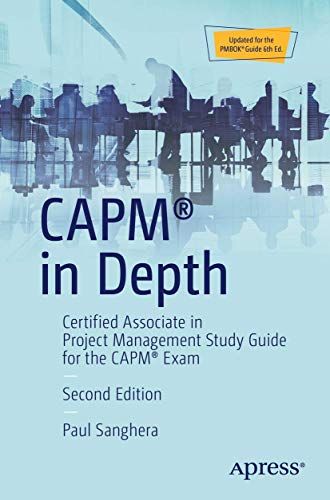
CAPM® in Depth
The Gateway to Project Management: Diving into CAPM Prep
The Gateway to Project Management: Diving into CAPM Prep
Nova: Welcome back to The Knowledge Blueprint. Today, we’re not talking about a massive enterprise transformation or a billion-dollar merger. We’re talking about the first, crucial step for anyone serious about managing projects: the Certified Associate in Project Management, or CAPM.
Nova: Exactly. And when you look at the source material—the Project Management Institute’s PMBOK Guide—it’s dense. It’s a reference manual, not a narrative. So, the market is flooded with study guides promising the world. Today, we’re zeroing in on one specific contender that keeps popping up: Paul Sanghera’s "CAPM in Depth."
Nova: That’s the million-dollar question, Alex. Our research suggests Sanghera is aiming higher. He claims this book doesn't just prepare you for the test; it aims to be a valuable reference long after you’ve passed. We’re going to unpack if it delivers on that promise of depth without the density.
Key Insight 1: From Manual to Masterpiece
The PMBOK Problem: Why Narrative Matters
Nova: Let’s start with the elephant in the room: the PMBOK Guide. It’s the bible, but it’s written like a technical specification document. It lists processes, inputs, tools, and outputs. It’s comprehensive, but it’s not intuitive for a beginner.
Nova: Precisely. And this is where Sanghera’s core philosophy, according to reviews, really shines. The book is reportedly structured to tell the story of project management in a cohesive, concise, yet comprehensive fashion. That word, 'cohesive,' is key.
Nova: The consensus points to yes. Reviewers often mention that all concepts, simple and complex, are defined and explained when they first appear. There’s no hopping from topic to topic, forcing you to remember a definition from Chapter Two while you’re reading about Earned Value Management in Chapter Ten.
Nova: Exactly. It’s designed to build understanding sequentially. Furthermore, the book explicitly states that no prior knowledge of project management is assumed. This isn’t for the PMP holder looking for a quick refresher; it’s for the newcomer who needs the ground floor built solid.
Nova: That leads us perfectly into our next point. The goal isn't just understanding; it's passing. And passing the modern CAPM requires understanding the of those concepts, which means we have to talk about how Sanghera handles the evolution of the exam itself.
Key Insight 2: Relevance in a Hybrid World
Adapting to the New Reality: Agile and Domains
Nova: That’s the critical context. If a study guide is based on an outdated framework, it’s useless, no matter how well-written the prose is. The PMBOK Guide itself has evolved, moving toward principles and performance domains in the 7th edition, which influences the exam blueprint.
Nova: The positive signal we’re getting is that the later editions of Sanghera’s work have been updated to reflect these changes. A good guide must incorporate the new Exam Content Outline, which now explicitly includes domains like 'Agile Frameworks' and 'Business Analysis.' The book needs to show how predictive, agile, and hybrid methodologies interact.
Nova: The structure suggests integration. When a concept is introduced, the book reportedly explains how it applies in a predictive setting versus how it might look in an adaptive environment. For example, when discussing requirements gathering, it doesn't just stop at the requirements documentation; it discusses user stories and backlog refinement.
Nova: And this is where the 'not just an exam-cram book' claim gains traction. If the material is presented in a way that builds a holistic understanding of methodologies, you’re better equipped for those tricky scenario questions that force you to compare and contrast predictive versus agile responses.
Key Insight 3: Conciseness and Credibility
The Author's Edge: Clarity from Experience
Nova: Paul Sanghera is described as a manager, educator, technologist, and entrepreneur. That diverse background is important because project management isn't just theory; it’s execution across various industries, especially technology.
Nova: While the book covers the universal standards, the clarity of explanation often appeals to those coming from technical backgrounds who appreciate directness over verbosity. Reviews highlight that he defines concepts clearly when they first appear, which is a hallmark of good technical writing—no unnecessary fluff.
Nova: It’s about density of information versus density of pages. It’s comprehensive enough to cover the necessary ground for the exam, but it strips away the redundant language. Think of it this way: if the PMBOK is a 500-page encyclopedia entry on every single process, Sanghera’s book is the 200-page textbook summary that explains those processes exist and they interact.
Nova: And there’s another subtle benefit mentioned in reviews: its utility the exam. If it’s written as a cohesive narrative, it becomes a handy desk reference when you start your first real project. You’re not just looking up a term; you’re revisiting a concept explained in context.
Key Insight 4: From Knowledge to Confidence
The Final Polish: Exam Readiness and Takeaways
Nova: To wrap up the core content, we need to look at the final layer of preparation: practice. A book can explain everything perfectly, but if you can't apply it under pressure, you fail. Sanghera’s materials, often bundled or referenced alongside his other works, typically include practice exams.
Nova: The structure implies it does. By focusing on a cohesive story and defining concepts clearly, it builds the foundational knowledge needed to tackle complex scenarios. When you understand the behind the process, you can deduce the answer even if the scenario is unfamiliar.
Nova: Exactly. The modern CAPM exam, much like the PMP, is testing judgment. Sanghera’s approach, by focusing on a comprehensive narrative, seems designed to cultivate that judgment by showing how all the pieces fit together in a real-world project lifecycle.
Nova: It promises to be the bridge between the academic standard and practical application. It’s the guide that respects your time by being concise, respects your intelligence by being clear, and respects the industry by being current.
Conclusion: Your First Step, Clearly Mapped
Conclusion: Your First Step, Clearly Mapped
Nova: So, Alex, after digging into the reputation and structure of Paul Sanghera’s "CAPM in Depth," what’s the final takeaway for someone standing at the starting line of their project management career?
Nova: I agree. The key synthesis here is the balance: it’s comprehensive enough to cover the PMI standards, yet concise enough to be manageable for a beginner. It transforms the PMBOK from a reference manual into a learnable curriculum. If you need clarity, context, and a solid grounding in both predictive and agile principles, this guide earns its keep.
Nova: Absolutely. For anyone looking to validate their foundational knowledge and step confidently into the world of project execution, understanding the material deeply, as this book aims to facilitate, is the only way forward. Keep learning, keep questioning, and keep building those skills.
Nova: This is Aibrary. Congratulations on your growth!