

The Silent Language of Influence: Building Trust in Complex Deals
Golden Hook & Introduction
SECTION
Nova: What if I told you that in your most critical business deals, the data, the spreadsheets, even your perfectly crafted arguments, are often secondary to something you can't even see?
Atlas: Hold on, Nova. Secondary? For strategists and innovators navigating complex deals, data is king. We live and die by the numbers. Are you saying we've been missing a secret handshake all this time?
Nova: Not a secret handshake, Atlas, but a silent language. Today, we're diving into the profound insights of Vanessa Van Edwards, the behavioral investigator who founded Science of People, and Kim Scott, the author who gave us the game-changing leadership philosophy of "Radical Candor." Both are renowned for demystifying human interaction, making the invisible forces of communication incredibly clear and actionable.
Atlas: Oh, I'm familiar with their work. Van Edwards's talks on nonverbal cues are legendary, and Scott's "Radical Candor" has certainly reshaped how many leaders think about feedback. But how does this play out specifically in the high-stakes world of negotiations, where the pressure is immense and the stakes are so high?
The Unseen Architecture of Deals: Decoding the Emotional Landscape of Trust
SECTION
Nova: That's precisely where the "silent language of influence" becomes absolutely critical. The book emphasizes that even with solid data and a strong position, negotiations can completely stall if trust is absent. It's not about what's said, but what's. The subtle, often unconscious signals we send and receive dictate the emotional landscape of any high-stakes discussion.
Atlas: So, even if the words are right, the body language can scream 'danger'? That's a huge blind spot for many strategists focused on hard facts. Can you paint a picture of a deal where everything looked perfect on paper, but these emotional undercurrents just... killed it?
Nova: Absolutely. Imagine a multi-million-dollar commercial real estate deal. You have two parties, let's call them Sarah and David. Sarah represents a developer eager to acquire a prime location, and David, the current owner, is ready to sell at a fair price. On paper, their financial models align perfectly. They've agreed on the price, the terms, even the closing date. But during their final negotiation session, David notices Sarah frequently checking her watch, her arms are crossed for most of the meeting, and her responses are curt, almost dismissive. While her words are all business, her non-verbal cues project impatience and a lack of genuine interest beyond the transaction.
Atlas: Ah, I see where this is going. David starts to feel like just another number, not a valued partner.
Nova: Precisely. David, who has deep sentimental attachment to the property, starts to feel disrespected. He perceives Sarah's body language as arrogance, a sign that she doesn't truly value his legacy or even his time. Despite the excellent offer, a deep, unconscious feeling of distrust begins to fester. He starts questioning her long-term intentions, wondering if she'll be a good steward of his property. The emotional tone shifts from collaborative to adversarial, without a single word being exchanged about it.
Atlas: That's incredible. So, the deal, which was a sure thing, begins to unravel purely because of unacknowledged emotional signals. How do we even begin to these 'unconscious signals' when we're so focused on the bottom line? It sounds like we're trying to read minds in a pressure cooker.
Nova: It's not about mind-reading, Atlas; it's about observation and intentionality. David's experience is a classic example of how a lack of attention to the "silent language" can transform potential friction into outright failure. For strategists, understanding this unseen architecture is a profound advantage.
Mastering the Silent Language: Practical Tools for Building Authentic Influence
SECTION
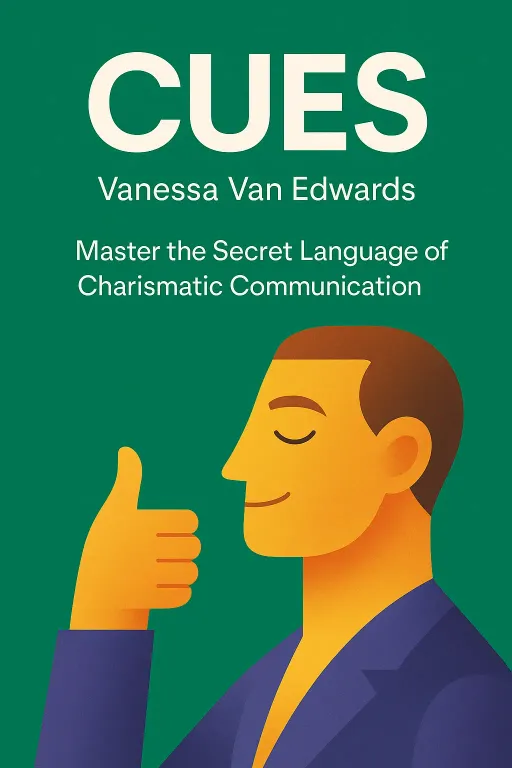
Nova: That's exactly where Vanessa Van Edwards's work on "Cues" comes in. It's about making the unconscious, conscious. Van Edwards reveals the science of nonverbal communication, showing how tiny, often overlooked cues—from eyebrow flashes to hand gestures, even how you stand—influence perception and trust. Understanding these helps you project confidence and, crucially, build rapport. It's not just about reading others, but intentionally sending the right signals.
Atlas: So, it's not just about others, but the right signals? How does a strategist, who's used to projecting strength, balance that with building rapport without seeming weak? I imagine many of our listeners, who lead with strategic foresight, might worry about softening their approach too much.
Nova: That's a brilliant question, and it brings us beautifully to Kim Scott's "Candid Conversations." Scott, known for "Radical Candor," emphasizes the importance of direct yet empathetic communication. It's about caring personally while challenging directly. Building trust means having tough conversations with respect, fostering genuine connection even when the message is difficult.
Atlas: That sounds like a tightrope walk. Especially in high-pressure environments, where 'direct' can often be misinterpreted as 'aggressive.' How do we ensure empathy doesn't dilute the strategic message, especially when you're trying to build consensus around a disruptive technology or a sustainable development project?
Nova: It's about precision, not dilution. Imagine a project manager, Alex, who needs to tell a key team member, Ben, that his critical component design is off-track and could delay the entire project. The old way might be to sugarcoat it, leading to future problems, or to be brutally direct, potentially alienating Ben. Kim Scott's approach would have Alex start by expressing genuine appreciation for Ben's past contributions and his dedication to the project – that's the 'care personally' part. Then, Alex would clearly and specifically explain the design is faltering and the potential impact, offering to collaborate on a solution – that's the 'challenge directly.'
Atlas: So, instead of a reprimand, it becomes a shared problem-solving session grounded in mutual respect. This transforms a potentially destructive conversation into a trust-building moment. It nurtures the relationship while still achieving the strategic objective. That makes perfect sense for someone trying to build consensus and lead with empathy.
Nova: Exactly. It's about transforming potential friction into productive collaboration. By understanding the "cues" you're sending and receiving, and then engaging in "candid conversations" that prioritize both truth and care, you're not just negotiating a deal; you're building a foundation of trust.
Synthesis & Takeaways
SECTION
Nova: So, these insights provide a practical toolkit for enhancing your emotional intelligence in negotiations. It’s about being acutely aware of the emotional tone you're setting, and ensuring your non-verbal cues support that intention, rather than undermining it.
Atlas: That's a profound shift. So, before walking into that next critical meeting, we need to pause and ask ourselves, 'What emotional tone am I trying to set, and are my unspoken cues aligned with that?' It’s about intentionality beyond just the agenda or the numbers. It’s about cultivating that executive presence by being fully present and authentic.
Nova: It's about conscious self-management and genuine connection. It's recognizing that the human element isn't a distraction from strategy; it the strategy. Trust is the ultimate currency, especially in complex deals.
Atlas: For innovators, for community builders, for anyone driving impactful change, mastering this silent language isn't just a tactic; it's foundational to creating lasting value and securing your vision. It's about moving from just closing deals to truly building relationships that endure. It’s about leading not just with intellect, but with empathy and profound understanding of human connection.
Nova: This is Aibrary. Congratulations on your growth!