

Acing the Bench: Mental Armor and the Judicial Mind with GaneshKumar
Golden Hook & Introduction
SECTION
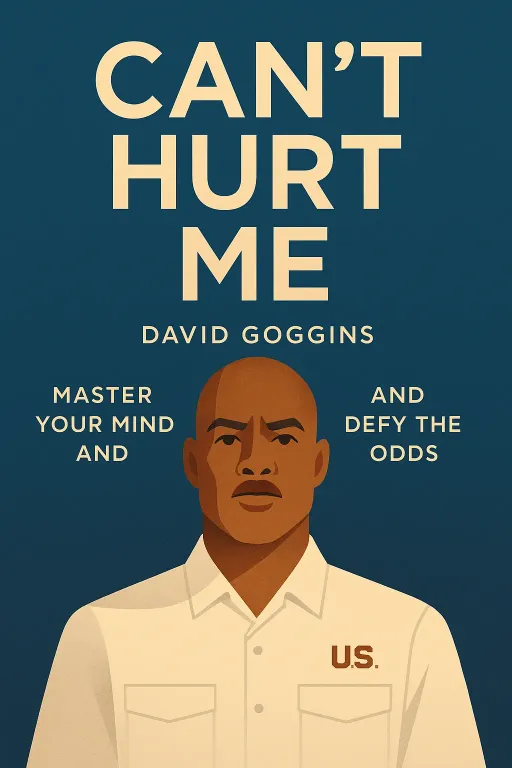
Dr. Warren Reed: Imagine standing before a panel of High Court judges. The air is thick. Every question is a cross-examination of your life's work, your legal knowledge, and your character. Your heart rate spikes. Do you freeze, or do you step into your mental armor? Today, we are dissecting David Goggins' masterpiece, Can't Hurt Me, but not for ultra-marathons. We are applying it to the ultimate intellectual crucible: acing the destination of your career. Today, we're going to tackle this book from three different angles. First, we'll explore the Accountability Mirror and how to audit our true readiness. Then, we'll discuss the Cookie Jar and the 40% Rule to unlock mental reserves under pressure. Finally, we'll focus on the 'Taking Souls' strategy to command respect in any high-stakes room. Joining me is GaneshKumar, a seasoned human rights litigator from Sindh, Pakistan, who has just cleared the written exams for the Civil Judge and Judicial Magistrate post and is preparing for his final interview with the Sindh High Court. Ganesh, welcome.
GaneshKumar: Thank you, Dr. Reed. It is a pleasure to be here. When I read Goggins' work, I don't just see physical suffering. I see a profound blueprint for cognitive discipline. In litigation, and especially when preparing to transition to the bench, the mental hurdles are immense. You are constantly battling self-doubt, the sheer volume of jurisprudence, and the weight of responsibility. Goggins' raw, unfiltered approach to mastering the mind resonates deeply with the challenges of the legal profession.
Dr. Warren Reed: Excellent. Let's skip the fluff. Goggins' book starts with a Warning Order. The mission is simple: unshackle your mind, ditch the victim mentality, and own your life. Ganesh, you admitted that initially, you didn't take this judicial exam too seriously. But now, you are in the final phase. The stakes are real. How does Goggins' Warning Order apply to your current transition?
GaneshKumar: It is a complete shift in mindset. In the law, we talk about the burden of proof. The Warning Order forces you to place the burden of proof on yourself. Initially, I relied on my six years of active practice. I thought, I know the courts, I know the procedures. But that was a form of comfortable denial. Goggins writes that denial is the ultimate comfort zone. To truly transition from a practitioner to a magistrate, I had to issue my own warning order. I had to accept that my past knowledge was not enough for the standard of excellence the Sindh High Court demands. I had to own my preparation completely.
The Accountability Mirror
SECTION
Dr. Warren Reed: Let's talk about the tool for that ownership: the Accountability Mirror. Goggins was overweight, working as a late-night pest exterminator, spraying for roaches and confronting raccoons in dumpsters. He was hiding from his academic failures. He had failed the Armed Services Vocational Aptitude Battery, the ASVAB, with a score of twenty, when he needed a thirty-six just to get into the military. He stood in front of his bathroom mirror, shaved his head, and spoke the brutal truth to himself. No sugarcoating. He posted sticky notes with his weaknesses and goals. Ganesh, as an analytical thinker, how do you evaluate this method? Is it too harsh, or is it necessary?
GaneshKumar: It is scientifically and professionally necessary. In legal terms, we call this an objective audit. When Goggins looked in that mirror and said, You are fat, you are lazy, you are illiterate, he wasn't engaging in self-loathing. He was stripping away the ego. In my preparation, I had to do the same. I had to look at my knowledge of the Civil Procedure Code, the Criminal Procedure Code, and the Constitution, and ask myself, Where are the gaps? It is easy to focus on your strengths, like my litigation experience in human rights. But the panel won't just test my strengths. They will probe my weaknesses. The Accountability Mirror is about putting your ego on trial and rendering a honest verdict.
Dr. Warren Reed: Exactly. No excuses. Goggins had to study for the ASVAB again. He had a learning disability and a stutter. He couldn't just read the book. He had to copy every page of the textbook by hand, multiple times, to force the information into his brain. He calloused his mind through repetition. Ganesh, you are completing your LLM and preparing for a highly technical judicial interview. How do you translate Goggins' brutal study method into your legal preparation?
GaneshKumar: The parallel is striking. The law is not just about memorization; it is about cognitive integration. When Goggins copied those pages, he was building neural pathways through sheer repetition. For the judicial exam, I cannot just skim through commentaries or past judgments. I have to write down the ratios of the judgments, draft mock orders, and speak my arguments aloud. I have to simulate the pressure of the courtroom. Repetition callouses the mind against the panic that occurs when a High Court judge asks you a complex question on a obscure point of law. You don't rise to the occasion; you fall to the level of your training.
Dr. Warren Reed: That is a key point. You fall to the level of your training. Goggins' training was brutal because he knew the environment he was entering—the Navy SEALs—would be unforgiving. The Sindh High Court interview panel is also unforgiving. They are looking for judicial temperament, decisiveness, and absolute clarity. If you lie to yourself in the mirror, you will break under their questioning.
GaneshKumar: Absolutely. If you have a weak foundation, a skilled cross-examiner will dismantle you in minutes. The judges on the panel are the ultimate cross-examiners. They can sense hesitation, they can spot a superficial answer immediately. By using the Accountability Mirror, I identify my weak areas—perhaps certain local laws or specific land revenue acts—and I target them with relentless study. I write them on my own metaphorical sticky notes. It is about replacing anxiety with preparation.
The Cookie Jar & The 40% Rule
SECTION
Dr. Warren Reed: Let's move to the next strategy: the Cookie Jar and the 40% Rule. Goggins decided to run the San Diego One Day race—a hundred-mile ultra-marathon—with zero running preparation, weighing two hundred and sixty pounds, having spent the previous months powerlifting. By mile seventy, his body was failing. He was urinating blood, his kidneys were shutting down, his shins had stress fractures, and his feet were broken. He was sitting in a chair, unable to stand. To get back on the track, he had to reach into his mental Cookie Jar. Ganesh, explain the mechanics of the Cookie Jar. What is it, and why does it work?
GaneshKumar: The Cookie Jar is a cognitive database of past resilience. When Goggins was at his absolute lowest, his brain was screaming at him to quit to protect his body. That is the brain's natural defense mechanism. To override that signal, he had to feed his mind evidence of his own capability. He didn't think about positive affirmations or abstract motivation. He recalled specific, undeniable victories: surviving Hell Week twice, overcoming his abusive father, escaping poverty. He used these memories as fuel. For an analytical mind, this is about leveraging empirical evidence of your own strength to defeat temporary panic.
Dr. Warren Reed: It is about data. Your brain says, You can't do this. You reply with, Here is the proof that I have done harder things before. Ganesh, you have over six years of practice in litigation, dealing with complex human rights cases in Sindh. That is a demanding, often hostile environment. How do you build your legal Cookie Jar for this upcoming interview?
GaneshKumar: That is exactly where I draw my strength. When I stand before the High Court panel, the imposter syndrome might try to creep in. My brain might say, You are from a rural area, this is too competitive, these judges are too intimidating. In that exact moment, I must reach into my Cookie Jar. I will remember the human rights cases where I stood up for marginalized individuals against powerful adversaries. I will remember the long nights of drafting petitions under tight deadlines, the intense arguments in the courtroom where the odds were stacked against my clients, and the moments of relief when justice was served. These are not just memories; they are legal precedents of my own resilience.
Dr. Warren Reed: That is a powerful connection. Your past litigation victories are your credentials of courage. Now, let's connect this to the 40% Rule. Goggins argues that when your mind tells you that you are completely exhausted, you have actually only tapped into forty percent of your true capability. The remaining sixty percent is locked behind a governor in your brain. How does a judicial candidate access that remaining sixty percent when the intellectual fatigue sets in?
GaneshKumar: The 40% Rule is about stretching your cognitive pain tolerance. During my preparation, there are days when my brain feels completely saturated. I have been reading judgments for ten hours, my head aches, and I want to close the books. That is the forty percent mark. That is the governor telling me to seek comfort. To access the remaining sixty percent, I have to recognize that this fatigue is a mental barrier, not a physical limit. I tell myself, Just one more chapter. Just one more case law. By pushing past that initial fatigue, you reset your baseline. You realize your capacity for analytical thinking is far greater than you believed.
Dr. Warren Reed: It is about incremental progression. Goggins didn't go from three hundred pounds to a Navy SEAL overnight. He increased his limits by five to ten percent every week. If you usually do a hundred push-ups, you do a hundred and five. If you study for five hours, you study for five and a half. That is how you remove the governor.
GaneshKumar: Yes, and in the context of the judicial interview, this mental stamina is critical. The interview itself might only last thirty minutes, but the mental pressure makes those thirty minutes feel like hours. The judges will push you until you don't know the answer, just to see how you react when you are cornered. If you have never pushed past your forty percent limit in private, you will panic in public. You need the mental stamina to remain calm, analytical, and composed even when you are intellectually exhausted.
Taking Souls on the Bench
SECTION
Dr. Warren Reed: Let's tackle Goggins' most aggressive concept: Taking Souls. During Hell Week, Goggins' boat crew was exhausted, shivering from hypothermia in the Pacific Ocean. The instructors were warm, dry, drinking coffee, and mocking them. Goggins realized that the only way to survive was to play a mind game. He decided to take the instructors' souls. He did this by performing so well, with so much energy and defiance, that he turned the instructors' own weapon of misery back on them. He made the instructors feel powerless to break them. Ganesh, this sounds highly adversarial. How do you apply 'Taking Souls' to a professional, respectful judicial interview?
GaneshKumar: It is about shifting the power dynamic through absolute excellence. In a judicial interview, the panel holds all the formal power. They have the authority to allocate you to the post or reject you. If you enter the room as a passive candidate, hoping to please them, you are at a tactical disadvantage. To 'take their souls' in a professional sense means to perform at such a high level of preparation, composure, and legal precision that you command their respect. You make them realize that you are not just a candidate begging for a job, but a highly competent legal mind who belongs on the bench.
Dr. Warren Reed: Give me a concrete example. How does that look in the interview room?
GaneshKumar: It looks like this: when they ask a difficult, multi-layered question designed to trap you, you do not flinch. You do not give a rushed, eager-to-please answer. You take a deliberate pause. You analyze the question. You break it down into its constitutional, procedural, and substantive components. You cite the relevant statutes and precedents with absolute clarity. You deliver your answer with a steady voice and direct eye contact. By showing that their toughest questions cannot shake your composure, you have effectively taken their souls. You have neutralized their ability to intimidate you. You have earned their professional respect.
Dr. Warren Reed: I love that. It is about dominating the standard of excellence. Goggins writes that excellence is the ultimate strategy. If you are a student, you don't just pass; you aim to be number one. If you are at work, you work around the clock to surpass their maximum expectations. Ganesh, you are competing against some of the best legal minds in Sindh. To stand out, you have to be uncommon amongst the uncommon. How do you maintain that level of focus without burning out?
GaneshKumar: You do it by adopting what Goggins calls the 'Start at Zero' mentality. Every day, regardless of what I achieved yesterday, I start at zero. It doesn't matter that I cleared the screening test. It doesn't matter that I passed the written exam. Those are past victories; they are in the Cookie Jar, but they do not guarantee success today. Complacency is the enemy of excellence. Every morning, I wake up and realize I have to earn my place all over again. This keeps you hungry. It keeps you disciplined. It prevents you from getting soft in the final stretch.
Dr. Warren Reed: The bottom line is that life is a mind game. The only person you are truly playing against is yourself. The panel of judges is just an external manifestation of the challenge. The real battle is inside your own mind.
GaneshKumar: That is the absolute truth. The judges are not my enemies. They are gatekeepers of a noble institution. My true opponent is my own doubt, my own fatigue, and my own temptation to settle for mediocrity. If I can master my mind, if I can build that armored mind, then the interview is just a formality. The destination is already secured in my mind before I even step into the room.
Synthesis & Call to Action
SECTION
Dr. Warren Reed: Let's synthesize this. We have covered the Warning Order—owning your life and preparation. We analyzed the Accountability Mirror—confronting your weaknesses with brutal honesty. We discussed the Cookie Jar and the 40% Rule—accessing your mental reserves under extreme pressure. And we redefined Taking Souls—commanding respect through unshakeable professional excellence. Ganesh, as we close, what is the one question you want to leave our listeners with, especially those facing their own high-stakes destinations?
GaneshKumar: I want to leave them with Goggins' ultimate question: 'What if?' When the doubts creep in, when people tell you that the odds are against you, or when your own mind says you cannot do it, look those doubts in the eye and ask, What if I can? What if I defy the odds? What if I perform flawlessly? That simple question silences the negativity and opens up the realm of possibility. For me, as I prepare for the Sindh High Court, I ask myself: What if a candidate from rural Sindh, who started this journey without taking it seriously, aces this interview and becomes one of the most dedicated, analytical, and upright magistrates on the bench? That is the vision that drives me forward.
Dr. Warren Reed: Powerful. No fluff. Just relentless execution. Ganesh, thank you for sharing your analytical depth and your legal perspective on this work. To our listeners: stop waiting for motivation. Motivation is a temporary fix. Build your accountability mirror, fill your cookie jar, and go take some souls in your own professional arenas. Until next time, stay armored.
GaneshKumar: Thank you, Dr. Reed. Keep pushing the limits.









