

The 'Founder's Burden' is a Trap: Why Self-Care Isn't Selfish.
Golden Hook & Introduction
SECTION
Nova: What if I told you that 'pushing through,' that badge of honor so many wear in the pursuit of building something meaningful, is actually the fastest way to your mission, not achieve it?
Atlas: Oh, I know that feeling. It's almost a point of pride for many founders, this idea of working until you drop. But to hear it framed as self-sabotage… that’s a tough pill to swallow for anyone driven by impact.
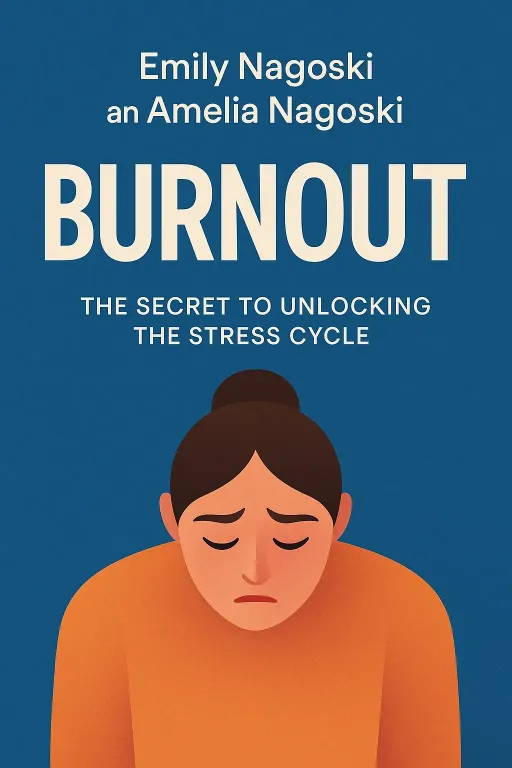
Nova: It absolutely is. And that's precisely what we're dissecting today, pulling insights from two seemingly disparate, but profoundly connected, works. First, we have "Burnout: The Secret to Unlocking the Stress Cycle" by sisters Emily Nagoski and Amelia Nagoski. What’s fascinating about them is their combined expertise: Emily is a sex educator, and Amelia is a conductor. They bring this incredible, interdisciplinary lens to understanding how stress impacts us, not just mentally, but as a deeply physiological process.
Atlas: Right, and then there's the classic "The Inner Game of Tennis" by W. Timothy Gallwey. It's a book about sports, yes, but it completely revolutionized how we think about mental performance, self-doubt, and the internal conversations that either make or break us. It's far more about the mind than the swing.
Nova: Exactly. Taken together, these books offer a powerful framework for understanding why the 'Founder's Burden' often feels like a trap, and why self-care isn't just a fluffy concept, but a profound act of strategic leadership. We’re talking about sustaining your vision, your energy, and your impact for the long haul.
Demystifying Burnout: The Science of Stress Cycle Completion
SECTION
Nova: So, let's start with burnout. The Nagoski sisters make a crucial distinction: stress is what happens in the external world – the deadlines, the investor pitches, the constant demands. Burnout is what happens when your body gets stuck in the stress response. Think of it like a car. The stressor is hitting the accelerator. Your body’s natural response is to rev up, to prepare for fight or flight. But if you keep pressing the accelerator without ever hitting the brake, or pulling over to cool down, what happens?
Atlas: Oh man, that engine is going to seize up. You’re going to burn out, literally. But for our listeners who are managing high-pressure teams, or trying to scale a new venture, the stressor often go away. How can you complete a stress cycle when the fundamental problem – the pressure, the responsibility – is still very much present?
Nova: That’s the genius of their work. They explain that completing the stress cycle isn't about the stressor. It's about letting your body know it's to relax, even if the external problem persists. Imagine a gazelle being chased by a lion. If it escapes, it doesn’t just calmly graze. It shakes, trembles, and runs the last of that adrenaline out of its system. Humans, however, often don’t do that. We solve the immediate crisis, then sit back down at our desks, still buzzing with cortisol and adrenaline.
Atlas: So it's not about fixing the problem, but about letting the body know it's to relax? Even when the problem is still there? That’s going to resonate with anyone who struggles with the constant pressure to perform. What does that actually look like for us?
Nova: It looks like specific, deliberate actions. Physical activity is a big one – literally running, dancing, or shaking off that stress. But it can also be deep breathing, crying, creative expression, or even just a genuine, deep laugh with a friend. The key is that these activities signal to your nervous system that the threat has passed, allowing your body to return to a state of calm. It’s not about being unproductive; it's about processing the of stress, so it doesn't accumulate into chronic burnout.
Atlas: That’s actually really inspiring. It reframes self-care from something indulgent to a biological necessity. It sounds like ignoring this physiological reality is what truly puts a founder’s long-term impact at risk.
Nova: Absolutely. Your capacity to lead, to innovate, to create that impact you're so driven by, is directly tied to your personal energy reserves and your emotional resilience. Prioritizing these "stress cycle completion" moments isn't selfish; it's a profound act of strategic leadership. You're safeguarding your most valuable asset: yourself.
The Founder's Inner Game: Cultivating Resilience Through Self-Mastery
SECTION
Nova: And that notion of 'safeguarding yourself' actually connects perfectly to the we play, especially when the external world is screaming for more, and your internal world is often screaming even louder. This is where W. Timothy Gallwey's insights from "The Inner Game of Tennis" become incredibly relevant, far beyond the court.
Atlas: Oh, I like that. So the biggest opponent isn't the market, or the competition, or even the never-ending to-do list, but the voice in your own head telling you you're not enough, or that your vision is too ambitious?
Nova: Precisely. Gallwey introduces the idea of Self 1 and Self 2. Self 1 is the 'teller,' the conscious, critical, judgmental self that tries to control everything. Self 2 is the 'doer,' the intuitive, capable self that simply performs. The biggest interference to performance, he argues, isn't external; it's the constant chatter and judgment from Self 1. Think of a founder paralyzed by perfectionism, constantly second-guessing every decision, micro-managing every detail, convinced that if they don't success, it won't happen.
Atlas: I totally know that feeling. Honestly, that sounds like my Monday mornings sometimes. For someone building a better world, who’s inherently driven by impact, how do you silence that inner critic without losing your drive, that healthy self-assessment that keeps you sharp?
Nova: It’s not about silencing it completely, but about changing your relationship with it. Gallwey advocates for non-judgmental awareness. Instead of telling yourself "You made a mistake, you're terrible," you observe, "My hand went too far left." You focus on the 'what' without the 'why' or the 'you should have.' This creates space for Self 2, the intuitive doer, to learn and perform without the crushing weight of Self 1's judgment. It's about trusting your natural capacity, which is often stifled by overthinking and self-criticism.
Atlas: That’s a great way to put it. So, it's almost like self-compassion isn't just about being kind to yourself; it's a performance enhancer. By not beating yourself up, you free up mental energy to actually the work better.
Nova: Exactly. When you reduce that internal interference, you unlock your true potential. It's about cultivating an inner environment where creativity and problem-solving can flourish, rather than being constantly battling an internal saboteur. This is why managing your inner state, through practices that build self-awareness and non-judgment, is truly key to sustained external output and impact.
Synthesis & Takeaways
SECTION
Nova: So, bringing these two powerful ideas together, we see that the 'Founder's Burden' becomes a trap when we ignore the physical realities of stress and let our internal critics run wild. Sustainable impact, that deep, purpose-driven change our listeners are striving for, emerges when we intelligently manage both our physiological stress responses and our inner mental landscape.
Atlas: It sounds like we're redefining strength here. It's not about enduring endless pain or sacrificing yourself on the altar of your mission. It's about intelligently managing your energy and your mind, understanding that true resilience comes from acknowledging your human limits and working them, not against them. That gives me chills.
Nova: It does, doesn't it? Nova's Take, as we like to say, is that your capacity to lead and create impact is directly tied to your personal energy reserves and emotional resilience. Prioritizing self-care, in this context, isn't a luxury or a reward for hard work. It's a profound act of strategic leadership, a fundamental component of building culture intentionally from day one, and a key founder well-being strategy.
Atlas: That makes me wonder, for all the resilient builders out there, what’s one concrete thing they can do today to start shifting this mindset and practice?
Nova: It's simple, but powerful. Dedicate 15 minutes today to a non-productive, screen-free activity that helps you complete a stress cycle. Maybe it's a brisk walk, a deep conversation with someone you trust, or simply putting on some music and dancing around your living room. It’s not about solving a problem; it’s about giving your body permission to release the accumulated stress, protecting your inner peace, and ultimately, your capacity to make that significant impact you're striving for.
Atlas: That's actually really inspiring. A small action, a huge impact on your long-term output.
Nova: Absolutely. This is Aibrary. Congratulations on your growth!









