

The Growth Equation: Strategies for Sustainable Expansion
Golden Hook & Introduction
SECTION
Nova: Atlas, if I told you that the secret to enduring greatness for a business isn't about having a groundbreaking idea, or even a charismatic leader, but something far more fundamental, what would your immediate, skeptical reaction be?
Atlas: Huh. My immediate, skeptical reaction would be, "Nova, you've been reading too many self-help books again." But then I'd immediately follow that up with, "Okay, I'm intrigued. What is this fundamental, non-charismatic, non-idea-driven secret you speak of?" Because frankly, that flies in the face of so much conventional wisdom we hear in the business world.
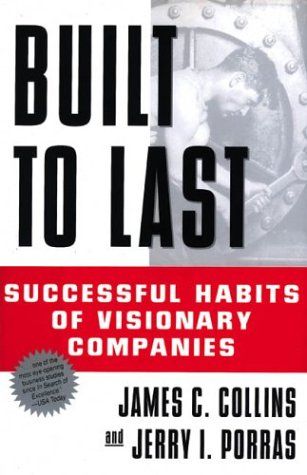
Nova: Exactly! It's a delightful subversion of expectation. And it's precisely the kind of profound insight we uncover in our deep dive today into Jim Collins's groundbreaking work. We're talking about two of his seminal books: "Built to Last: Successful Habits of Visionary Companies," which he co-authored with Jerry I. Porras, and his solo masterpiece, "Good to Great: Why Some Companies Make the Leap... And Others Don't."
Atlas: Ah, Jim Collins. The name practically hums with gravitas in business circles. I know these books are highly regarded, practically required reading for anyone serious about long-term success. But for those who haven't delved into them, what's Collins's big, overarching message across these two works?
Nova: Well, the core of our podcast today is really an exploration of what it truly means to build something that lasts, something that doesn't just grow fast but grows sustainably and excellently. Today we'll dive deep into this from two perspectives. First, we'll explore the foundational principles that distinguish truly visionary companies, then we'll discuss the disciplines that allow companies to transition from simply good to demonstrably great.
The Unseen Blueprint - Core Ideology and Enduring Excellence
SECTION
Nova: So, let's start with "Built to Last." Collins and Porras spent years studying companies that had achieved sustained success over decades, even centuries, outperforming their peers significantly. And what they found was utterly fascinating. They challenged this prevailing notion that you need a brilliant idea or a heroic, larger-than-life founder to build a great company.
Atlas: Oh, I love that. Because honestly, the "lone genius" narrative can be pretty exhausting for the rest of us. It implies if you're not Elon Musk or Steve Jobs, you're doomed. So, what did they find instead? What was the real secret?
Nova: What they found was that visionary companies are built by preserving a core ideology while simultaneously stimulating progress. Think of it like a sturdy oak tree. The core ideology is its deep root system – unchanging, fundamental values and purpose. The stimulating progress is the tree continually growing, adapting, shedding leaves, reaching for the sun.
Atlas: That's a great analogy. So, the core ideology isn't just a mission statement tacked onto a wall, is it? It sounds like something far deeper.
Nova: Absolutely. It’s not just words; it's the deeply held guiding principles and beliefs that define the organization's character and purpose, totally independent of its current products, services, or market conditions. It's the company exists, beyond making money. And it's something that is preserved and protected, almost sacred.
Atlas: So, for a food business, for instance, that core ideology might be something like "nourishing communities through wholesome, ethically sourced ingredients," regardless of whether they're selling sandwiches or catering fine dining.
Nova: Exactly! And the trick is, while that core ideology remains fixed, the operational strategies, the products, the market approaches – all of that can and should change. That's the "stimulating progress" part. It’s a dynamic tension. They call it "the Genius of the AND." You don't choose between preserving the core or stimulating progress; you do both.
Atlas: I like that a lot. "The Genius of the AND." It’s not about either/or, but finding a way to integrate seemingly opposing forces. But how do these visionary companies ensure this core ideology is communicated and lived by every team member, especially as they grow? That sounds like a massive challenge.
Nova: That's where the culture comes in. Collins and Porras describe how these companies create a cult-like culture around their core ideology. Not "cult" in a negative sense, but in the sense that the values are deeply ingrained, almost taken for granted, and permeate every decision. They hire people who naturally align with these values, and they continually reinforce them through stories, rituals, and even their organizational structure.
Atlas: So, it's about finding people who are already swimming in the same direction, rather than trying to force them to. That makes sense. It's like a self-selecting mechanism for value alignment.
Nova: Precisely. And this leads directly into our second main point, which Collins explores even further in "Good to Great."
Architecting Your Future - From Good to Great
SECTION
Nova: So, after "Built to Last," Collins continued his research, asking: how do companies make the leap from merely good performance to truly sustained, great results? He and his team analyzed companies that made this transition and identified key characteristics and disciplines.
Atlas: Okay, so "Built to Last" is about the DNA of visionary companies, and "Good to Great" is about the transformation. What's one of the most surprising findings from that research?
Nova: One of the most counterintuitive, yet powerful, findings was the concept of Level 5 Leadership. We often think of great leaders as charismatic, visionary figures who rally the troops with their personality. But Collins found that the leaders who drove good companies to greatness were often the opposite: they were humble, quiet, and fiercely determined. They possessed a paradoxical blend of extreme personal humility and intense professional will.
Atlas: Wow, that's fascinating. So, not the rockstar CEO we often lionize in the media, but someone more like a steady, relentless craftsman.
Nova: Exactly. They channel their ego away from themselves and into the larger goal of building a great company. They're more concerned with the success of the enterprise than their own personal fame or fortune. And they often attribute success to external factors or their team, while taking responsibility for failures themselves. They build enduring greatness through sheer, quiet resolve.
Atlas: That's actually really inspiring. It makes leadership feel more attainable for those of us who aren't naturally bombastic or spotlight-seeking. Now, you also mentioned the Hedgehog Concept. That sounds intriguing. What exactly is it?
Nova: The Hedgehog Concept comes from an ancient Greek parable: "The fox knows many things, but the hedgehog knows one big thing." Collins found that great companies, like the hedgehog, simplify a complex world into a single, unifying idea that guides all their efforts.
Atlas: So, it's about focus, but a very specific kind of focus, right? Not just "do one thing well."
Nova: Yes, it's about finding the intersection of three circles. First, what are you deeply passionate about? Second, what can you be the best in the world at? And third, what drives your economic engine? You're not just good at it, but you are. And "economic engine" isn't just profit, but how you generate cash flow and profitability.
Atlas: That makes me wonder, for our listeners, especially those building food businesses, how do you apply that Hedgehog Concept? Because it sounds like it requires some serious self-reflection and brutal honesty.
Nova: It absolutely does. For a food business, it means asking: What are we truly passionate about? Is it local sourcing, a specific cuisine, sustainable practices, or customer experience? Then, what can we be at, not just locally, but globally if we scaled? Is it our unique recipe, our distribution model, our brand storytelling? And finally, what's the single most important metric that drives our profitability? Is it customer loyalty, per-item margin, or speed of service?
Atlas: That's a deep question, and it forces you to confront where your business truly excels and where it might just be "good." And that focus helps you say "no" to opportunities that don't fit, which is often harder than saying "yes."
Nova: Spot on. It provides clarity and helps avoid the "death by a thousand opportunities" problem. Many good companies fail to become great because they dilute their efforts by chasing too many things. The hedgehog, with its singular, piercing understanding, is far more effective.
Synthesis & Takeaways
SECTION
Nova: So, when we connect "Built to Last" and "Good to Great," we see a powerful blueprint for sustainable expansion. It’s about building a robust foundation with a core ideology that transcends trends, and then executing with the disciplined focus of Level 5 Leadership and the Hedgehog Concept.
Atlas: It really boils down to building a business as a culture, not just a commodity. It’s recognizing that sustainable growth isn't just about rapid expansion; it's about building a robust foundation and a culture that fosters enduring excellence. And that's something that truly resonates with the idea of navigating an industry like food confidently, ensuring smooth operations, and connecting deeply with your market.
Nova: Absolutely. It's about having that unseen blueprint, that inner compass, and then having the discipline to follow it, even when the market is chaotic. It's about understanding that the biggest enemy of great is often good.
Atlas: And it’s a powerful reminder that while the journey of growth can feel overwhelming, trust your instincts, Nova. Your vision is clear. And for our listeners, practice active listening, refine your message daily, and keep asking those deep questions about your core purpose. Embrace the journey.
Nova: Indeed. This is Aibrary. Congratulations on your growth!