

Leading for Impact: Building Enduring Organizations
Golden Hook & Introduction
SECTION
Nova: You know, Atlas, I was thinking about how many companies pop up, make a splash, and then just… vanish. It's like they're built on sand.
Atlas: Oh, I know that feeling. It makes you wonder what separates the shooting stars from the constellations, doesn't it? Especially for anyone striving to build something that truly lasts, something beyond the fleeting trend.
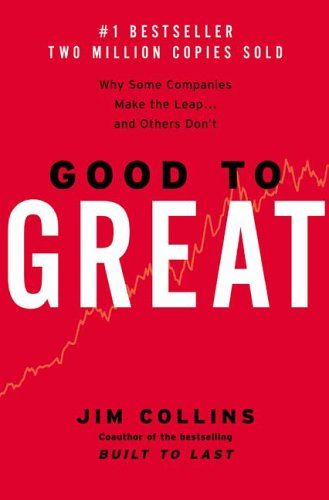
Nova: Exactly! And that's precisely what we're dissecting today, through the lens of two monumental works by Jim Collins: "Good to Great" and "Built to Last." Collins, an acclaimed researcher and author, spent years meticulously studying what makes some companies not just successful, but. He's not just a business guru; he's a data scientist of organizational excellence.
Atlas: Right, so we’re talking about the secret sauce for longevity, not just a flash in the pan. I imagine a lot of our listeners, especially those with a strategic mind, are constantly asking themselves: how do I ensure my vision doesn't just survive, but thrives for decades?
Nova: Precisely. And it starts with a concept Collins introduces in "Good to Great"—the idea that enduring greatness isn't accidental; it's the result of deliberate leadership and a commitment to core values.
Cultivating Excellence: Disciplined People, Thought, and Action
SECTION
Atlas: So, when Collins talks about "disciplined people, thought, and action," what does that actually look like in practice? Is it just about being rigid and by-the-book?
Nova: Not at all, and that’s a common misconception. It’s about a deeply ingrained culture, not just a set of rules. Think of it this way: disciplined people are those who are self-motivated, who don't need to be managed. They're on the bus, in the right seats, before you even decide where the bus is going.
Atlas: So you're saying it's about getting the people first, even before you have a fully formed strategy? That sounds almost counter-intuitive to the traditional "strategy first" approach.
Nova: Absolutely. Collins found that the great companies first focused on "who" before "what." They hired disciplined people who shared their values, and then those people figured out the "what." A fantastic example of this is Nucor, a steel company that achieved extraordinary results. They didn't have a grand, complex strategy to begin with. What they had was a culture of extreme discipline and shared accountability among their employees.
Atlas: Nucor, steel... that doesn't immediately scream "cutting-edge innovation." How did they become great then?
Nova: Their greatness came from their disciplined culture. They empowered their frontline workers, fostered a sense of ownership, and linked compensation directly to performance. The employees the strategy. They were disciplined in how they thought about costs, how they innovated processes, and how they executed their daily tasks. This wasn't about a genius CEO dictating every move; it was a collective, disciplined effort.
Atlas: That’s fascinating. So it's not simply about having smart people, but people who are inherently disciplined in their approach and aligned with a shared purpose. I can see how that would change the dynamic of an organization, especially in a demanding industry like food, where operational excellence and quality are paramount.
Nova: Exactly. And that leads us to the second pillar: disciplined thought. This isn't just about being smart; it's about confronting the brutal facts of your reality, no matter how unpleasant they are. It’s the "Stockdale Paradox" from "Good to Great."
Atlas: The Stockdale Paradox? That sounds intriguing. What's that about?
Nova: It’s named after Admiral Jim Stockdale, who was a prisoner of war during the Vietnam War. He endured eight years of torture, yet survived when many others didn't. When asked about it, he said the optimists—those who believed they’d be out by Christmas—died of broken hearts. Stockdale maintained unwavering faith that he would prevail, but also confronted the of his current reality.
Atlas: So, a blend of ultimate optimism and immediate realism. That’s a powerful combination. How does that translate to business leadership?
Nova: Great companies embody this. They never lose faith that they will succeed, but they are relentlessly honest about their current challenges. They create a culture where truth can be heard, no matter how uncomfortable. Think about Kroger, the grocery chain. In the 1970s and 80s, facing intense competition from superstores, they didn't bury their heads in the sand. They confronted the brutal fact that their traditional supermarket model was obsolete and completely reinvented themselves, closing underperforming stores and investing heavily in new formats.
Atlas: That’s a tough pill to swallow for any leader. It takes immense mental fortitude to acknowledge that your existing model is failing, especially when you’re driven by growth and impact. For someone in the food industry, facing constant shifts in consumer preferences and regulatory landscapes, that ability to confront harsh realities head-on must be invaluable.
Nova: It absolutely is. And this disciplined thought then fuels disciplined action. It’s not about impulsive decisions, but strategic, consistent execution based on those brutal facts and an unwavering belief in ultimate success.
Your Path to Lasting Impact: Core Ideology and Dynamic Change
SECTION
Nova: Now, moving from "Good to Great" to "Built to Last," Collins, along with Jerry I. Porras, dives deeper into what makes truly exceptional companies tick over – not just a few great years. They emphasize core ideology and dynamic change.
Atlas: Core ideology… I hear that term thrown around a lot. What’s the Collins and Porras definition that makes it a driver of success? Is it just a mission statement on a wall?
Nova: Far from it. Their research shows that truly visionary companies have a core ideology that transcends individual leaders or product lines. It’s a combination of core values – the essential tenets that are intrinsically important to the company – and a core purpose – the organization’s fundamental reason for existence beyond just making money. It's the soul of the company.
Atlas: So, it's not just about what you, but you do it, and what you. For our listeners who are focused on navigating complex regulatory environments and optimizing supply chains, how does something as seemingly abstract as "core ideology" actually translate into tangible operational benefits?
Nova: That’s the beauty of it. A strong core ideology acts as a guiding star. Take Procter & Gamble. Their core values, like integrity and leadership, have remained constant for over a century, even as their product lines and markets have evolved dramatically. This core ideology guides their decisions, from product development to ethical practices, which in turn builds trust with consumers and ensures compliance.
Atlas: So it's a compass for decision-making, especially in turbulent times. It helps you stay true to yourself while everything around you is changing.
Nova: Precisely. And that leads us to the other crucial element: dynamic change. Visionary companies don't just cling to their core ideology; they also embrace "Big Hairy Audacious Goals," or BHAGs, and constantly push for progress. They preserve their core while stimulating progress.
Atlas: BHAGs! I love that acronym. So it's about having these huge, almost intimidating goals, but ensuring they’re still aligned with your core purpose?
Nova: Exactly. Think of Boeing in the 1950s. Their core purpose was to be at the forefront of aerospace. Their BHAG was to put humanity on the moon. This wasn't a small, incremental step; it was a massive, inspiring, and slightly terrifying goal that galvanized the entire organization. They preserved their core identity as an aerospace pioneer, but stimulated progress by aiming for something truly audacious.
Atlas: That’s a powerful example of how vision can drive an entire industry forward. For leaders who are constantly thinking about growth and expansion, the idea of a BHAG, anchored by a strong core ideology, feels like a strategic superpower. It’s about having the courage to dream big while staying true to your foundational principles.
Nova: It is. These companies weren't afraid to shed old products or even entire divisions if they no longer served their core purpose or hindered their progress. They were willing to experiment, to innovate, and sometimes, to fail spectacularly on the way to something truly revolutionary. It’s a constant dance between preserving the essential and stimulating dynamic evolution.
Synthesis & Takeaways
SECTION
Atlas: So, to bring it all together, what I’m hearing is that building an enduring organization isn't about finding a single magic bullet, but about a symbiotic relationship between disciplined people, thought, and action, all guided by a clear core ideology and an unwavering commitment to dynamic change. It’s about building a solid foundation, while also daring to reach for the stars.
Nova: That’s beautifully put, Atlas. The profound insight here is that greatness isn't a destination; it's a continuous journey of disciplined evolution. It’s about asking yourself: are your core values truly lived, or are they just words on a plaque? And how can you, as a leader, foster both the humility to confront brutal facts and the fierce resolve to achieve audacious goals?
Atlas: That’s a deep question, and one I think every leader, especially those aiming to make a lasting impact, needs to grapple with. It’s not just about what you achieve, but how you build the capacity for continuous, principled achievement.
Nova: For our listeners, we want to challenge you this week. Reflect on your company's core values. Are they clearly articulated and consistently lived by every team member? If not, identify one way to reinforce them this week. Start small, but start with intent. Because enduring greatness, ultimately, is built one disciplined step at a time.
Atlas: And for those of you who want to dive deeper into these concepts, definitely check out Jim Collins' "Good to Great" and "Built to Last." They’re foundational texts for anyone serious about leadership and organizational excellence.
Nova: This is Aibrary. Congratulations on your growth!