

Stop Patching, Start Designing: The Frameworks for System Resilience.
Golden Hook & Introduction
SECTION
Nova: What if I told you that most of what we consider 'good security practice' is actually a colossal waste of time, a band-aid on a gushing wound?
Atlas: Whoa, that’s a bold claim, Nova. I imagine a lot of our listeners, especially those working hard to secure their systems, might feel a bit attacked right now. Are you saying all our patching and fire-fighting is for nothing?
Nova: Not for nothing, Atlas, but it’s often misdirected. It’s like endlessly patching leaky pipes in a house when the fundamental plumbing infrastructure was flawed from the start. We're talking about the cold, hard fact that building truly secure systems isn't about reacting to threats; it's about proactive design choices. Many security efforts become endless patching cycles because the foundational architecture wasn't secure to begin with.
Atlas: Okay, so we're talking about a paradigm shift, not just better tools. That makes me wonder, what's leading us down this reactive path in the first place? And how do we even begin to think differently?
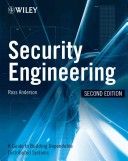
Nova: Excellent questions, and that's precisely what we're diving into today. Our insights are drawn from two seminal works: "Security Engineering" by Ross Anderson and "Building Secure Software" by John Viega and Gary McGraw. Anderson, a brilliant Cambridge professor and cryptographer, approaches security as an emergent property of good design, deeply understanding how complex systems inherently fail. Viega and McGraw, with their extensive software security consulting background, give us the practical blueprint for integrating security throughout the entire software development lifecycle. These aren't just books; they're manifestos for designing resilience, not just reacting to breaches.
The Flawed Paradigm of Reactive Security: The Patching Treadmill
SECTION
Nova: So, let's talk about this "patching treadmill." We've all been there: a new vulnerability is discovered, a frantic scramble to patch, then another, and another. It feels like playing Whac-A-Mole with digital threats. But here’s the kicker: often, these vulnerabilities aren't just isolated flaws; they're symptoms of deeper architectural shortcomings.
Atlas: That’s going to resonate with anyone who struggles with managing security. It feels like you’re always behind, always reacting. For our listeners who are architects or strategists, constantly putting out fires drains resources and morale. What’s the deeper issue here? Is it just that we’re not fast enough, or is there something fundamentally wrong with the approach?
Nova: It’s the approach itself. Ross Anderson, in "Security Engineering," articulates this beautifully. He emphasizes that security isn't a feature you bolt on at the end; it's an of good design. Think of it like this: you can have the strongest bricks and best insulation, but if your house's foundation is on quicksand, or if the load-bearing walls are misplaced, you're going to have problems, regardless of how many individual fixes you apply.
Atlas: So, it's not just about finding the crack, it's about the entire foundation being shaky? That’s a powerful distinction. Can you give an example of what an "emergent property" failure looks like in a real-world system? Something where the individual pieces are secure, but the whole thing still falls apart?
Nova: Absolutely. Imagine a hypothetical smart-city system. You have highly secure individual components: hardened traffic light controllers, encrypted surveillance cameras, robust public Wi-Fi access points. Each component passes its security audit with flying colors. But the between them—the way they share data, the protocols for handoffs, the centralized management system—were never designed with the same rigorous security mindset.
Atlas: I see where this is going.
Nova: Exactly. A cascading failure during a city-wide power surge, for instance. Or a subtle data leak occurring not because one camera was hacked, but because its connection to the central analytics platform used a default, unencrypted communication channel, assuming the would handle encryption. The individual pieces were "secure," but the overall system wasn't "designed" for resilience against these complex interactions. The security didn't emerge from the combined design.
Atlas: That makes me wonder, how often are we dealing with these kinds of systemic issues, where the problem isn't a single weak link, but the entire chain's structure? That sounds incredibly frustrating to diagnose and fix after the fact.
Nova: It's far more common than most realize. And that frustration, Atlas, is precisely what leads us to the solution: 'security by design.' It's about transforming that reactive headache into proactive foresight.
Security by Design: Engineering Resilience from the Ground Up
SECTION
Nova: That frustration, Atlas, is precisely what leads us to the solution: 'security by design.' It's about designing for resilience from day one, not just against threats, but for overall system integrity. This is where Viega and McGraw's "Building Secure Software" truly shines. They advocate for integrating security throughout the entire software development lifecycle—from the moment you gather requirements, through architecture, coding, and testing. It's about anticipating vulnerabilities code is even written.
Atlas: So, it’s about thinking like an attacker during the design phase? How do you even begin to do that without overwhelming the design process? I mean, for someone in a high-stakes tech environment, the idea of adding more complexity to an already complex design phase might feel daunting. How does this differ from traditional threat modeling?
Nova: It’s a crucial distinction. Traditional threat modeling can sometimes feel like a checklist, a post-design audit. What Viega and McGraw champion is embedding that adversarial thinking the design process itself. It’s not just "is this feature secure?" It’s "how could this feature, or its interaction with others, be exploited or fail in an unexpected way?" It’s about building in controls at the architectural level.
Atlas: Can you give us a concrete example of what that looks like? Because "security by design" sounds great in theory, but I want to understand how it actually plays out in practice.
Nova: Let’s take a new financial transaction platform. Instead of building it and then running penetration tests to find vulnerabilities, a 'security by design' approach starts at the blueprint stage. The team, drawing from Viega and McGraw's principles, would diagram the entire architecture: API endpoints, database access, user authentication flows, external integrations, internal microservices.
Atlas: Okay, so you’re visualizing the whole system’s attack surface before any code is written.
Nova: Exactly. And at each layer, they proactively identify potential attack surfaces and design in controls. For example, instead of just encrypting data at rest, they might design a system where even if the database is breached, the data is useless without a separate, highly secured key management service, residing in a different trust domain. Or, for critical transactions, they might architect a multi-factor authorization process that involves multiple independent services, not just a single authentication server. This prevents entire classes of vulnerabilities from ever appearing in the code, because the system is structurally resistant.
Atlas: That's a profound shift. It’s truly about building secure foundations. The "Tiny Step" from the book, where you choose one component in a current project and diagram its security architecture, identifying potential attack surfaces before any code is written—that makes so much more sense now. It’s not just a theoretical exercise; it’s the practical entry point into this mindset.
Nova: Precisely. It’s about being an architect of resilience, not just a repair person.
Synthesis & Takeaways
SECTION
Nova: So, what we're really talking about today, Atlas, isn't just a technical adjustment; it's a fundamental paradigm shift. It’s moving from the painful, endless cycle of reactive patching to the empowering, proactive stance of designing systems that are inherently resilient, secure from their very inception. It’s foresight over hindsight.
Atlas: For our listeners who are architects, communicators, strategists – this isn't just about technical details for engineers. It's about leading the conversation, influencing design decisions at the highest level, and ultimately building trust and reliability into our digital environments from the ground up. It’s about making security a core value proposition, not an afterthought.
Nova: Absolutely. When you design for resilience, you're not just building a more secure system; you're building a more robust, reliable, and ultimately, more valuable system. It’s about designing for success, not just against failure.
Atlas: So the real question isn't "how do we fix this vulnerability after it's found?" but "how do we design a system where this class of vulnerability can't exist in the first place?" That’s the kind of deep analysis and thinking that provides lasting intellectual value.
Nova: Exactly. And the tiny step? Start small. Pick one component in a current project, diagram its security architecture. Anticipate, don't just react. Be the architect of resilience.
Atlas: A powerful call to action.
Nova: This is Aibrary. Congratulations on your growth!