

The 'Design Debt' Trap: Why Your UI/UX Needs a Strategic Reset
Golden Hook & Introduction
SECTION
Nova: You know, Atlas, I think there's a huge myth floating around in the UI/UX world that's quietly crippling projects. Everyone talks about building scalable design systems, right? But what if the very thing we think is making our UI/UX scalable, those beautiful, reusable components, is actually setting us up for crippling debt?
Atlas: Hold on, aren't components the whole point of a design system? The holy grail of efficiency? How can they possibly be debt? That sounds almost heretical to a lot of our listeners who are meticulously building these systems.
Nova: It sounds counterintuitive, I know. But here's the core truth: a truly scalable UI/UX system isn't just about having a library of slick components. It's about a deep, almost philosophical understanding of the business domain it serves. Without that profound connection, your design system, no matter how well-crafted its individual pieces, inevitably becomes a source of what we call 'design debt.'
Atlas: Design debt. I like that. It immediately conjures up images of interest accruing. So, it's not just about pretty pixels and reusable buttons, but about the underlying business logic that those pixels and buttons are meant to serve? That’s a significant shift in perspective.
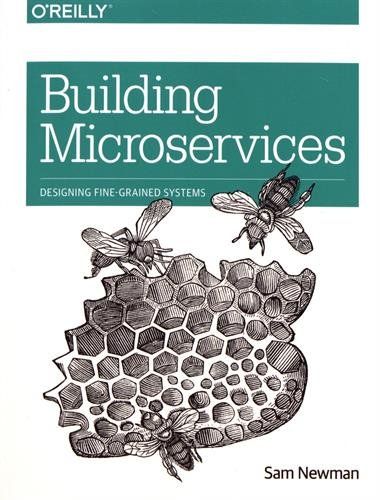
Nova: Absolutely. And this isn't some new, ephemeral concept. We're drawing insights today from foundational texts like "Domain-Driven Design: Tackling Complexity in the Heart of Software" by Eric Evans, and Sam Newman's "Building Microservices." Evans's work, though often applied to code architecture, fundamentally shifts how we should think about in general. And Newman then extends this to breaking down complex systems, a principle directly applicable to how we structure UI/UX components. It's about building something that reflects the of the business, not just its surface.
Deep Dive into Design Debt: The 'Misaligned Feature' Case Study
SECTION
Atlas: Okay, so paint me a picture. What does this design debt actually look like in the wild? How does a well-intentioned component library turn into an anchor?
Nova: Let's imagine a rapidly growing e-commerce platform. They’re super excited about their new, perfectly documented design system. Their 'one-size-fits-all' product page component—you know, the one with the image carousel, description, add-to-cart button—seemed brilliant, a model of reusability. It worked for their initial simple product catalog.
Atlas: Right, sounds like a win. Efficient, consistent.
Nova: Exactly. But then, the business innovated. They introduced complex 'subscription box' features, where users build custom monthly deliveries. Then came 'custom-engraved' items, requiring intricate personalization options. And finally, 'digital downloads' with unique delivery mechanisms. Each time, the product team, trying to be efficient, tried to jam these fundamentally unique business domains into that generic, original product page component.
Atlas: Oh, I see where this is going. Suddenly, that elegant component is groaning under the weight of exceptions.
Nova: Precisely. They started adding endless conditional logic: "If product type is 'subscription,' show this widget; if 'engraved,' show that configurator; if 'digital,' hide the shipping options." The UI became a patchwork quilt of hidden elements, broken user flows, and an increasingly convoluted codebase. Designers were constantly trying to force new, unique business models into a component never built for them. The 'scalable' component, once a source of pride, became an anchor, dragging down every new feature.
Atlas: Wow, that sounds like a nightmare that many of our listeners, especially those building complex digital products, have probably lived through. It's like trying to fit a square peg into a round hole, over and over, until the peg is shredded and the hole is unrecognizable. But how does that like debt? Like, what's the real, tangible cost beyond just making things complicated?
Nova: The cost is insidious, Atlas. It's not just the endless development time wasted debugging conditional logic or trying to make a square peg look round. It's user frustration because the experience feels inconsistent, clunky, or just plain wrong for the task at hand. It's a loss of brand trust because the product feels disjointed. It's the inability to innovate quickly because every new idea requires untangling this spaghetti bowl of UI logic. And crucially, for the empathetic leaders listening, it's a demoralized design and engineering team, constantly fighting the system instead of building something new and exciting. That's the human and strategic cost of design debt.
The Domain-Driven Solution: Building Resilient Structures
SECTION
Atlas: That’s a really stark picture. It makes you realize that what looks like efficiency on the surface can be hiding a huge, growing problem underneath. So, if trying to force everything into generic components is the problem, what’s the solution? How do we build these resilient structures you mentioned?
Nova: And that naturally leads us to the solution, which isn't just about better components, but fundamentally rethinking how we architect our design systems. We need to borrow a page from Eric Evans's Domain-Driven Design. Traditionally, DDD is about modeling software around the core business domains. For UI/UX, this means we should design our components and flows not just as generic building blocks, but as direct reflections of those specific, bounded business contexts.
Atlas: So, for our e-commerce example, instead of one giant, generic 'product page' component trying to do everything, you'd have specialized components?
Nova: Exactly. You'd recognize 'Subscription Management,' 'Customization Workflow,' and 'Digital Asset Delivery' as distinct, bounded contexts within your business domain. Each of these would then have its own UI/UX components, designed specifically to address the unique needs and user flows of. Sam Newman's microservices concept reinforces this: breaking down a complex system into smaller, manageable, independently deployable services that are aligned with business capabilities. Applied to design, it means your 'subscription product card' component lives in harmony with the subscription domain, not awkwardly bolted onto a generic product component.
Atlas: That sounds far more adaptable. If the business decides to overhaul how subscriptions work, you're not tearing apart your entire product page. You're just updating the subscription domain's UI. But for our 'Strategic Innovator' listeners, who are trying to shape the future, how do you even begin to identify these distinct 'domains' in a messy, existing product? How do you carve out these boundaries?
Nova: That’s the critical first step, and it's simpler than it sounds, though not easy. My tiny step recommendation for everyone listening is this: Choose one complex feature in your product. Just one. Then, map its core business domain. What are the unique user needs, the specific business rules, the distinct data models that define feature? And then, evaluate if your current UI/UX components for that feature truly reflect that domain, or if they're generic components being stretched and contorted.
Atlas: So it's not just a design exercise, it's a deep business analysis. It's about bringing the "craft and code" together, as our visionary architects often strive to do. You can't design well if you don't understand the world you're designing for.
Nova: Precisely. This understanding comes from deep, continuous collaboration with business experts, product managers, and users, not just designers working in isolation. It's about connecting the dots between user needs, business strategy, and the underlying architecture. Trusting your intuition, as our listeners are encouraged to do, means recognizing when a generic solution simply isn't serving a unique, critical domain.
Synthesis & Takeaways
SECTION
Nova: So, to bring it all together: escaping design debt isn't about throwing more components at the problem. It's about a deeper, more strategic understanding. It's about aligning your UI/UX architecture directly with your business domain architecture. It transforms your design system from a collection of parts into a living, breathing ecosystem that genuinely supports your business.
Atlas: What really strikes me here is that this isn't just a technical problem; it's a strategic one. It's about building a foundation for future innovation, not just fixing present bugs. For leaders, this means fostering that deep collaboration between design, engineering, and business—cultivating environments where people thrive by building meaningful, resilient systems.
Nova: Exactly. It's about building worlds, as our listeners often do, not just stacking bricks. It's about moving beyond surface-level aesthetics to architect experiences that are truly resilient and adaptable.
Atlas: And that leads to true scalability and a future-proof product. It truly is a strategic reset.
Nova: This is Aibrary. Congratulations on your growth!