

The Bio-Blueprint: Mapping the Future of Medicine from the Foundations of the Past
Golden Hook & Introduction
SECTION
Dr. Celeste Vega: Imagine spending twelve years of your life and over a billion dollars on a single, highly complex project, only to face a ninety percent chance of total failure at the very last step. It sounds like a psychological thriller, but it is actually the everyday reality of bringing a new drug to life. Welcome to The Bio-Blueprint, where we dissect the fascinating, high-stakes world of biotechnology. I am Dr. Celeste Vega, and joining me today is Aliu Aliu Olawale, a healthcare student with a deep passion for understanding how the history of medicine shapes its future. Aliu, it is wonderful to have you here.
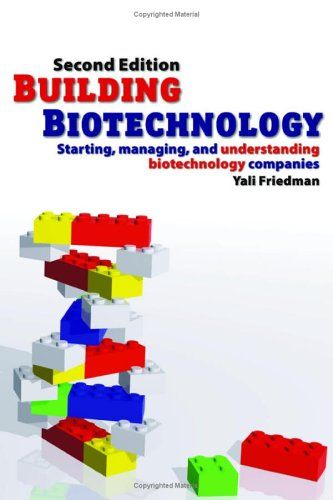
Aliu Aliu Olawale: Thank you, Celeste. It is an absolute pleasure to be here. You know, I have always believed that if you want to build a strong future, you have to start by flipping the right books and looking closely at the past. And Yali Friedman's Building Biotechnology is exactly that kind of book. It is a masterclass in showing us that biotech isn't just about brilliant scientists staring into microscopes. It is this incredibly complex ecosystem where science, law, history, and finance collide.
Dr. Celeste Vega: Spot on, Aliu. Today, we are going to tackle this book from two distinct, powerful angles. First, we will explore the regulatory gauntlet, looking at how past public health crises shaped today's strict FDA drug approval pipeline. And second, we will dive into the business of biology, examining how intellectual property and venture capital bridge the infamous Valley of Death to fund these medical breakthroughs.
Aliu Aliu Olawale: I love that roadmap, Celeste. As someone looking at healthcare from both a clinical and systemic perspective, I think we often take our modern medicines for granted without realizing the monumental journey they took just to get to the pharmacy shelf. Let us pull back the curtain on that journey.
Deep Dive into Core Topic 1
SECTION
Dr. Celeste Vega: Let us start with that journey, which Friedman describes as a highly structured, incredibly rigorous regulatory gauntlet. To understand why it is so tough today, we have to look back at how these rules were written. They were literally written in response to tragedy. Aliu, you are a big believer in learning from history. Do you remember the story of thalidomide in the late 1950s?
Aliu Aliu Olawale: Oh, absolutely. It is one of the most defining and sobering moments in the history of medicine and regulation. Back then, thalidomide was widely prescribed in Europe and other parts of the world to pregnant women to treat morning sickness. It was marketed as completely safe. But in the United States, a brilliant medical officer at the FDA named Dr. Frances Kelsey refused to approve it. She felt the safety data was insufficient, despite facing immense pressure from the pharmaceutical company.
Dr. Celeste Vega: And her skepticism saved countless lives.
Aliu Aliu Olawale: Exactly. Because shortly after, it became tragically clear that thalidomide caused severe birth defects in thousands of children across Europe. That crisis was the catalyst for the 1962 Kefauver-Harris Amendments in the United States. Before that law, drug companies only had to prove their products were safe. After that law, they had to prove their drugs were both safe and effective through well-controlled clinical trials. It fundamentally changed the rules of the game.
Dr. Celeste Vega: It really did. It established the modern clinical trial structure we have today, which Friedman outlines so clearly in the book. Think of it as a three-phase scientific filter. Phase One is all about safety. You test the drug on a very small group of healthy volunteers, maybe twenty to eighty people, just to see if it is toxic and how the human body processes it. If it passes, you move to Phase Two.
Aliu Aliu Olawale: Right, and Phase Two is where we first start looking at efficacy. You test it on a larger group, usually a few hundred people who actually have the disease you are trying to treat. You are trying to find the right dosage and see if there is a therapeutic benefit. But even if Phase Two looks promising, the real test is Phase Three.
Dr. Celeste Vega: Yes, Phase Three is the ultimate hurdle. We are talking about thousands of patients across multiple hospitals, sometimes globally. This is a massive, double-blind, randomized study designed to prove beyond a statistical doubt that the drug works better than a placebo or the current standard of care. It is incredibly expensive and logistically mind-boggling.
Aliu Aliu Olawale: It is a massive undertaking. And when you look at it through an analytical lens, you realize why the failure rate is so high. Biology is messy. A molecule that cures a disease in a petri dish or a mouse model often behaves completely differently in a diverse human population. But as a healthcare advocate, I find this rigor deeply reassuring. It shows that our regulatory system, which was forged in the lessons of past tragedies like thalidomide, prioritizes patient safety above all else.
Dr. Celeste Vega: It is a beautiful tension, isn't it? We want life-saving drugs quickly, but we need them to be safe. Friedman points out that this regulatory gauntlet is actually a major driver of the biotech business model. Because it takes so long, about ten to fifteen years from discovery to approval, companies have to find ways to survive and fund themselves during this long period of zero revenue.
Aliu Aliu Olawale: That is a perfect transition to the business side of things, Celeste. It makes you realize that in biotech, the science is only half the battle. The other half is securing the resources to keep that science alive through years of testing.
Deep Dive into Core Topic 2
SECTION
Dr. Celeste Vega: Exactly. And that brings us to our second core topic: the business of biology, and specifically, the concept of intellectual property, or IP. In software, you can launch an app in a weekend with a laptop and some coffee. If it fails, you pivot. But in biotech, you cannot pivot your way out of a failed clinical trial. You need hundreds of millions of dollars upfront. Friedman argues that without strong patents, the modern biotech industry simply could not exist. Why do you think that is, Aliu?
Aliu Aliu Olawale: Well, think about it from an investor's perspective. If I am going to write a check for fifty million dollars to fund a risky Phase Two trial, I need to know that if the drug actually works, some competitor won't just copy the chemical formula the next day and sell it for a fraction of the price. A patent gives the inventing company a temporary monopoly, usually twenty years from the date of filing, to exclusively sell that drug. It is the only way investors can hope to recoup their massive upfront costs and make a profit.
Dr. Celeste Vega: It is like building a toll bridge. You spend years and a fortune building it, and the patent allows you to collect tolls for a limited time to pay off the construction debt and fund the next bridge. But this creates a really interesting ethical dilemma, doesn't it? Especially for someone like you who cares deeply about healthcare access.
Aliu Aliu Olawale: It absolutely does, Celeste. It is a profound ethical tightrope. On one hand, we need patents to incentivize the creation of new, life-saving therapies. Without that financial incentive, many of these drugs would never leave the academic lab. On the other hand, during that patent window, drug prices can be astronomically high, making them inaccessible to the very patients who need them most. It is a clash between the market dynamics of innovation and the human right to healthcare.
Dr. Celeste Vega: How does Friedman suggest we navigate that, or how do you see it from your perspective?
Aliu Aliu Olawale: Friedman emphasizes that biotechnology requires a deep understanding of these overlapping systems. It is not about choosing one over the other; it is about finding balance. For instance, once a patent expires, generic drug manufacturers can enter the market, which dramatically drives down prices and increases access. So, the system is designed to reward the innovator temporarily, and then eventually give the discovery to the public domain forever.
Dr. Celeste Vega: That is a great way to frame it. The patent is a temporary contract with society. But getting to that patent expiration means surviving what industry insiders call the Valley of Death. This is the phase between basic laboratory research and clinical trials. It is where promising science goes to die because it is too advanced for academic grants, but too early and risky for traditional venture capital.
Aliu Aliu Olawale: Yes, the Valley of Death is where the real drama of biotech business happens. Friedman explains that bridging this gap requires a unique breed of investors, like specialized biotech venture capitalists, and strategic partnerships with big pharmaceutical companies. A small biotech startup might discover a brilliant molecule, but they don't have the infrastructure to run a global Phase Three trial. So, they partner with a giant like Pfizer or Novartis, trading some of their future profits for the immediate cash and expertise needed to get through the regulatory gauntlet.
Dr. Celeste Vega: It is a highly collaborative ecosystem. It is almost like a relay race. The academic researchers pass the baton to the biotech startup, who runs with it through early-stage development, and then they pass it to big pharma to cross the finish line of global distribution.
Aliu Aliu Olawale: I love that metaphor, Celeste. It really highlights that no single entity can do this alone. It requires the historian's appreciation for regulatory safety, the scientist's passion for discovery, the businessman's risk tolerance, and the healthcare provider's focus on the patient.
Synthesis & Takeaways
SECTION
Dr. Celeste Vega: That is a beautiful synthesis, Aliu. As we start to wrap up our conversation today, it is clear that Building Biotechnology is not just a textbook; it is a guide to understanding how these different forces shape human health. If you had to leave our listeners, especially those aspiring to work in healthcare or science, with one key takeaway from our discussion, what would it be?
Aliu Aliu Olawale: I would say that we must never view science in a vacuum. If you want to build a healthier future, you have to understand the machinery that allows science to reach the patient. Learn the history of our regulations so we don't repeat past mistakes. Understand the business models so we can find innovative ways to make life-saving treatments both viable and accessible. True advocacy in healthcare means understanding the entire blueprint, not just our individual corner of it.
Dr. Celeste Vega: Beautifully said, Aliu. Thank you so much for sharing your insights and your analytical perspective with us today. It has been an incredibly enriching conversation.
Aliu Aliu Olawale: Thank you, Celeste. It was a pleasure.
Dr. Celeste Vega: And to our listeners, thank you for tuning in to The Bio-Blueprint. We leave you with this question to ponder: How can we, as a society, better design our financial and regulatory systems to ensure that the next generation of medical breakthroughs is both revolutionary and accessible to all? Until next time, keep exploring, keep learning, and keep building the future.