Unlocking Your Expertise: The Power of Personal Branding for Architects
Golden Hook & Introduction
SECTION
Nova: Alright, Atlas, quick game for you. Five words. Describe "personal branding" for me. Go!
Atlas: Ugh. Self-promotion, awkward, necessary, exhausting, confusing.
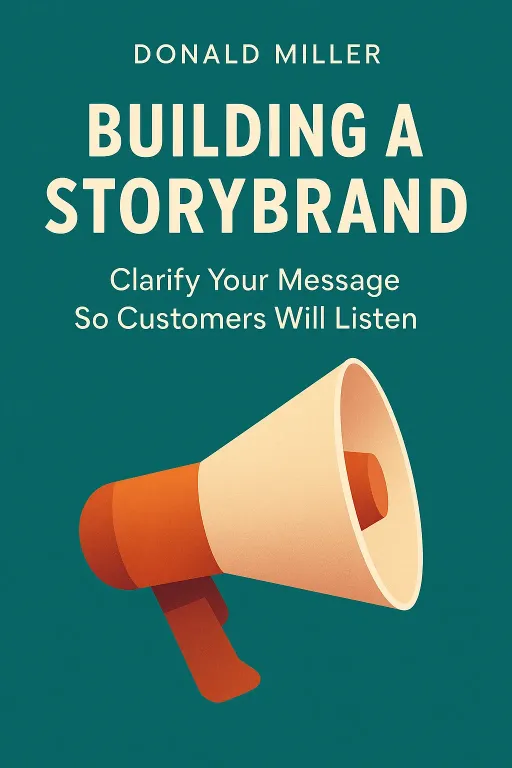
Nova: Hmm, not bad! I love the honesty. Mine would be: "Serve, clarify, connect, impact, thrive." And that, my friend, is precisely why we're diving into Donald Miller's brilliant work today, specifically his books "StoryBrand" and "Building a StoryBrand."
Atlas: Oh, I see. He's the guy who basically brought Hollywood narrative structure to how businesses, and even individuals, communicate.
Nova: Exactly! He’s a former filmmaker who saw how powerful a clear story is, and he demystified incredibly complex marketing ideas into actionable steps. He makes it accessible for everyone, not just marketing gurus.
Atlas: That’s a great way to put it. A former filmmaker. It makes me wonder, is he basically saying we're all main characters in our own blockbusters?
Nova: Precisely, but with a crucial, counter-intuitive twist.
The Guide, Not the Hero: Shifting Your Personal Brand Narrative
SECTION
Nova: That twist is what Miller calls the "Cold Fact": many brilliant minds struggle to communicate their value, leaving their profound insights unshared. And his big revelation? Customers aren't looking for a hero; they're looking for a guide. You are not the hero of your client's story. Your client is the hero.
Atlas: Wait, hold on. Are you saying all those "be your own hero" mantras are actually counterproductive for building a brand, especially for someone who's an architect, driven by making a lasting impact? That feels… backwards. That's a huge mindset shift.
Nova: Absolutely. Think about it: when you watch a movie, who do you root for? The protagonist, right? The hero. And who helps the hero overcome their challenges? The wise mentor, the guide. Think about Yoda guiding Luke, Dumbledore helping Harry, or even Haymitch mentoring Katniss. They're not the stars, but they are absolutely essential to the hero's success.
Atlas: So you're saying my client is Luke Skywalker, and I, the architect, am Obi-Wan Kenobi. I have the wisdom, the tools, the experience to help them navigate their Death Star of design problems.
Nova: Exactly! You're equipping them with the lightsaber, not wielding it yourself. But here’s the breakthrough: this doesn't diminish your expertise; it amplifies it by making it relevant to. Instead of saying, "I'm an award-winning architect with 20 years of experience in sustainable design," you shift to, "I help visionary clients create sustainable, future-proof spaces that enhance their legacy and impact."
Atlas: Oh, I like that. I can definitely relate to that. See the difference? One is about you, the other is about them and their success, with you as the enabler. It's a huge reframing. It's not about dimming my light, but about using my light to illuminate path. So it's less about "look at my impressive portfolio" and more about "I can help you achieve impressive vision."
Nova: That's a great way to put it, Atlas. It's about understanding that people aren't interested in your journey as much as they are in how you can help them complete theirs. This makes your brand instantly more relatable and compelling because it speaks directly to their needs, their aspirations, and their problems.
Atlas: It really shifts the entire focus. I imagine a lot of our listeners, especially those who come from technical or historical backgrounds, are used to presenting facts and figures, not necessarily framing themselves as a guide in someone else's epic. It's a significant mental jump.
Nova: It is. And it’s why Miller’s approach is so powerful. It provides a simple, powerful narrative structure that resonates deeply with your audience because it mirrors the stories we intuitively understand. It's about serving, not selling.
Clarifying Your Message: The StoryBrand Framework in Action
SECTION
Nova: Precisely! And that naturally leads us to the second key idea: how Miller gives us a practical, seven-part framework to actually this. It's about clarifying your message so concisely that anyone can understand what you offer and why they need it.
Atlas: So you're saying it's a structured way to tell a story where my client is the star? For someone who likes to break down complex problems and build solutions, a framework sounds incredibly helpful. What does that mean in practice?
Nova: It means your message follows a clear arc: a character has a problem, meets a guide, who gives them a plan, calls them to action, and helps them avoid failure and achieve success. It's a universal story. And his "Tiny Step" to get started is deceptively simple but incredibly powerful.
Atlas: Okay, so what's the tiny step? I'm curious, what's the absolute first thing I can do to apply this?
Nova: Identify one core problem your expertise solves for others. Then, write a one-sentence solution from your perspective as the guide. For an architect, it's not "I design buildings." That's what you do. The problem you solve is, say, "inefficient, uninspiring workspaces." So your solution, as the guide, becomes: "I help ambitious entrepreneurs design efficient, inspiring workplaces that boost productivity and attract top talent."
Atlas: That makes me wonder, for a historian or strategist, it might be, "I help organizations understand their past challenges to build resilient future strategies." It forces you to articulate the you bring, not just the you provide. It's about the transformation you facilitate.
Nova: Exactly! Miller emphasizes that if you confuse, you lose. People are bombarded with information every single day. Your brand needs to cut through that noise by offering absolute clarity and a clear path forward for. It's not about being clever; it's about being clear. It's about serving their deepest needs and aspirations, which aligns perfectly with your drive for lasting contributions.
Atlas: That’s a perfect example. So, the framework essentially gives you a script to follow for piece of communication, from a website to an elevator pitch. It feels like a blueprint for clarity, which is something many brilliant minds, especially in technical fields, often struggle with. They have all this knowledge, but then struggle to communicate it effectively.
Nova: That’s a great way to put it, Atlas. It's a system to ensure your message is always client-centric, always problem-solving, and always clear. It’s about making your expertise not just visible, but in a way your audience immediately understands.
Synthesis & Takeaways
SECTION
Nova: Absolutely, Atlas. The profound insight here is that personal branding isn't about promoting yourself; it's about serving your audience by becoming the trusted guide who solves their problems. It’s about leveraging your expertise—whether you’re an architect, a historian, or a strategist—to clarify journey, not just showcase. It’s a complete reorientation of impact, moving from a monologue about your achievements to a dialogue about their success.
Atlas: That’s actually really inspiring. So, the ultimate takeaway is that true personal branding is about generosity and clarity. It's about making your profound insights accessible and actionable for others, which in turn amplifies your own impact exponentially. It's not a transactional exchange; it's a transformative partnership. That gives me chills in a good way.
Nova: Exactly. So, for our listeners today, take that tiny step. Identify that one core problem your expertise solves, craft that one-sentence solution from your perspective as the guide. Start seeing yourself as the guide your audience desperately needs. This is Aibrary. Congratulations on your growth!